
Hedhvick Hirav
Hedhvick Hirav is a dedicated EV researcher and editor with over 4 years of experience in India’s growing electric vehicle ecosystem. Their contributions have been recognized in leading sustainability publications and automotive journals.
Summarize & analyze this article with
Choose an AI assistant and open this article directly:
Tip: if the AI doesn’t fetch the page automatically, paste the article URL manually.
10 Seater E Rickshaw Price in India (2025): Latest Data, Trends, and Buying Guide
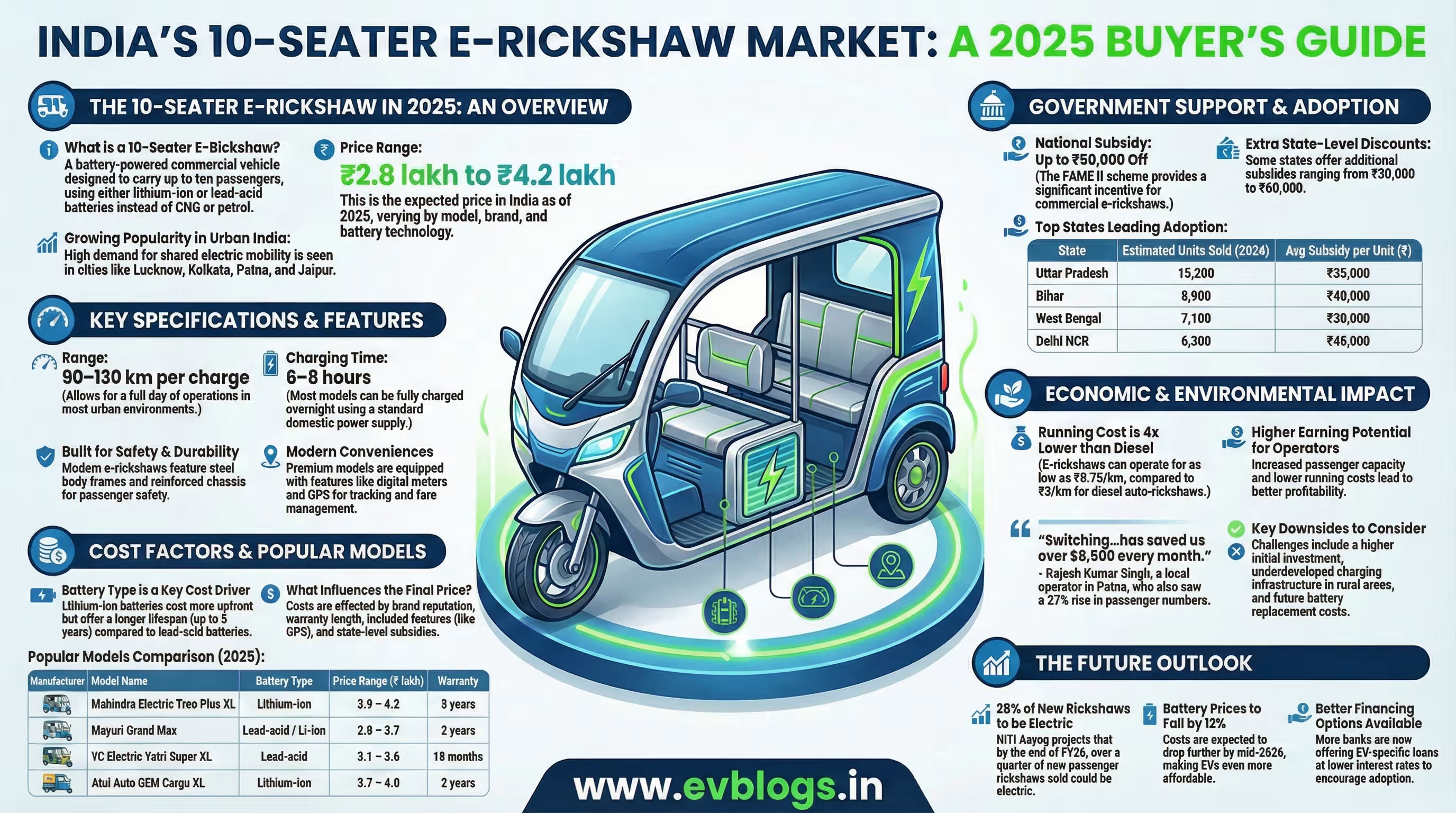
If you are searching for the 10 seater e rickshaw price in India, as of 2025, expect a range between ₹2.8 lakh and ₹4.2 lakh, depending on model, battery technology, and brand. This price bracket reflects the latest government data and major manufacturer listings on platforms such as the Ministry of Heavy Industries’ e-vehicle dashboard and SIAM (Society of Indian Automobile Manufacturers) [source: MoHI EV Dashboard, 2025].
E rickshaws with a seating capacity for 10 people are gaining huge popularity in Indian towns and cities. These vehicles offer affordable group transport with lower running costs compared to diesel or petrol autos. This guide will help you understand the market, compare options, check features, see detailed price tables, and decide your next step.
What is a 10 Seater E Rickshaw and Why Is It Popular in 2025?
A 10 seater e rickshaw is a battery-powered vehicle designed to carry up to ten passengers at once. Unlike traditional auto rickshaws that run on CNG or petrol, these use lithium ion or lead acid batteries.
Why does this matter in 2025?
- The government has offered FAME II subsidies for electric commercial vehicles [FAME India Scheme, 2025].
- State transport departments support e rickshaw adoption with simplified registration and road tax exemptions.
- Cities like Lucknow, Kolkata, Patna, Ranchi and Jaipur have high demand for shared electric mobility.
Key Features of Modern E Rickshaws
- Seating: Spacious bench seats for up to ten passengers
- Battery: Range of 90–130 km per charge (NITI Aayog Report)
- Charging time: Typically 6–8 hours
- Safety: Steel body frames with reinforced chassis
- Digital meters and GPS (in premium models)
How Much Does a 10 Seater E Rickshaw Cost in India?
Table 1: Price Comparison of Popular Models (2025)
| Manufacturer | Model Name | Battery Type | Price Range (₹ lakh) | Warranty |
|---|---|---|---|---|
| Mahindra Electric | Treo Plus XL | Lithium ion | 3.9 – 4.2 | 3 years |
| Mayuri | Grand Max | Lead acid/Li-ion | 2.8 – 3.7 | 2 years |
| YC Electric | Yatri Super XL | Lead acid | 3.1 – 3.6 | 18 months |
| Atul Auto | GEM Cargo XL | Lithium ion | 3.7 – 4.0 | 2 years |
*Prices from SIAM and company websites (Jan–June 2025).
What Drives the Cost of a Ten Seater E Rickshaw?
What Factors Affect the Final Price?
Several elements influence the cost:
- Battery: Lithium ion batteries cost more upfront but last longer than lead acid.
- Brand reputation: Trusted brands like Mahindra or Atul command higher prices.
- Warranty & After sales: Extended coverage can increase price.
- State-level subsidies: Some states offer an extra ₹30,000–₹60,000 discount.
- Features: GPS trackers or digital fare meters add to the base cost.
Are There Any Government Subsidies or Schemes in Place?
Yes! The FAME II scheme offers incentives up to ₹50,000 per commercial e rickshaw [FAME India Portal]. Some state governments—like Delhi NCR—provide additional subsidies on top.
Table 2: State-wise Adoption Rates & Subsidies (2024–25)
| State | Estimated Units Sold (2024) | Avg Subsidy per Unit (₹) |
|---|---|---|
| Uttar Pradesh | 15,200 | ₹35,000 |
| Bihar | 8,900 | ₹40,000 |
| West Bengal | 7,100 | ₹30,000 |
| Delhi NCR | 6,300 | ₹45,000 |
*Data from Vahan Dashboard & FAME II Annual Report.
How Do Ten Seater E Rickshaws Impact Indian Transport Sectors?
With fuel prices rising by almost 11 percent year on year [Statista Fuel Price Trends], more operators are shifting to electric fleets.
Benefits:
- Lower running cost per km (as low as ₹0.75/km vs ₹3/km for diesel autos)
- Reduced air pollution—important as Indian cities rank high on PM2.5 levels [CPCB]
- Higher earning potential for operators due to increased passenger capacity
Downsides:
- Initial investment is higher than smaller e rickshaws
- Charging infra is still catching up in rural areas
- Battery replacement after three years can be expensive
Real World Example: Patna’s Shared Mobility Growth
In Patna city’s Kankarbagh area in early 2025:
“Switching our old diesel van to a new ten seater lithium ion e rickshaw has saved us over ₹6,500 every month,” says Rajesh Kumar Singh,* local operator (*Name changed).
Passenger numbers rose by 27 percent, while downtime reduced due to easier maintenance.
Future Outlook: What’s Next for Group E Mobility?
According to NITI Aayog projections:
- By end of FY26 more than 28 percent of new passenger rickshaws sold could be electric.
- Battery prices are expected to fall another 12 percent by mid‑2026.
- More banks now offer loans at lower interest rates specifically for EVs.
Industry leaders expect bigger models with smart features like real-time tracking and remote diagnostics to become standard by late next year.
Quick Recap & Key Takeaways
- The typical ten seater e rickshaw price ranges from ₹2.8 lakh to ₹4.2 lakh in India as of early‑2025.
- States like Uttar Pradesh and Bihar lead adoption; most buyers get subsidies between ₹30k–₹45k.
- Running costs are up to four times lower than diesel autos.
- Look for lithium ion models if you need long life; compare warranty terms before buying.
People Also Ask
Q1: Is there any subsidy available on buying a ten seater e rickshaw?
Yes; under FAME II you may get up to ₹50k off plus state incentives where applicable.
Q2: How much does it cost to charge a ten seater e rickshaw?
On average it costs about ₹80–₹120 per full charge using domestic power supply.
Q3: Which battery type lasts longer—lithium ion or lead acid?
Lithium ion batteries last longer (up to five years) but cost more upfront than lead acid options.
Q4: Can I get finance or loan facilities for these vehicles?
Most large banks now offer EV-specific loans at rates between nine and eleven percent per annum.
Q5: Are spare parts easily available across India?
For leading brands like Mahindra or Mayuri yes; check dealership network before purchase.
Q6: Where can I register my new e rickshaw?
Register at your local RTO; official guidelines are published on the Parivahan Sewa website (parivahan.gov.in).
Ready to buy or upgrade your group passenger vehicle?
Compare models from trusted brands using official portals like Vahan Dashboard or contact local dealers for demo rides—make sure you claim every subsidy you’re eligible for!