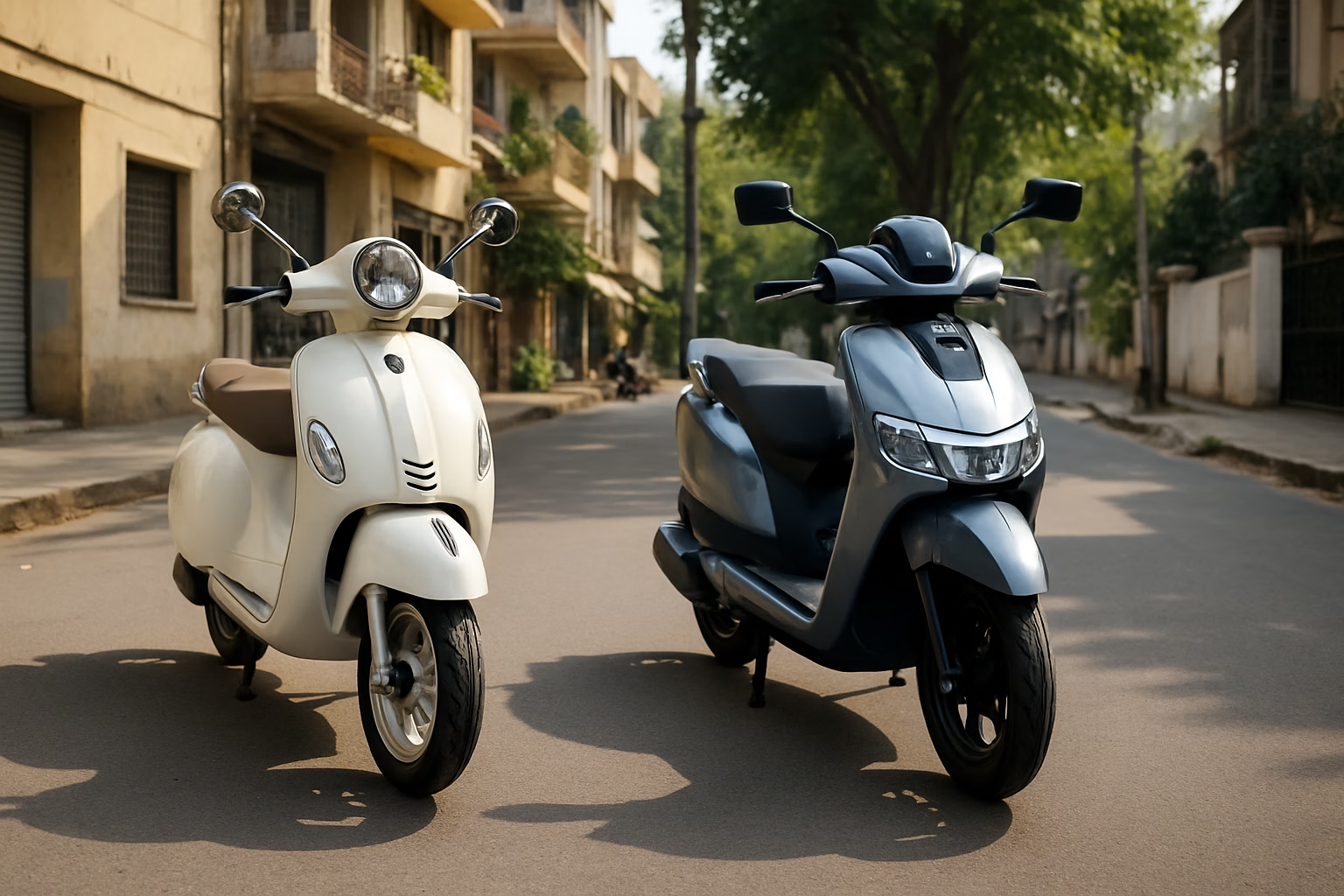

This is the EV scooter version of head versus heart, except both sides have a strong case. The Ather 450X is the clever, sporty, software-driven scooter that enthusiasts love. The Bajaj Chetak is the solid, metal-bodied, service-everywhere scooter that families trust. Both are among India’s best sellers in 2026, so this is not a case of one good scooter and one bad one. It is about which set of strengths fits your life.
I have built this from tested range data, real owner reviews, and the trade-offs each brand would rather gloss over. Lab range and real range are kept separate.
My quick verdict: Buy the Ather 450X if you want the sharper, smarter, more fun scooter and you have Ather service nearby. Buy the Bajaj Chetak if you want build quality, comfort, the widest service network, and no fuss.
Specs at a Glance
| Spec | Ather 450X (3.7 kWh) | Bajaj Chetak 3501 |
|---|---|---|
| Ex-showroom price | Rs 1,64,079 (base) | Rs 1,47,293 |
| IDC / ARAI range | 161 km | 153 km |
| Real-world range | ~125 km Smart Eco (tested) | ~100-120 km |
| Battery | 3.7 kWh | 3.5 kWh |
| Peak power | 6.4 kW | 4 kW |
| Top speed | 90 km/h | 73-80 km/h |
| Body | Plastic panels | Metal (steel) |
| Boot space | 22 litres | 35 litres + 5 L glovebox |
| Fast charging | Yes (Ather Grid) | No (home only) |
| Service centres | 500 (Ather) | 4,000+ (Bajaj network) |
| Warranty (battery) | 3 yr / 30,000 km | 3 yr / 50,000 km (extendable to 5 yr) |
Prices ex-showroom, mid-2026. Sources are linked through the sections below.
Price: Mind the Stack Pro
The Chetak 3501 lists at Rs 1,47,293 ex-showroom, the base Ather 450X 3.7 kWh at Rs 1,64,079 (BikeWale Chetak , BikeWale Ather ). So the Ather is already about Rs 17,000 dearer, and here is the part that matters: the base 450X does not include Warp mode, full traction control, or Google Maps navigation. Those need Ather’s Stack Pro add-on at Rs 17,000 to Rs 20,000 (BikeDekho ). A BikeWale long-term reviewer flatly called locking those behind a paywall “a bit strange” at the already-high price (BikeWale ). The Chetak gives you its full feature set in the price. For an apples-to-apples Ather, budget closer to Rs 1.8 lakh.
Range and Performance
The two are closer on range than their reputations suggest. The Ather 450X 3.7 kWh claims 161 km IDC and a BikeDekho long-term test measured a real 125 km in Smart Eco and 85 km in Warp, with a range readout the reviewer called “laser accurate” (BikeDekho ). The Chetak 3501 claims 153 km ARAI and owners report a real 100-120 km. The Ather has a slight real-range edge and a clear performance edge: 6.4 kW and 90 km/h against the Chetak’s 4 kW and 73-80 km/h. The Ather is also lighter and sharper to ride in traffic. The Chetak answers with a smoother, calmer, more comfortable ride that owners consistently praise.
Build and Comfort: The Chetak’s Home Turf
This is where the Chetak earns its money. Its steel body feels solid in a way the Ather’s plastic panels do not, and owners say so plainly:
“This bajaj chetak is great for value, premium metal body gives solid, durable finish.” by Suchismita S., 5.0/5, ZigWheels
The Chetak also has a far bigger boot (35 litres plus a 5-litre glovebox versus the Ather’s 22 litres) and a more forgiving ride. The Ather’s suspension is firm, and a BikeDekho long-term tester noted you almost have to crawl over potholes, plus a cramped pillion seat. If comfort and practicality top your list, the Chetak wins this round comfortably.
Tech and Software: The Ather’s Home Turf
Flip it around and the Ather dominates. It is a genuinely smart scooter with a responsive touchscreen, Google Maps, over-the-air updates, and the excellent Magic Twist regen that one tester said he kept reaching for on other bikes by habit (BikeDekho ). Owners love how it rides:
“The bike handles turns and short stops really well, and the ride feels smooth and controlled.” by yash, 5.0/5, BikeDekho
If you want the connected, app-driven, frequently-updated experience, the Chetak’s simpler tech cannot match it. Just remember the best modes need the Stack Pro.
Charging: A Real Gap
The Ather has the single biggest practical advantage here: the Ather Grid, with over 5,000 fast chargers across 395 cities at about Rs 1 per minute (Autocar Professional ). The Chetak has no DC fast charging at all, by Bajaj’s deliberate choice, so you plan around a roughly 3-hour home charge. For overnight chargers that is no problem. For anyone who needs a mid-day top-up or rides between cities, the Ather network is a decisive edge.
Known Issues, Both Sides
Ather 450X: the headline ones are software, a 7-8% daily self-discharge when parked (enough to flatten the battery over a two-week holiday), and a firm ride. The dashboard freezes and GPS dropouts that plagued older units have largely been fixed through AtherStack updates, with the latest claiming big stability gains (ev.care ). Its BikeWale reliability and service sub-scores sit at a middling 3 out of 5.
Bajaj Chetak: the worrying ones are post-warranty repair costs and parts waits. One owner reported an onboard charger that failed within four months and was still unresolved three months later, and another described a roughly Rs 1 lakh MCU-and-battery bill after 3.5 years, with the supervisor suggesting he scrap the scooter (BikeWale ). The Chetak’s reviews are polarised, 57% five-star but 24% one-star on BikeWale, a clear split between happy commuters and owners who hit a service wall.
Service Network
Both are better here than Ola, but they win differently. Ather has built 500 dedicated EV service centres (Autocar Professional ), which are EV-specialist but concentrated in larger towns. The Chetak rides on Bajaj’s 4,000-plus dealer network (Chetak ), so in a smaller city a Bajaj outlet is far more likely to be near you. The trade-off: Ather’s centres know EVs deeply, while Bajaj’s vast network can be hit or miss on EV-specific battery and electronics work. Reach versus expertise.
Sales: Both Winning, Chetak Bigger
Unlike the Ola story, this is not a collapse-versus-rise tale. Both brands are growing. The Bajaj Chetak holds around 21-22% market share and has crossed 7.27 lakh cumulative sales (Autocar Professional ). Ather sits around 15-16% share, grew roughly 59% year on year, and has passed 600,000 cumulative sales (Autocar Professional ). Buyers are backing both, which tells you these are two genuinely good scooters serving two different priorities.
Who Should Buy Which
Buy the Ather 450X if: you want the sportiest ride and the smartest software, you value the 5,000-charger network, you will use the connected features, and you have Ather service nearby. Budget for the Stack Pro to get the full scooter.
Buy the Bajaj Chetak if: you want a solid metal body, a comfortable ride, the most service reach, a bigger boot, and a lower price. Just confirm your local Bajaj dealer is competent on EV repairs, and know there is no fast charging.
Frequently Asked Questions
Which is better, Ather 450X or Bajaj Chetak? The Ather for tech, performance, and charging network; the Chetak for build quality, comfort, boot space, and service reach. Both are strong sellers, so the right pick depends on which set of strengths you value.
What is the real-world range of the Ather 450X? A BikeDekho long-term test measured about 125 km in Smart Eco and 85 km in Warp on the 3.7 kWh, against a 161 km IDC claim.
Does the Bajaj Chetak have fast charging? No. Bajaj leaves out DC fast charging by design. The 3501 charges 0-80% in about 3 hours at home.
What is the Ather Stack Pro and do I need it? It is a Rs 17,000-20,000 add-on that unlocks Warp mode, full traction control, and Google Maps. If you want the complete 450X, you need it, so factor it into the price.
Which has the better service network? The Chetak has wider reach through Bajaj’s 4,000-plus dealers; Ather has 500 EV-specialist centres. Reach favours Chetak, EV expertise favours Ather.
My Final Verdict
Buy the Ather 450X if you are an enthusiast who wants the sharpest ride, the smartest software, and the best charging network, and you can live with a firm ride, a small boot, and paying for the Stack Pro. Buy the Bajaj Chetak if you want a comfortable, solid, practical scooter with the widest service reach and a lower price, and you charge at home. Neither is a wrong answer here. The Ather is the better gadget, the Chetak is the better workhorse.
For more, see my Simple One vs Ather 450X and Ola S1 Pro vs Bajaj Chetak comparisons, plus the best electric scooters under 1.5 lakh .
Prices and specifications are as of June 2026 and sourced from the manufacturers and publications linked above. Real-world range varies with rider weight, terrain, weather and riding mode. Confirm the current on-road price and warranty at your dealer before buying.