
Researched by Vignesh (EVBlogs.in). Specs verified from ARAI data. Prices are on-road, not ex-showroom. Range figures adjusted for Indian city driving — not ideal test conditions.
Best Banks for EV Loans in India (2026)
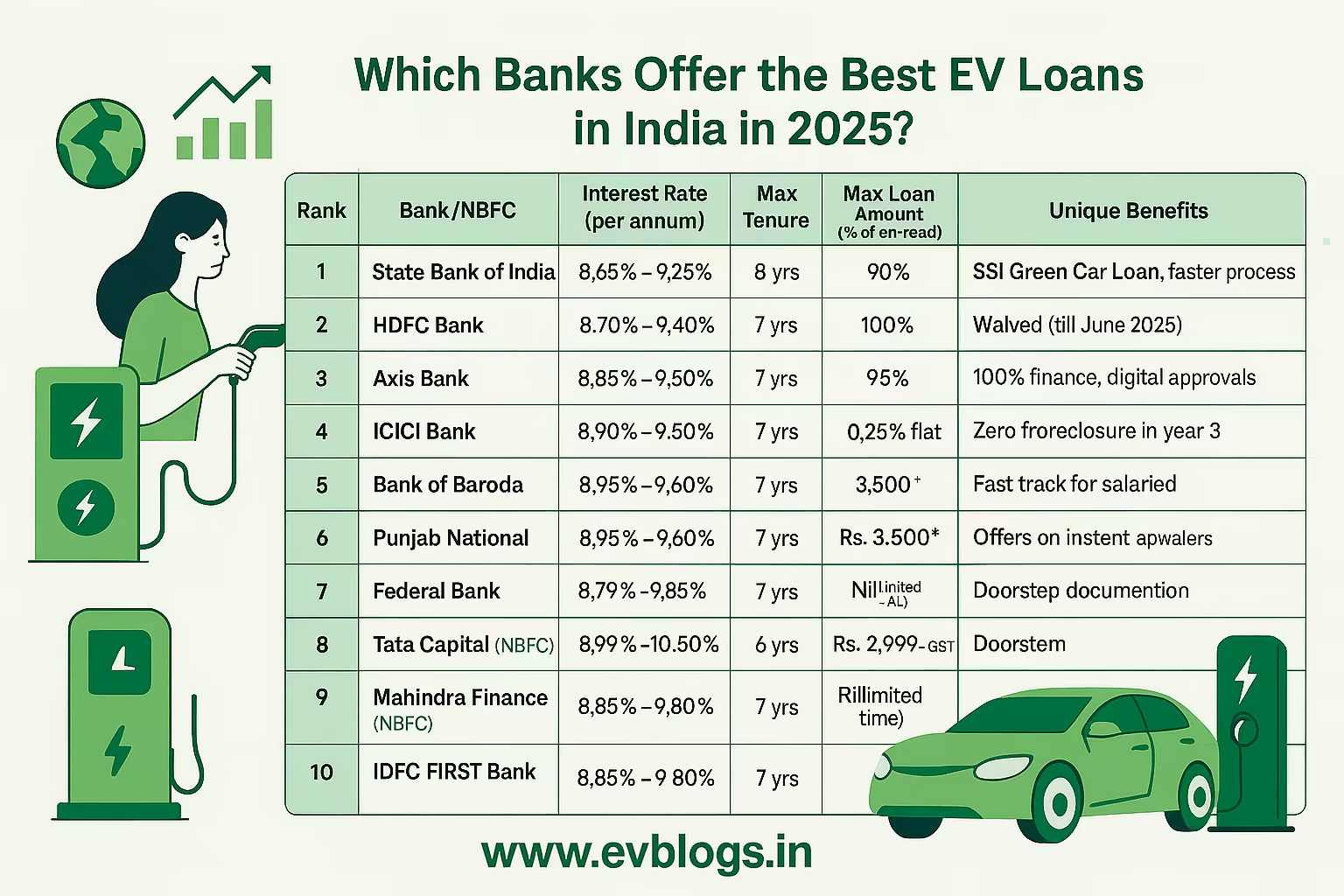
An EV still costs more upfront than a petrol equivalent, so the loan you pick matters as much as the car. I went through the official pages of every major lender to compare real interest rates, how much they’ll fund, tenure, processing fees, and the part almost every other comparison skips, the prepayment and foreclosure charges. Here’s what I found.
One thing to say clearly at the top: interest rates move every month with the RBI repo rate. Every figure here was verified on 4 July 2026 from the sources linked. Treat them as a starting point and confirm the live rate before you apply.
EV loan rates at a glance
| Lender | EV loan rate (p.a.) | Max funding | Max tenure | Processing fee |
|---|---|---|---|---|
| PNB Green Car Loan | ~8.30% (fixed) | 90% on-road / 100% ex-showroom | 10 years | Nil |
| SBI Green Car Loan | ~8.55%–9.85% | Up to 100% on-road | 8 years | Nil to Rs 4,000 |
| Bank of Baroda Green Wheel | ~7.60%–11.15% | 90% on-road | 8 years (96 mo for good credit) | Rs 750–1,000 + GST (50% off) |
| ICICI EV Car Loan | ~9.10% onwards | 100% on-road | 7 years | Not published |
| HDFC EV Car Loan | ~9.40% onwards | 100% on select cars | 8 years | Not published |
| Axis Bank | ~9.25% onwards (not EV-specific) | 85% on-road | 7 years | Not published |
| Canara Green Wheels | ~8.05%–8.45% (general) | 90% on-road | 7 years | 0.25%, min Rs 1,000 |
Sources: SBI , PNB , Bank of Baroda , ICICI , HDFC , BankBazaar and CreditMantri , all as of 4 July 2026.
What “green car loan” actually means, and where it doesn’t
Here’s the honest bit that other comparisons gloss over. Not every “EV loan” is actually cheaper than a normal car loan. Some banks genuinely price EV finance below their standard rate. Others just put an “EV loan” label on the same car loan page with the same rate.
Three lenders I could confirm give a real EV-specific discount:
- SBI applies a stated 25 basis point concession versus its regular car loan, per its official Green Car Loan page .
- PNB advertised a dedicated 8.30% EV rate, a 5 bps discount, per BusinessToday . That report is from June 2025, so confirm it still stands.
- Bank of Baroda runs a genuinely separate Green Wheel product with its own rate card, per its official page .
By contrast, on Axis, Kotak, and Tata Capital I could not find a published rate distinct from their standard new-car loan. Their EV pages emphasise funding amount or tenure, not a lower rate. That doesn’t make them bad lenders, but don’t assume the “EV” badge means a discount. Ask them to show you the rate in writing against their regular car loan.
Best for the lowest rate: PNB and SBI
PNB Green Car Loan is the value pick. It funds up to 90% of on-road price or 100% of ex-showroom, stretches to a 10-year tenure, charges no processing fee, and has no prepayment penalty, per its official page . The zero foreclosure charge is a real advantage if you plan to close early. One caveat: PNB’s general new-car floating rate as of July 2026 sits around 7.55% to 7.80%, actually lower than the 8.30% fixed EV figure, so ask PNB which product is cheaper for your profile before assuming the EV rate wins.
SBI Green Car Loan is the safe, everywhere-available choice. It funds up to 100% of on-road price, runs to 8 years, and applies that 25 bps concession. Rates were quoted around 8.55% to 9.85% depending on source and profile. There’s a conflict worth knowing: SBI’s own page says zero processing fee for the green scheme, while BankBazaar lists Rs 1,000 to Rs 4,000. Get the fee confirmed at sanction.
Best for metros and high loan amounts: HDFC and ICICI
ICICI’s EV Car Loan markets 100% on-road funding and a 7-year tenure, with rates around 9.10% onwards, per its EV car loan page . Watch the prepayment terms: ICICI charges 5% plus GST on foreclosure, dropping to nil only after 24 months.
HDFC’s EV Car Loan offers up to 8 years and 100% financing on select cars, with rates from about 9.40%, per its EV car loan page . Its foreclosure charges are tiered: 6% of outstanding principal within the first year, 5% between 13 and 24 months, and 3% after 24 months. If you’re likely to prepay from a bonus or by selling your old car, that tiered fee is a real cost to factor in.
Best for self-employed and business owners: Bank of Baroda and Canara
Bank of Baroda’s Green Wheel is the most flexible for business borrowers. It lends up to Rs 300 lakh to individuals and Rs 500 lakh to non-individuals, accepts a CIBIL score from 701, and stretches tenure to 96 months for salaried applicants with a 726-plus score, per its official page . Floating-rate individual borrowers pay no foreclosure charge, and it applies a 50% concession on the processing fee. That combination is hard to beat for a professional or firm.
Canara Green Wheels funds up to 90% of on-road price over 7 years with no prepayment penalty, per its official page . I could not confirm a Canara EV-specific rate discount, so its general car loan rate of roughly 8.05% to 8.45% is the number to work with.
Best for two-wheeler EVs: specialist NBFCs, not the big banks
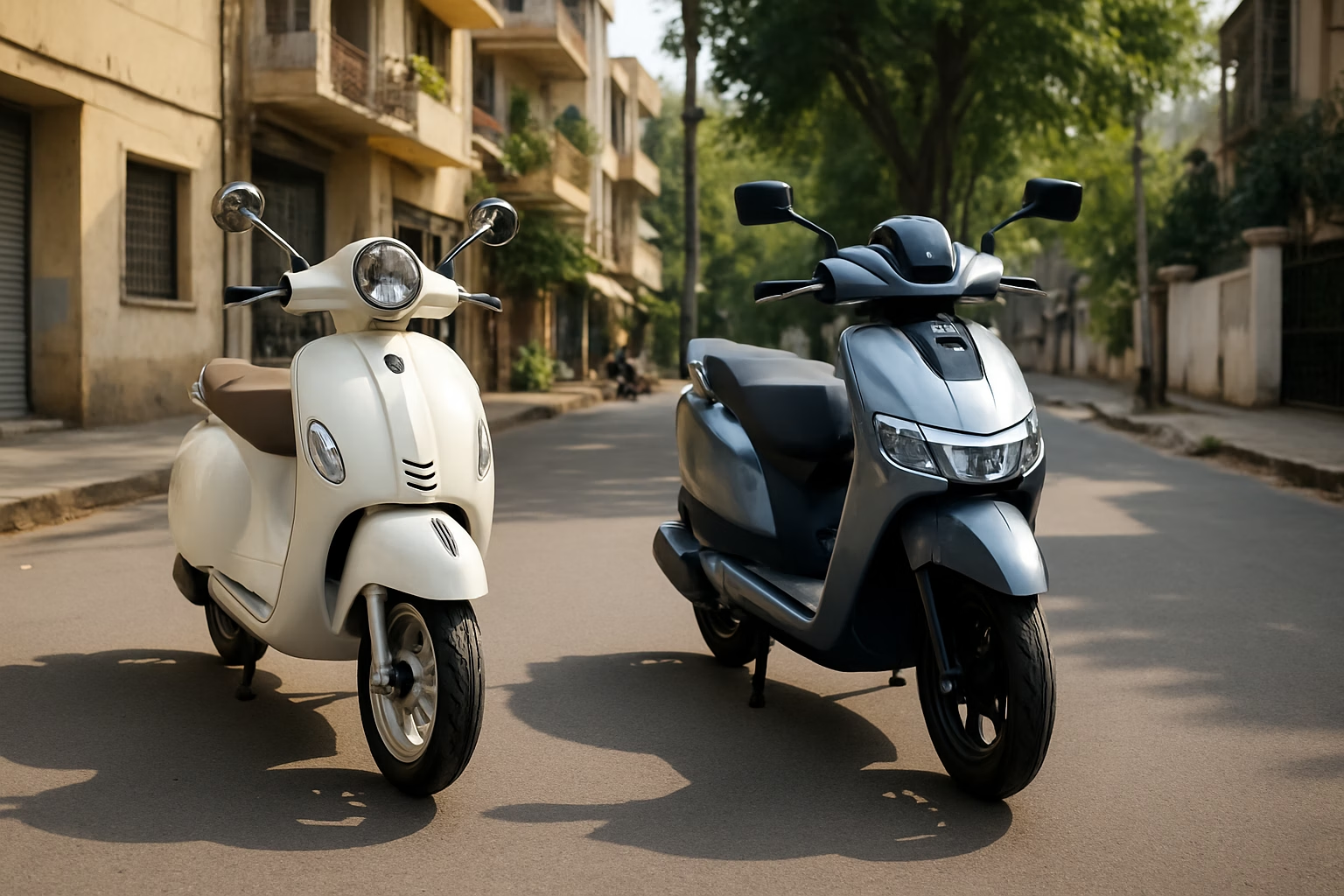
If you’re financing an electric scooter, the traditional banks are not your cheapest route. ICICI’s own FAQ states plainly that its EV bike loan carries the same rate as a normal two-wheeler loan, with no EV discount. General two-wheeler bank rates run high, from about 10.25% to well over 24% depending on profile.
The better option is an EV-specialist NBFC. OTO Capital advertises rates from 8.99%, tenures of 1 to 3 years, a 10% down payment, and approval claimed within 30 minutes, and it explicitly finances Ola Electric, Ather, TVS Electric and Matter, per its site . For a Bajaj Chetak, Bajaj Auto Finance is the natural in-house financier at the dealership. Ola’s own in-house financing quotes blended rates of roughly 9.7% to 15%, with a published example EMI of Rs 3,775 a month on an S1 Pro over 36 months, per BikeDekho .
Worked EMI example: Rs 10 lakh loan
Here’s what the rate difference actually costs you on a Rs 10 lakh loan, calculated on a standard reducing-balance basis. These are my calculations from the rates above, not a bank calculator’s output, so verify on the bank’s own EMI calculator before you commit.
| Scenario | Rate | Tenure | Monthly EMI | Total interest |
|---|---|---|---|---|
| PNB (8.30%) | 8.30% | 5 years | ~Rs 20,470 | ~Rs 2,28,200 |
| PNB (8.30%) | 8.30% | 7 years | ~Rs 15,780 | ~Rs 3,25,500 |
| SBI (8.90%) | 8.90% | 5 years | ~Rs 20,750 | ~Rs 2,45,000 |
| ICICI (9.10%) | 9.10% | 7 years | ~Rs 16,220 | ~Rs 3,62,500 |
| HDFC (9.40%) | 9.40% | 7 years | ~Rs 16,350 | ~Rs 3,73,400 |
Two lessons jump out. First, stretching from 5 to 7 years lowers your EMI by roughly Rs 4,700 but adds about a lakh in total interest. Take the longer tenure only if you need the lower EMI, not by default. Second, the gap between the cheapest and dearest rate here is over Rs 45,000 in interest on the same loan, which is exactly why comparing lenders is worth an afternoon.
Processing fees and prepayment, the part most guides skip
Two loans at the same rate are not equal if one punishes you for closing early. Here’s how foreclosure compares:
- PNB and Canara: no prepayment penalty. Best if you expect to close early.
- Bank of Baroda: nil for floating-rate individuals.
- ICICI: 5% plus GST, dropping to nil after 24 months.
- HDFC: 6% within year one, 5% up to 24 months, 3% after.
If there’s any chance you’ll clear the loan ahead of schedule, a nil-foreclosure lender like PNB or Canara can save you more than a slightly lower headline rate would.
Don’t forget the Section 80EEB tax benefit
Beyond the bank rate, the government still helps. Under Section 80EEB of the Income Tax Act, you can claim a deduction of up to Rs 1.5 lakh per year on the interest paid on a loan taken to buy an electric vehicle, subject to the scheme’s conditions and eligibility window. Check your eligibility with the Income Tax Department or your accountant, since this applies to the interest component and has qualifying dates.
Eligibility, broadly
Across these lenders the pattern is consistent. You’ll generally need to be 21 to 70 years old at loan maturity, show a minimum income in the region of Rs 25,000 a month or Rs 3 lakh a year depending on the bank, and have a CIBIL score around 700 or higher for the best rates and approval odds. Bank of Baroda accepts scores from 701, and several banks offer small concessions to women borrowers and to defence personnel, though I couldn’t verify the exact discount amounts, so ask directly.
What I couldn’t verify
In the interest of being straight with you: I could not find dated, attributable customer reviews specifically about EV loan servicing on any public platform as of July 2026, so I haven’t invented any. Several banks don’t publish an EV-specific processing fee schedule, and the PNB 8.30% figure comes from a June 2025 report that needs re-confirming. Rates change monthly. Use this as a shortlist, then verify the live numbers with the bank before you sign.
My recommendation by buyer type
- Lowest overall cost, plan to prepay: PNB Green Car Loan, for its low rate and zero foreclosure charge.
- Reliable, available everywhere: SBI Green Car Loan.
- Self-employed or a business: Bank of Baroda Green Wheel.
- Metro buyer wanting 100% funding fast: ICICI or HDFC EV car loan.
- Electric scooter: an EV-specialist NBFC like OTO Capital, not a big bank.
Frequently Asked Questions
Is EV loan interest actually lower than a petrol car loan?
Sometimes, but not always. SBI gives a confirmed 25 basis point concession, PNB and Bank of Baroda run genuinely separate green loan rates. But Axis, Kotak and Tata Capital appear to charge the same as their standard car loan under an “EV” label. Always compare the EV rate against the bank’s regular car loan rate before assuming it’s cheaper.
Can I get 100% funding on an EV loan?
Yes, from some lenders. SBI and ICICI advertise up to 100% of on-road price, and HDFC offers 100% on select cars. Others like Axis cap funding around 85%, and Bank of Baroda and Canara around 90%. The higher the funding, the more interest you pay overall, so a larger down payment still saves money.
What credit score do I need for the best EV loan rate?
Around 700 or higher gets you approval and the better rates at most banks. Bank of Baroda accepts applicants from a CIBIL score of 701. Below 700, expect a higher rate or a larger down-payment requirement.
Do electric two-wheelers get cheaper loan rates than petrol scooters?
Usually not from banks. ICICI’s own FAQ confirms its EV bike loan carries the same rate as a regular bike loan. For a better two-wheeler EV rate, look at specialist NBFCs like OTO Capital, which starts around 8.99% and finances major electric scooter brands directly.
What happens if I prepay my EV loan early?
It depends on the lender. PNB and Canara charge no prepayment penalty. ICICI charges 5% plus GST, nil after 24 months, and HDFC uses a tiered 6%, 5%, then 3% scale. If you expect to close early, a nil-foreclosure lender can be worth more than a marginally lower rate.
Can I claim a tax benefit on my EV loan?
Yes. Section 80EEB allows a deduction of up to Rs 1.5 lakh per year on the interest paid on an EV loan, subject to eligibility and the scheme’s qualifying dates. Confirm your specific eligibility with the Income Tax Department or a tax advisor.
Disclaimer: Interest rates, fees and loan terms change frequently with RBI policy and vary by applicant profile. All figures here were verified from the linked sources on 4 July 2026. Confirm current rates and charges directly with the bank before applying.