
Researched by Vignesh (EVBlogs.in). Specs verified from ARAI data. Prices are on-road, not ex-showroom. Range figures adjusted for Indian city driving — not ideal test conditions.
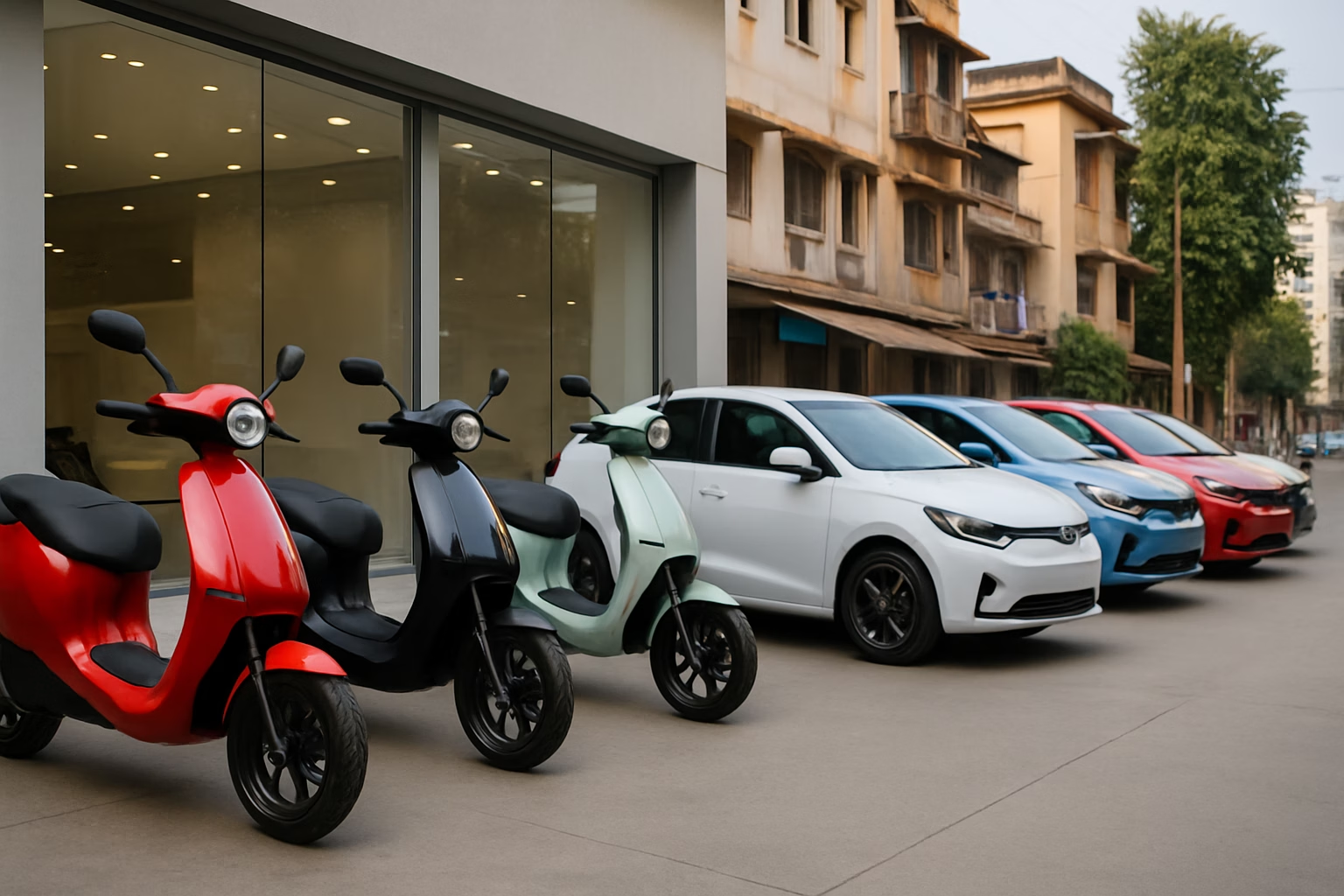
India’s electric vehicle (EV) market is set to witness a transformative year in 2026 with a plethora of new models poised for launch. The upcoming models range from compact city cars to luxurious SUVs, catering to a broad spectrum of buyers. This guide highlights the most anticipated electric cars, their features, and what makes them worth waiting for. Whether you’re an urban commuter, a family seeking a spacious SUV, or a tech-savvy enthusiast, there’s something for everyone.
Quick Comparison Table
| Model | Expected Price (₹) | Battery Options (kWh) | Range (km) | Key Features |
|---|---|---|---|---|
| Hyundai Creta EV | 17.99 – 23.50 Lakh | 45 & 51.4 | 390-473 | V2L, ADAS Level 2 |
| Maruti Suzuki e Vitara | 15.00 – 22.00 Lakh | 49 & 61 | 400-500 | ALLGRIP-e AWD, extensive service network |
| Mahindra XUV.e8 | 25.00 – 35.00 Lakh | 60 & 80 | 450-550 | Triple screen dashboard, AWD options |
| Tata Harrier EV | 22.00 – 30.00 Lakh | ~70 | 450-500 | Gen 2 architecture, OTA updates |
| Toyota Urban Cruiser Ebella | 16.00 – 23.00 Lakh | 49 & 61 | 400-500 | 27PL platform, 7 airbags |
| Tata Curvv EV Long Range | 20.00 – 25.00 Lakh | ~55 | 585 | Coupe-SUV design, ADAS Level 2 |
| Mahindra XUV 3XO EV | 12.00 – 18.00 Lakh | ~40 | 300-400 | Compact design, city-friendly |
| Skoda Enyaq | 35.00 – 45.00 Lakh | 77 | 510 | Fast charging, premium build |
Hyundai Creta EV
Specs
- Expected Price: ₹17.99 – ₹23.50 Lakh
- Battery Options: 45 kWh & 51.4 kWh
- Range: 390-473 km (ARAI certified)
- Charging: 10-80% in 58 minutes (DC fast charging)
Pros
- Offers Vehicle-to-Load (V2L) technology, allowing users to power external devices.
- Equipped with ADAS Level 2, enhancing driver assistance for safer journeys.
Cons
- Higher variants may push the budget for some buyers.
Who It’s For
Ideal for tech-savvy families looking for a balance of technology and practicality in a mid-sized SUV.
Maruti Suzuki e Vitara
Specs
- Expected Price: ₹15.00 – ₹22.00 Lakh
- Battery Options: 49 kWh & 61 kWh
- Range: 400-500 km
Pros
- ALLGRIP-e all-wheel drive offers enhanced stability and control.
- Backed by Maruti’s extensive service network, reassuring for long-term ownership.
Cons
- Interior design may lag behind competitors in terms of modernity.
Who It’s For
Great for those who value reliability and service support, along with capability in varied conditions.
Mahindra XUV.e8
Specs
- Expected Price: ₹25.00 – ₹35.00 Lakh
- Battery Options: 60 kWh & 80 kWh
- Range: 450-550 km
Pros
- Offers both single and dual motor AWD configurations for varied performance needs.
- Comes with a futuristic triple-screen dashboard layout.
Cons
- Larger footprint may not be ideal for tight urban settings.
Who It’s For
Perfect for families or individuals looking for a spacious, high-tech SUV with off-road capabilities.
Tata Harrier EV
Specs
- Expected Price: ₹22.00 – ₹30.00 Lakh
- Battery: Approximately 70 kWh
- Range: 450-500 km (expected)
Pros
- Built on the advanced Acti.ev platform with Gen 2 architecture.
- Features connected car technology with OTA updates for continuous improvement.
Cons
- Limited real-world range data available as of now.
Who It’s For
Suits buyers interested in a robust and tech-forward SUV with a significant focus on connectivity and updates.
Toyota Urban Cruiser Ebella
Specs
- Expected Price: ₹16.00 – ₹23.00 Lakh
- Battery Options: 49 kWh & 61 kWh
- Range: 400-500 km
Pros
- Built on Toyota’s reliable 27PL platform, ensuring durability.
- Comes with comprehensive safety features, including 7 airbags.
Cons
- Conservative design might not appeal to those seeking a standout look.
Who It’s For
Ideal for those prioritizing safety and reliability in a compact SUV format.
Tata Curvv EV Long Range
Specs
- Expected Price: ₹20.00 – ₹25.00 Lakh
- Battery: Approximately 55 kWh
- Range: 585 km (expected)
Pros
- Unique coupe-SUV design stands out in the segment.
- Features ADAS Level 2 for enhanced safety.
Cons
- Sloping roofline might limit rear headroom for taller passengers.
Who It’s For
Appeals to style-conscious buyers who want a blend of aesthetics and advanced safety in their vehicle.
Mahindra XUV 3XO EV
Specs
- Expected Price: ₹12.00 – ₹18.00 Lakh
- Range: 300-400 km (expected)
Pros
- Compact and city-friendly, perfect for urban commuting.
- Offers a tech-loaded experience at an affordable price.
Cons
- Range might be limiting for long-distance travel.
Who It’s For
Designed for urban dwellers looking for an affordable yet feature-rich electric car.
Skoda Enyaq
Specs
- Expected Price: ₹35.00 – ₹45.00 Lakh
- Battery: 77 kWh
- Range: 510 km (WLTP)
Pros
- Offers rapid charging capabilities, reducing downtime.
- High-quality materials and build, reflecting Skoda’s premium positioning.
Cons
- Premium pricing puts it out of reach for budget-conscious buyers.
Who It’s For
Suited for buyers seeking a luxury EV experience with fast charging and long-range capabilities.
Buying Guide
Budget
Determine your budget to narrow down your choices. With prices ranging from ₹12 lakh to ₹45 lakh, there’s an EV for every financial plan.
Range Requirements
Consider your daily commute and travel habits. If long drives are frequent, prioritize models with higher ranges.
Charging Infrastructure
Evaluate your access to charging facilities. The PM E-DRIVE scheme is expanding charging infrastructure, but personal access remains crucial.
Brand Preference
Choose brands with strong service networks and reliability, especially if you plan to keep the vehicle for several years.
Features
Consider the features important to you, such as safety, infotainment, and driver assistance systems. Some models offer advanced ADAS, which can enhance safety and convenience.
FAQ
1. What is the PM E-DRIVE scheme? The PM E-DRIVE scheme is a government initiative launched in 2024 to support EV adoption by installing charging stations and providing purchase subsidies, particularly for fleet vehicles and public transport.
2. How do subsidies under the PM E-DRIVE scheme work? Subsidies are available for electric two-wheelers, three-wheelers, and buses, but not directly for personal electric cars. The focus is on fleet electrification.
3. Are real-world ranges consistent with ARAI figures? Real-world ranges can vary and are often lower than ARAI figures due to factors like driving conditions and climate. Always check for real-world tests before making a decision.
4. Do all EVs require special chargers at home? While all EVs can charge from a standard home outlet, a dedicated EV charger can significantly reduce charging times and is recommended for convenience.
5. How does the availability of fast chargers impact long road trips? Fast chargers can reduce charging times significantly, making long road trips more feasible. Ensure your route has adequate fast charging infrastructure if planning long drives.
6. What are the maintenance costs associated with EVs? Generally, EVs have lower maintenance costs compared to ICE vehicles due to fewer moving parts. However, battery health is crucial and might incur costs if issues arise.
7. Is it worth waiting for newer models or buying available options? If newer models offer features that align closely with your needs or preferences, it might be worth the wait. However, current models might have established service support and real-world data, offering peace of mind.