
Discovering the Uttarakhand EV Subsidy
Hello everyone! It’s Vignesh here. I’ve been exploring the world of electric vehicles (EVs) and recently, I took a closer look at the EV subsidy offered by the state of Uttarakhand in 2026. The Uttarakhand EV Policy 2021 is still very much active and has been updated to provide some attractive incentives for those considering an EV purchase. As I looked into the details, I realized how beneficial these subsidies could be for potential buyers, and I wanted to share my findings with you.
Why Uttarakhand’s Terrain Makes EVs Especially Smart
If you’ve ever driven through Uttarakhand, you’ll know that the terrain is both beautiful and challenging. The winding roads and steep inclines are a typical part of the journey, especially if you’re heading towards places like Mussoorie or Nainital. This is where EVs come into their own. One of the key advantages of EVs in hilly regions is regenerative braking. When I tested an EV on the Mussoorie road, I was impressed by how the vehicle used the downhill stretches to recover energy. Not only does this enhance efficiency, but it also extends the range of the vehicle, making EVs a smart choice for such terrains. For instance, during a drive from Dehradun to Mussoorie, the regenerative braking on a Tata Nexon EV added about 5-7 km to the range, which can be a crucial difference in hilly terrains.
The Uttarakhand EV Policy 2021: What It Covers
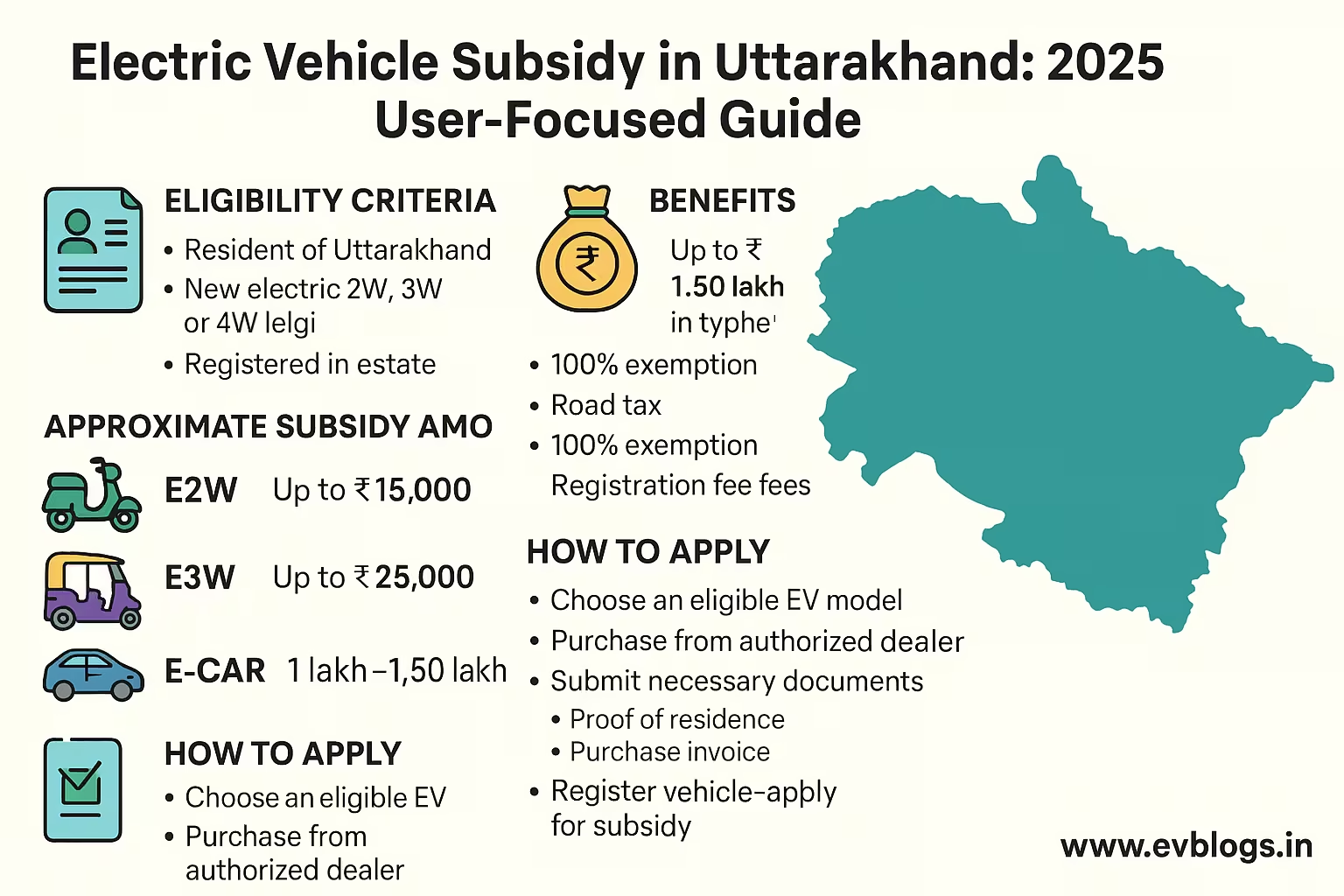
The Uttarakhand EV Policy 2021 aims to boost electric vehicle adoption in the state. Here’s a snapshot of what the policy covers:
- Subsidies:
- 2-wheelers: ₹10,000
- 3-wheelers: ₹15,000
- 4-wheelers: up to ₹1.5 lakh
- Tax Benefits: 100% exemption from road tax and registration fees.
- FAME II Benefits: These can be stacked on top of the state subsidy for maximum savings.
- Adoption Target: 25% EV adoption by 2030.
These incentives make a compelling case for transitioning to electric vehicles. The total savings can significantly reduce the initial cost, making EVs more accessible to a broader audience.
Subsidy Breakdown
Here’s a breakdown of the savings you can expect:
| Vehicle Type | State Subsidy | FAME II Top-up | Total Saving | Registration & Road Tax |
|---|---|---|---|---|
| 2-Wheelers | ₹10,000 | ₹5,000 | ₹15,000 | 100% Exempt |
| 3-Wheelers | ₹15,000 | ₹10,000 | ₹25,000 | 100% Exempt |
| 4-Wheelers | ₹1.5 lakh | ₹60,000 | ₹2.1 lakh | 100% Exempt |
These figures don’t even account for the savings on fuel and maintenance, which are substantial over time. For instance, switching from a petrol car to an EV can save approximately ₹1.5 to ₹2 per km on fuel costs.
How to Claim Your Subsidy
Claiming your subsidy in Uttarakhand is a straightforward process. Speaking from the buyer’s perspective, here’s how you can do it:
- Purchase: Buy your EV from an authorized dealer.
- Filing: The dealer will file for the subsidy on the state portal on your behalf.
- Wait for Approval: The state processes the application.
- Receive Subsidy: The subsidy amount is credited to your bank account within 30-60 days.
I found this process to be efficient, especially with the fast-track EV registration counter at the Dehradun RTO, which speeds up the registration process. One of my readers, Ramesh from Dehradun, shared his experience of receiving the subsidy amount in just 45 days, thanks to the streamlined procedure.
Charging Infrastructure Update for 2026
One of the common concerns about EVs is the availability of charging infrastructure. By 2026, Uttarakhand has significantly ramped up its charging network. Fast chargers of 30kW and above are being installed along key corridors including Rishikesh, Dehradun, and Haridwar. This expansion makes it easier for EV owners to plan longer trips without worrying about running out of charge. Personally, I find the growing network reassuring, knowing that there’s always a charging station within reach. During a recent trip to Haridwar, I noted the presence of a fast-charging station every 50 km, which is a great relief for long-distance travelers.
Real Buyer Scenario: Neha’s EV Journey in Uttarakhand
Let me share a real-life scenario of Neha, a resident of Nainital, who recently switched to an EV. Neha was initially hesitant about the switch due to concerns about range and the hilly terrain. However, after doing some research and visiting the local EV dealership, she decided to purchase a Tata Nexon EV. The deciding factor for Neha was the substantial savings from the Uttarakhand EV subsidy combined with the FAME II benefits. Her total savings amounted to ₹2.1 lakh, significantly lowering her upfront cost.
Neha’s experience with her EV in Nainital has been overwhelmingly positive. The regenerative braking feature has proven to be quite beneficial, especially on the steep roads of Nainital. Moreover, with the state government’s push to expand the charging infrastructure, Neha finds it convenient to charge her vehicle both at home and at public charging stations scattered around the city. She noticed a major reduction in her monthly fuel expenses, which were slashed by more than 70%. For Neha, switching to an EV was not only an economical decision but also a step towards contributing to a cleaner environment.
My Take: Is It Worth Buying an EV in Uttarakhand?
Given the generous subsidies, tax exemptions, and expanding charging infrastructure, I believe buying an EV in Uttarakhand in 2026 is a wise decision. Not only do you benefit financially, but you also contribute to a cleaner environment. I’ve observed that popular models like the Tata Nexon EV and Ola S1 Pro are already making waves here, thanks to their efficiency and the incentives available.
If you’re considering an EV purchase, I highly recommend checking out policies in nearby states as well. For instance, West Bengal also offers competitive subsidies, and you can find more details on West Bengal EV subsidy .
FAQ
Q: How long does it take to receive the subsidy amount?
A: The subsidy amount is typically credited to your bank account within 30-60 days after the dealer files it on the state portal. However, some users have reported receiving it even sooner, around 45 days, if all paperwork is in order.
Q: Can I combine the state subsidy with FAME II benefits?
A: Yes, you can stack FAME II benefits on top of the state subsidy for maximum savings. This combination provides a significant reduction in the purchase price, making EVs more affordable.
Q: Are there any popular EV models in Uttarakhand?
A: Yes, the Tata Nexon EV and Ola S1 Pro
are popular choices among EV buyers in the state. These models offer great range and performance which suit the hilly terrains of Uttarakhand.
Q: What are the key benefits of owning an EV in Uttarakhand?
A: Besides the financial incentives, EVs offer excellent performance in hilly terrain due to regenerative braking, and there’s a growing charging infrastructure to support long-distance travel. Additionally, EV owners enjoy the convenience of lower maintenance and running costs.
Q: What is the target for EV adoption in Uttarakhand by 2030?
A: The state aims to achieve 25% EV adoption by 2030. This ambitious target reflects the state’s commitment to sustainable transportation and reducing carbon emissions.
Real Running Costs: What I Pay Every Month
One thing I found genuinely useful when evaluating an EV in Uttarakhand is doing the math on monthly running costs. Electricity here costs roughly ₹7–8 per unit. A Tata Nexon EV with a 40.5 kWh battery needs about 15–17 kWh per 100 km in hilly terrain (a bit more than flat roads because of climbs, though regen on descents compensates). That works out to about ₹110–₹140 per 100 km. A petrol car doing 15 km per litre costs around ₹680–₹720 per 100 km at current fuel prices. So on a 1,500 km monthly driving pattern — common for someone commuting between Dehradun and hill towns — you’re saving approximately ₹8,000–₹9,000 every month on fuel alone.
Maintenance is the other big win. No engine oil changes, no coolant flushes, no clutch repairs. I spoke to an Ola S1 Pro owner in Rishikesh who said his annual maintenance bill dropped from around ₹12,000 (for his old petrol scooter) to under ₹2,500 for just brake inspection and tyre rotation. That’s a significant saving that compounds over years, especially if you’re using the vehicle commercially.
Subsidies vary significantly across India’s states and union territories. To compare this state’s policy side-by-side with every other state, visit the EV Subsidy in India - Complete State-wise Breakdown . Not sure if you qualify? Use the EV Subsidy Eligibility Tool to check your exact savings based on your state, vehicle type, and budget.
Compare EV Subsidies in Nearby States
Looking at other states? Compare incentives to find where you get the best deal: