When I first heard about the West Bengal EV subsidy and the push for cleaner air under the state’s policies, I was immediately intrigued. Living in India, one is always on the lookout for ways to save money, especially when it comes to transportation. So, when West Bengal started offering substantial subsidies to encourage electric vehicle (EV) adoption, it caught my attention. In 2026, this state is proving to be a great place to go electric, thanks to some very appealing incentives.
West Bengal EV Policy 2021 and Clean Air Act
Back in 2021, the West Bengal government launched the West Bengal EV Policy 2021, with a vision to transform the state’s transportation landscape. This was further bolstered by the West Bengal Clean Air Act, aimed at reducing air pollution levels. The state set an ambitious target of having 10 lakh EVs on the roads by 2030. This goal is supported by a combination of state subsidies, tax waivers, and robust infrastructure development.
Understanding the Subsidy Structure
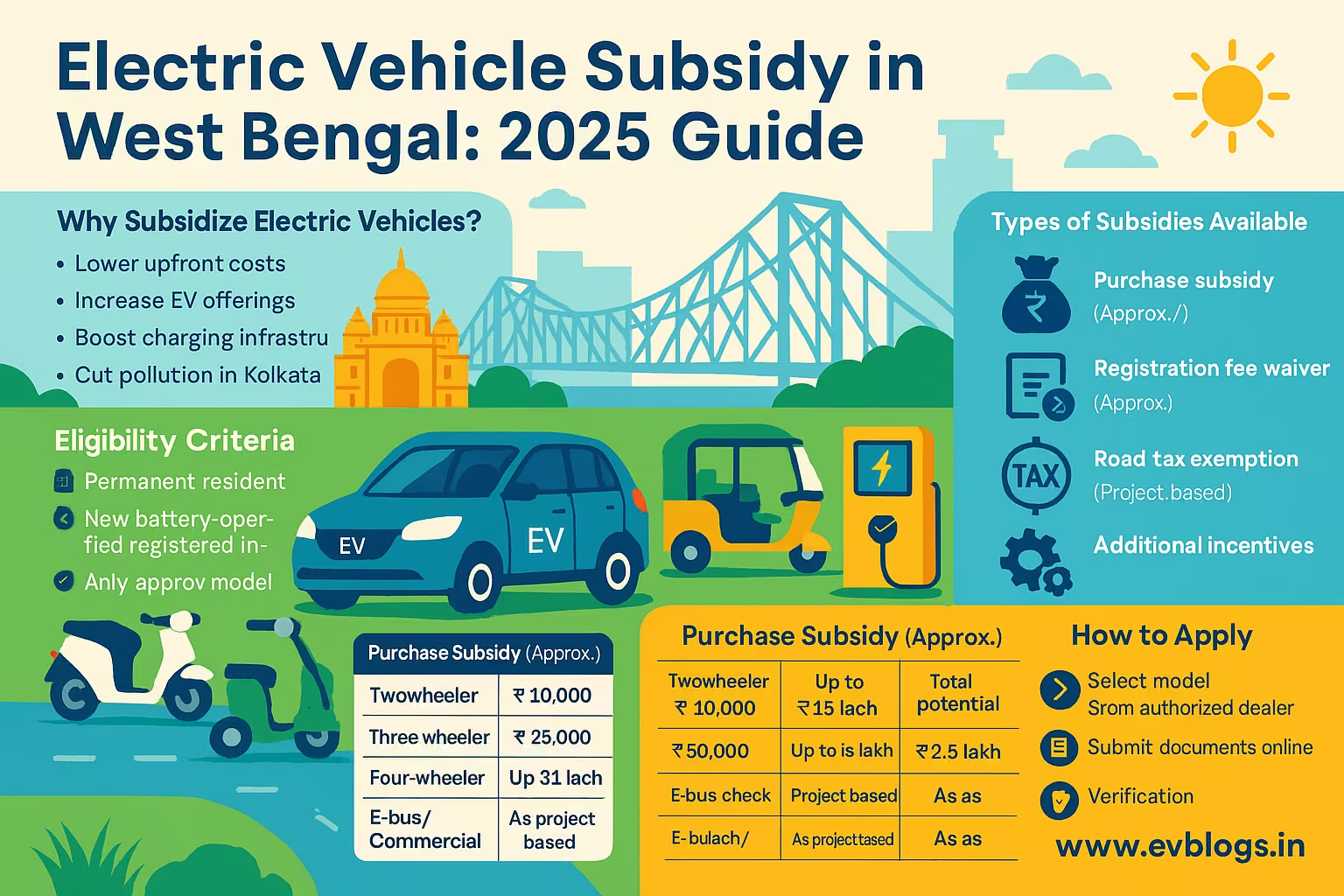
Let me break down the subsidy structure for you, as this is where things get exciting. The state offers subsidies for various types of EVs, and these are quite generous. Plus, the central government’s FAME II scheme applies on top of these subsidies, making it even more attractive.
Here’s a quick comparison of the key numbers:
| Vehicle Type | State Subsidy | FAME II Top-up | Registration & Road Tax | Approved Brands |
|---|---|---|---|---|
| 2-wheelers | ₹10,000 | Yes | Full Waiver | Ola, Ather, TVS, Hero Electric, Bajaj Chetak |
| 4-wheelers | ₹20,000 | Yes | Full Waiver | Tata Nexon EV, MG ZS EV |
| Battery Rickshaws | ₹25,000 | Yes | Full Waiver | Various local e-rickshaw manufacturers |
The zero registration and road tax are significant, as they substantially lower the overall cost of ownership. For instance, if you’re considering a Tata Nexon EV, the combined savings from the state subsidy and FAME II scheme can bring down the initial cost by as much as ₹1.5 lakh, making it a more feasible option for many families.
How to Apply for the Subsidy
Applying for these subsidies might seem daunting, but I found the process to be straightforward when I checked the West Bengal Transport Department portal. Here’s how you can apply:
- Visit the Dealership: Start by visiting an approved dealership. They play a crucial role in helping you with the application.
- Fill Form EV-1: This is the primary form you’ll need to fill out to apply for the subsidy.
- Submit Required Documents: You’ll need to provide your Aadhaar card, address proof, and bank details.
- Receive Subsidy: Once submitted, you can expect the subsidy to be credited to your bank account within 30 days.
I found this process quite user-friendly, and the 30-day timeline is reasonable for such financial benefits. A friend of mine recently went through this for his new TVS iQube , and he shared that the dealership was very supportive in guiding him through each step, ensuring he didn’t miss out on any essential documents.
Charging Infrastructure in Key Cities
One of the main concerns with EVs is charging infrastructure. However, West Bengal seems to have addressed this well, especially in major cities:
- Kolkata: The city’s dense stop-start traffic is a perfect match for EVs due to regenerative braking, which improves efficiency. There are over 150 operational charging stations spread across the city, located strategically at shopping malls, office complexes, and residential areas.
- Howrah: With several charging stations available, it’s convenient for daily commuters. Around 30 charging stations are spread across key routes, ensuring that EV owners have easy access without detours.
- Asansol and Siliguri: These cities are also equipped with adequate charging facilities, ensuring that EV users have convenient access to power up their vehicles. In Asansol, for example, the local government has collaborated with private players to set up at least 20 fast-charging stations.
This network of charging stations reassures prospective buyers about range anxiety and charging convenience. I remember talking to an EV owner in Siliguri who mentioned how the availability of charging stations has changed his driving habits, allowing him to plan longer trips without worrying about running out of charge.
The E-Rickshaw Story: Impact of ₹25,000 Subsidy
E-rickshaws are incredibly popular in suburban areas of West Bengal, and the ₹25,000 subsidy is a serious financial boost for many drivers. I spoke to a driver in Howrah who shared how this subsidy allowed him to upgrade to a new e-rickshaw with better features, which has significantly increased his daily earnings.
With the subsidy making up a substantial part of the purchase price, e-rickshaw drivers find it easier to invest in newer models, which are often more efficient and reliable. This initiative not only boosts their income but also contributes to the state’s overall push for cleaner air. For many, the savings from reduced fuel costs are reinvested into their business, allowing them to expand operations or improve the quality of service offered.
Real Buyer Scenario: A Family’s Decision in Kolkata
I recently met a family in Kolkata who decided to switch to an electric vehicle, and their story is a perfect example of how the subsidy can make a difference. Arjun, the father, was initially hesitant about the switch from his petrol car to an EV. However, after doing the math, he realized that the combined subsidies from the state and FAME II would reduce the Tata Nexon EV’s effective price by nearly ₹2 lakh.
The family was also concerned about charging, but with multiple stations near their home and workplace, this worry quickly vanished. They now enjoy the quiet, smooth drive of their new EV and are thrilled about the savings on fuel and maintenance. Their transition has been so positive that Arjun is even considering an electric scooter for his daughter.
Should You Buy an EV in West Bengal Right Now?
In my experience, if you’re considering an EV purchase, West Bengal in 2026 is a great choice. The combination of state and central subsidies offers significant cost savings. Plus, with the existing infrastructure for charging and the supportive policies, it’s a smart financial decision.
If you’re curious about how West Bengal’s subsidies compare with those of other states, you might want to check out a nearby state’s subsidy policy for more insights.
FAQ
Q: How do the West Bengal EV subsidies compare with other states?
A: West Bengal’s subsidies are competitive, especially with the full waiver on road tax and registration. The additional FAME II top-up makes it even more appealing compared to some states. For example, while states like Maharashtra offer larger subsidies for four-wheelers, West Bengal’s overall package, including tax benefits, is quite attractive.
Q: Can I apply for the subsidy online?
A: The initial step requires visiting a dealership, but some documentation can be submitted online through the West Bengal Transport Department portal. This hybrid approach ensures both personal assistance and digital convenience.
Q: Are there enough charging stations in rural areas?
A: While the focus has been on urban centers like Kolkata and Howrah, charging infrastructure is gradually expanding to suburban and rural areas. Initiatives are underway to cover more remote locations to ensure wider accessibility.
Q: Which e-rickshaw brands are eligible for the subsidy?
A: The subsidy applies to various local e-rickshaw manufacturers, which are widely available across the state. Brands like Mahindra Treo and Kinetic Safar are popular choices, both benefiting from the subsidy and offering robust service networks.
Q: How long does it take to receive the subsidy?
A: Once your application is complete and approved, you should receive the subsidy within 30 days. However, processing times can vary slightly based on the volume of applications, so it’s wise to follow up if it takes longer.
Subsidies vary significantly across India’s states and union territories. To compare this state’s policy side-by-side with every other state, visit the EV Subsidy in India - Complete State-wise Breakdown . Not sure if you qualify? Use the EV Subsidy Eligibility Tool to check your exact savings based on your state, vehicle type and budget.
Compare EV Subsidies in Nearby States
Looking at other states? Compare incentives to find where you get the best deal: