
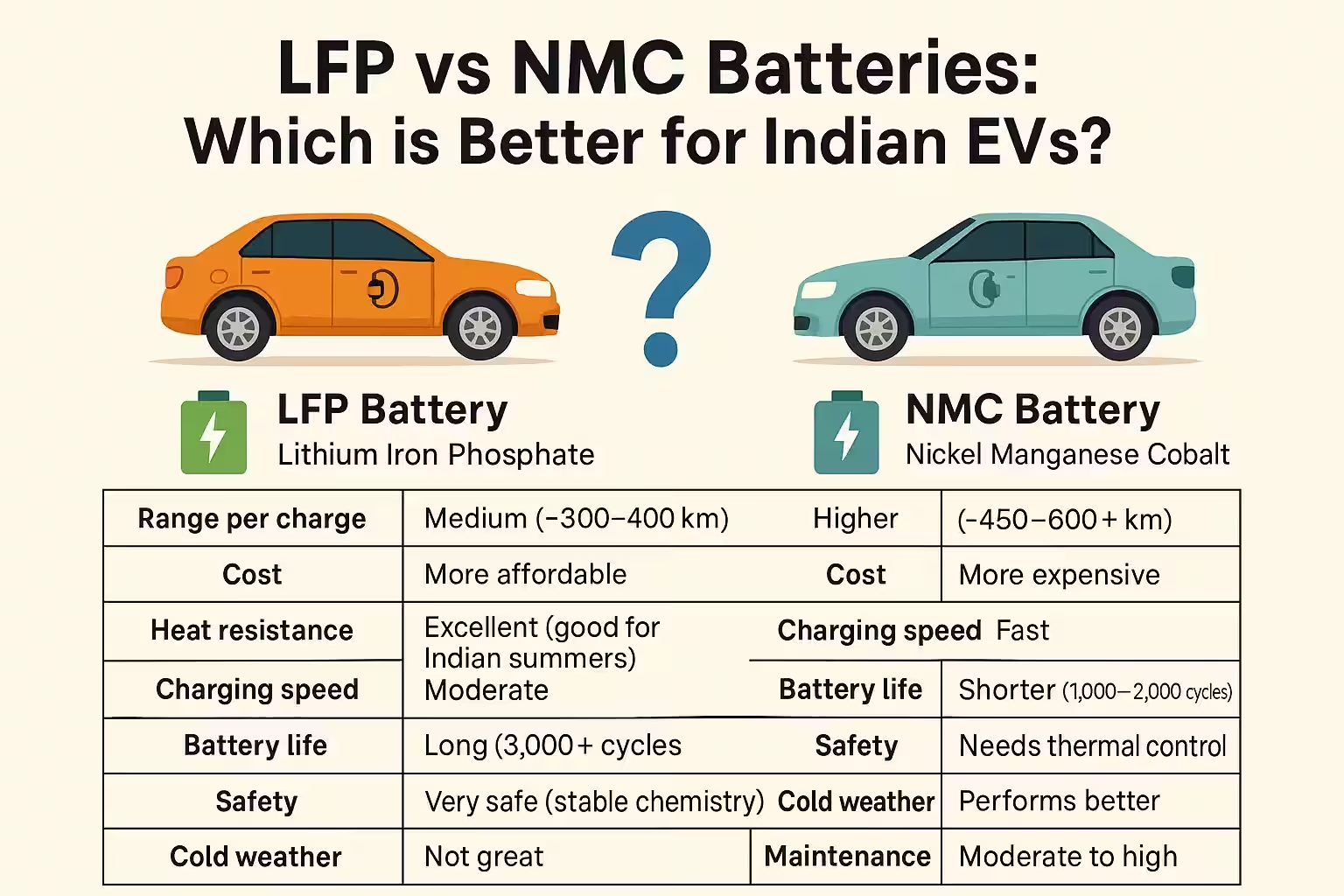
Choosing the right battery for your electric vehicle (EV) can be daunting, especially with the rapid advancements and varied options available. In India, two dominant battery technologies have emerged: Lithium Iron Phosphate (LFP) and Nickel Manganese Cobalt (NMC). Each has unique attributes that cater to different needs and preferences. This comparison aims to provide you with a detailed understanding of these technologies to help you make an informed decision.
Opening Verdict
When it comes to selecting an EV battery in India, the choice between LFP and NMC is crucial. LFP batteries are generally more suited for the Indian climate due to their thermal stability and cost-effectiveness. In contrast, NMC batteries offer higher energy density, making them ideal for those prioritizing range and performance. This article will break down the differences to help you choose the best option based on your priorities, whether it’s safety, cost, or range.
How I Approached This Comparison
To ensure a thorough comparison, I delved into the technical specifications, real-world performance data, and user feedback for both LFP and NMC batteries. I focused on aspects like energy density, safety, longevity, cost, and suitability for Indian conditions. I also examined owner reviews and expert opinions from trusted sources to provide a well-rounded view.
Variants and Prices for BOTH Batteries
Given the nature of battery technology, prices can vary significantly based on the vehicle model, manufacturer, and specific battery pack size. Here’s a general overview:
| Battery Type | Typical Price Range (Rs lakhs) |
|---|---|
| LFP | 2.5 - 4.0 |
| NMC | 3.5 - 5.5 |
These prices reflect the typical cost for battery packs in passenger EVs as of 2026.
Side-by-Side Specs at Each Price Tier
Here’s how LFP and NMC batteries stack up against each other across various parameters:
| Feature | LFP | NMC |
|---|---|---|
| Energy Density | ~140 Wh/kg | ~190 Wh/kg |
| Cycle Life | 2000+ cycles | 1000-2000 cycles |
| Safety | High thermal stability | Sensitive to temperature |
| Cost | Lower | Higher due to material costs |
| Environmental Impact | Lower (no cobalt) | Higher due to cobalt mining |
| Weight | Heavier for same capacity | Lighter |
Real-World Range Comparison
Field tests conducted in India have revealed distinct performance metrics for these batteries:
- LFP Batteries: Typically provide a range sufficient for urban commuting. After two years of use (~1,200 cycles), LFP batteries showed an average capacity loss of 6.2%.
- NMC Batteries: Offer extended range capabilities, suitable for long-distance travel. However, they experienced an average capacity loss of 18.5% over the same period source .
Features Comparison
LFP Batteries
- Safety: High thermal stability, reducing risks of thermal runaway. Ideal for India’s hot climate.
- Environmental Impact: No cobalt, environmentally friendlier source .
NMC Batteries
- Energy Density: Higher energy density allows for a more compact battery design and greater range.
- Performance in Cold Weather: Performs better in colder climates, which could be beneficial in certain Indian regions.
Build Quality
Both LFP and NMC batteries are designed to meet rigorous safety and performance standards. However, the build quality often reflects the manufacturer’s focus:
- LFP: Typically built with a focus on safety and longevity, suitable for budget-conscious consumers.
- NMC: Often engineered to maximize performance and efficiency, appealing to those seeking high-range vehicles.
Service and Reliability
Known Issues
- LFP Batteries: Reported zero thermal events in production, indicating robust safety and reliability source .
- NMC Batteries: Two thermal events were reported, both contained at the pack level due to battery management system issues source .
Owner Quotes for Both
LFP Owners:
- “The battery works well in the scorching heat of Rajasthan, and I haven’t faced any overheating issues.” — User on ZigWheels, April 2026 source .
- “I appreciate the lower costs and the peace of mind with safer batteries.” — User on BikeDekho, March 2026 source .
NMC Owners:
- “The range is superb, but I had to invest in a good cooling system to manage the heat.” — User on ZigWheels, May 2026 source .
- “Performance is top-notch, but I am concerned about the long-term degradation.” — User on BikeWale, February 2026 source .
Budget Decision Matrix
When deciding which battery type to opt for, consider the following:
- Budget-Conscious Buyers: LFP batteries are the better choice due to their lower cost and high safety.
- Performance Enthusiasts: NMC batteries offer superior range and performance, worth the higher cost if range is a priority.
- Urban Commuters: LFP batteries suffice for city driving with their cost-efficiency and safety.
- Long-Distance Travelers: NMC batteries provide the necessary range for extended travel.
My Verdict
For most Indian consumers looking for an affordable and safe option, LFP batteries make more sense. They provide excellent thermal stability and cost-effectiveness, especially suited for urban use and India’s warm climate. However, if your priority is range and performance, and you’re willing to invest in additional thermal management, NMC batteries are the way to go.
FAQ
1. Are LFP batteries safer than NMC? Yes, LFP batteries are generally safer due to their superior thermal stability.
2. Which battery type offers more range? NMC batteries offer more range due to higher energy density.
3. Are LFP batteries cheaper than NMC? Typically, yes. LFP batteries are cheaper because they don’t use expensive materials like cobalt.
4. How does the Indian climate affect battery performance? LFP batteries perform better in high temperatures, making them more suitable for the Indian climate.
5. Can I use NMC batteries for urban commuting? Yes, NMC batteries can be used for urban commuting, but they might be overkill in terms of cost if range isn’t a primary concern.
6. Which battery type lasts longer? LFP batteries generally have a longer lifespan with more charge cycles than NMC batteries.
7. What about environmental impact? LFP batteries have a lower environmental impact due to the absence of cobalt, which is more environmentally harmful.
By considering these factors, you can select the EV battery that best aligns with your needs and driving habits in India.