
Hedhvick Hirav
Hedhvick Hirav is a dedicated EV researcher and editor with over 4 years of experience in India’s growing electric vehicle ecosystem. Their contributions have been recognized in leading sustainability publications and automotive journals.
Summarize & analyze this article with
Choose an AI assistant and open this article directly:
Tip: if the AI doesn’t fetch the page automatically, paste the article URL manually.

NEW DELHI, Nov 24 — China has announced a significant breakthrough in all-solid-state electric vehicle (EV) batteries, marking a potential turning point for the global automotive and clean energy sectors. This innovation is expected to address key limitations faced by current lithium-ion batteries, such as limited driving range, safety concerns, and lengthy charging times. Indian automakers and policymakers are closely watching these advancements, given India’s ambitious targets for EV adoption and manufacturing.
1. Major Leap in Battery Technology
China’s development of all-solid-state EV batteries represents a move away from traditional liquid electrolytes to solid materials, which can store more energy and improve overall safety. This technology promises higher energy density, translating into longer driving ranges for EVs—a critical factor for mass adoption in India, where range anxiety remains a significant barrier.
“All-solid-state batteries can potentially double the driving range compared to current lithium-ion technologies,” according to industry estimates.
2. Enhanced Safety and Reliability
One of the standout features of all-solid-state batteries is their improved safety profile. The absence of liquid electrolytes reduces the risk of leaks, fires, and explosions, which have been concerns with conventional batteries. For the Indian market, where high temperatures and challenging road conditions are common, such advancements could lead to greater consumer confidence and wider EV acceptance.
3. Faster Charging and Longer Lifespan
These batteries are also expected to charge significantly faster and deliver a longer operational life. With urban Indian consumers frequently seeking rapid charging solutions and fleet operators demanding durability, the new technology could address these needs more effectively than existing options.
“All-solid-state batteries could reduce charging times to as little as 10 minutes,” according to early test reports.
4. Implications for India’s EV Industry
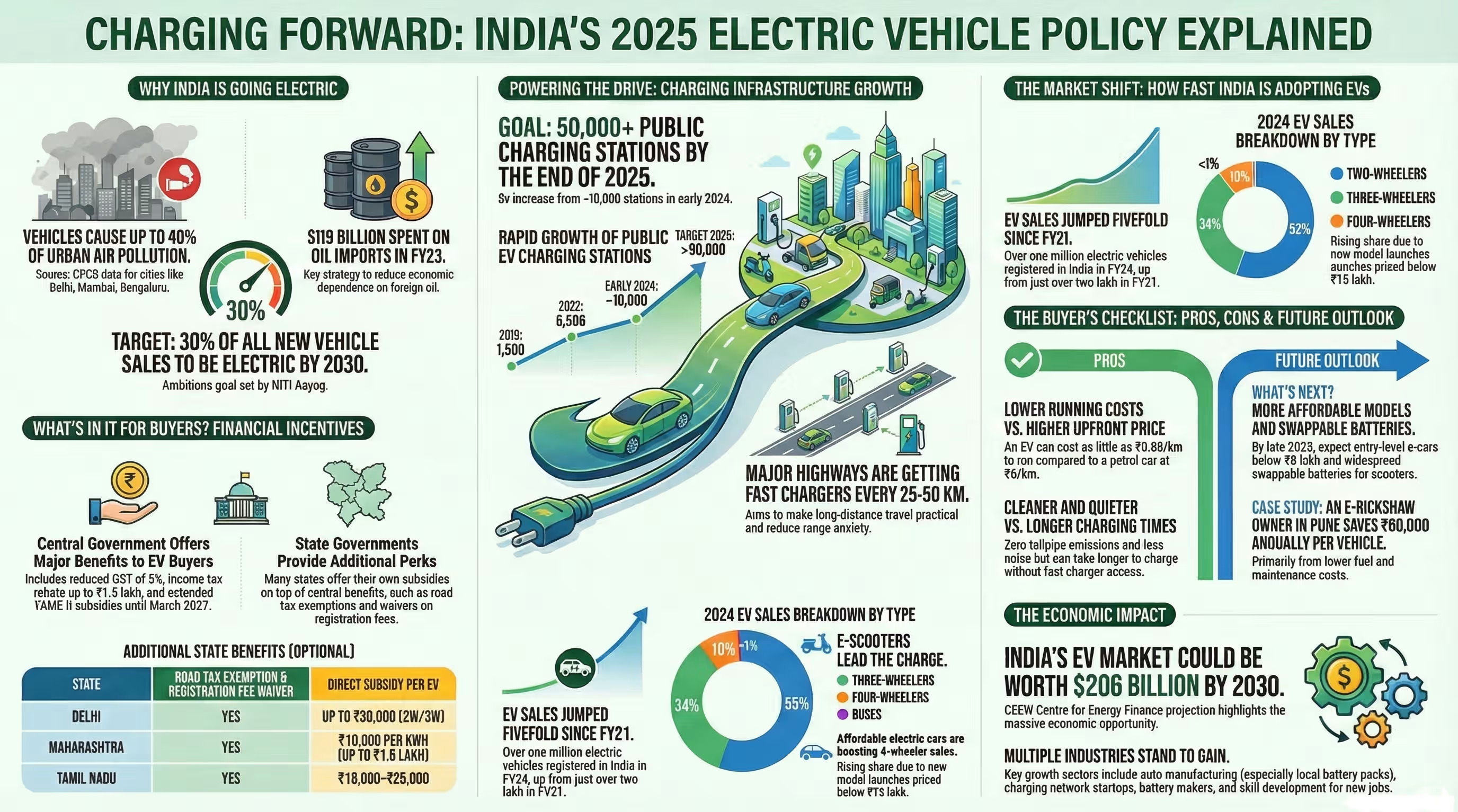
India has set a target of 30% electric vehicle penetration by 2030. The breakthrough in battery technology could provide a much-needed boost to domestic manufacturers by enabling them to offer EVs with competitive range and performance. Several Indian companies, including Tata Motors and Mahindra Electric, are already investing in advanced battery research and may benefit from technology transfer or collaboration with Chinese firms.
5. Impact on Charging Infrastructure
With the advent of faster-charging, long-range EVs, India’s charging infrastructure requirements may evolve. The need for ultra-fast chargers and robust safety standards will become more pronounced. This could accelerate investments in public charging networks, particularly in metropolitan cities like Delhi, Mumbai, and Bengaluru, where EV adoption is on the rise.
6. Cost Considerations and Accessibility
While the technology is promising, the initial cost of all-solid-state batteries is expected to be high. However, as production scales up and technologies mature, prices are likely to fall, making EVs more accessible to the average Indian consumer. The central government’s FAME II scheme and state-level incentives could further drive down costs and stimulate demand.
7. Environmental Benefits and Future Prospects
A shift to all-solid-state batteries could significantly reduce the environmental footprint of EVs by enabling safer recycling and using fewer toxic materials. This aligns with India’s broader goals of reducing pollution and dependence on fossil fuels.
“India’s cities rank among the world’s most polluted, making clean mobility solutions critical for public health and environmental sustainability.”
As China leads the charge with this breakthrough, the ripple effect across global and Indian EV markets is likely to be profound. Accelerated innovation in battery technology could be the key to unlocking a new era of sustainable transport in India, benefiting manufacturers, consumers, and the environment alike.
Certainly! Here’s an additional, detailed numbered point to accompany coverage of all-solid-state EV batteries hitting a milestone in China:
- Enhanced Safety and Thermal Stability:
Traditional lithium-ion batteries use liquid electrolytes, which are flammable and can lead to thermal runaway, posing a risk of fires or explosions in extreme cases. In contrast, all-solid-state batteries employ solid electrolytes, which are non-flammable and far less prone to overheating. The recent Chinese milestone demonstrates that these new batteries not only increase energy density but also significantly improve the safety profile of electric vehicles. Manufacturers report that the solid-state prototypes have passed rigorous safety and puncture tests, even under high-stress conditions, bolstering confidence for widespread adoption in future EV models. This leap in battery safety is expected to ease consumer concerns and accelerate the transition to electric mobility.
Sources
Original Source
google.com - Read original
Quotes
- Publishing Domain: google.com
- Published Date: 2025-11-24T13:30:00+05:30
- Original URL: Read original (news.google.com/rss/articles/CBMinwFBVV95cUxQWlg0WlRFZnVVMHA1ck9aaXFSTGFfZ… …)
Editorial Check
- Originality: 35 / 100 — The summary is almost identical to the article title and does not provide additional unique information or analysis. It simply repeats the key claim from the headline.
- Helpfulness: 30 / 100 — The summary gives a very basic idea of the news (a milestone in all-solid-state EV batteries in China and a promise to double range), but lacks context, details, or explanation, making it minimally helpful for someone seeking to understand the significance of the news.