
Hedhvick Hirav
Hedhvick Hirav is a dedicated EV researcher and editor with over 4 years of experience in India’s growing electric vehicle ecosystem. Their contributions have been recognized in leading sustainability publications and automotive journals.
Summarize & analyze this article with
Choose an AI assistant and open this article directly:
Tip: if the AI doesn’t fetch the page automatically, paste the article URL manually.
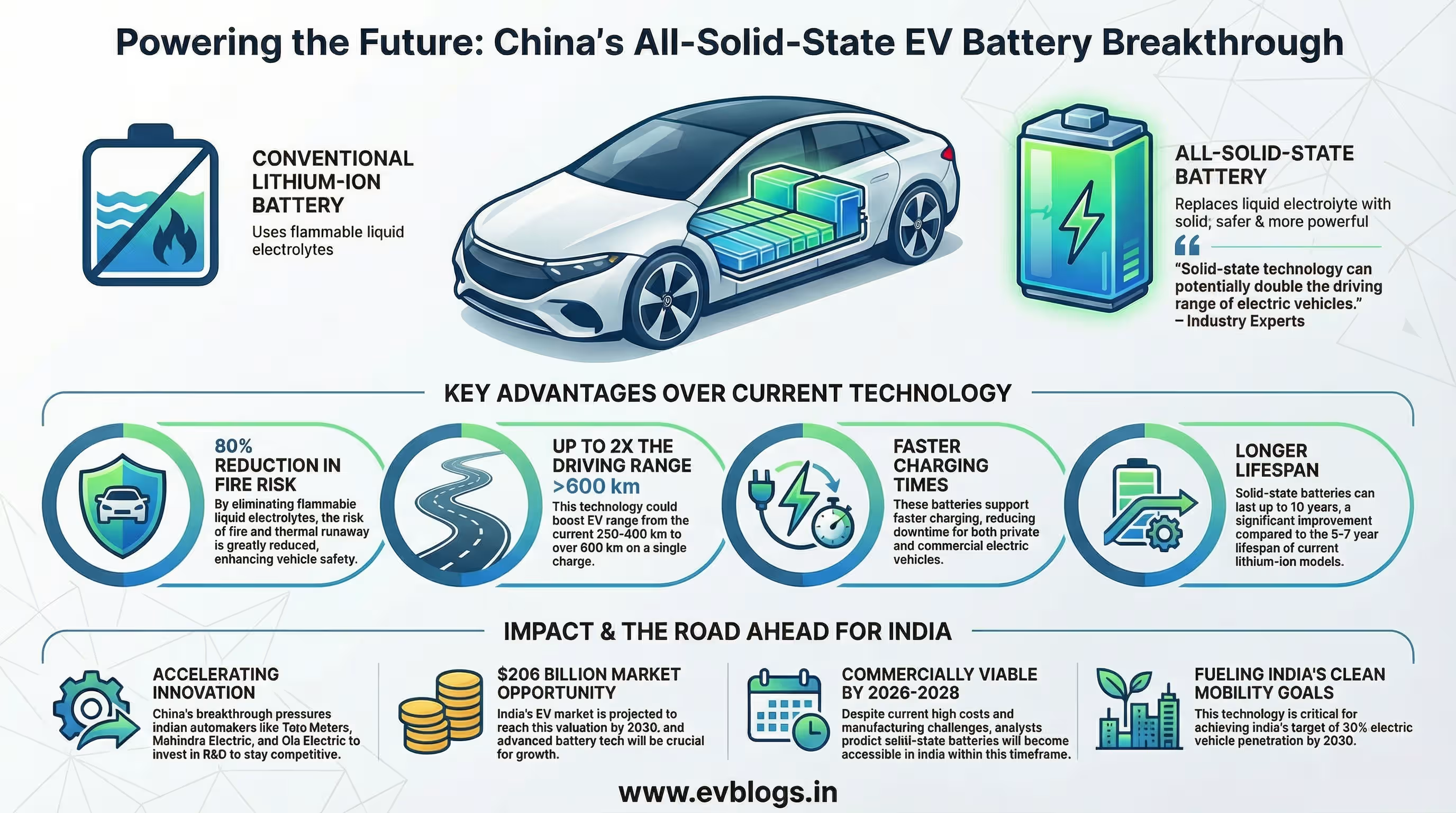
NEW DELHI, Nov 24 — China has taken a significant leap forward in electric vehicle (EV) technology by achieving a breakthrough in all-solid-state battery development. This new advancement is expected to transform the EV landscape globally, with far-reaching implications for India’s rapidly growing electric mobility sector. Here are the key points you need to know about this milestone and its potential impact.
1. All-Solid-State Batteries: A Game Changer for EVs
All-solid-state batteries are widely regarded as the next frontier in battery technology. Unlike conventional lithium-ion batteries that use liquid electrolytes, solid-state batteries use solid electrolytes, making them safer, more energy-dense, and longer-lasting.
“Solid-state technology can potentially double the driving range of electric vehicles,” according to industry experts.
This improvement addresses two of the biggest concerns for Indian EV consumers: range anxiety and battery safety.
2. Doubling the Driving Range
One of the standout benefits of all-solid-state batteries is their ability to significantly increase vehicle range. In the case of the latest Chinese innovation, electric vehicles powered by these batteries are expected to achieve up to twice the range compared to current models.
For perspective, a typical electric car in India currently offers 250-400 km per charge. Solid-state batteries could push this figure beyond 600 km.
This breakthrough is especially relevant for India, where longer range is essential due to the country’s vast geography and limited charging infrastructure.
3. Enhanced Safety and Reliability
Solid-state batteries are inherently safer than traditional lithium-ion batteries. By eliminating flammable liquid electrolytes, the risk of fire and thermal runaway is greatly reduced.
“The adoption of solid-state batteries could reduce battery-related fire incidents by over 80%,” state recent safety studies.
For Indian consumers, safety remains a top concern, especially after several high-profile EV fire incidents in recent years.
4. Faster Charging and Longer Lifespan
Another major advantage is the reduced charging time and extended cycle life. Solid-state batteries support faster charging, which can help reduce downtime for both private and commercial vehicles.
Solid-state batteries can last up to 10 years, compared to 5-7 years for current lithium-ion models.
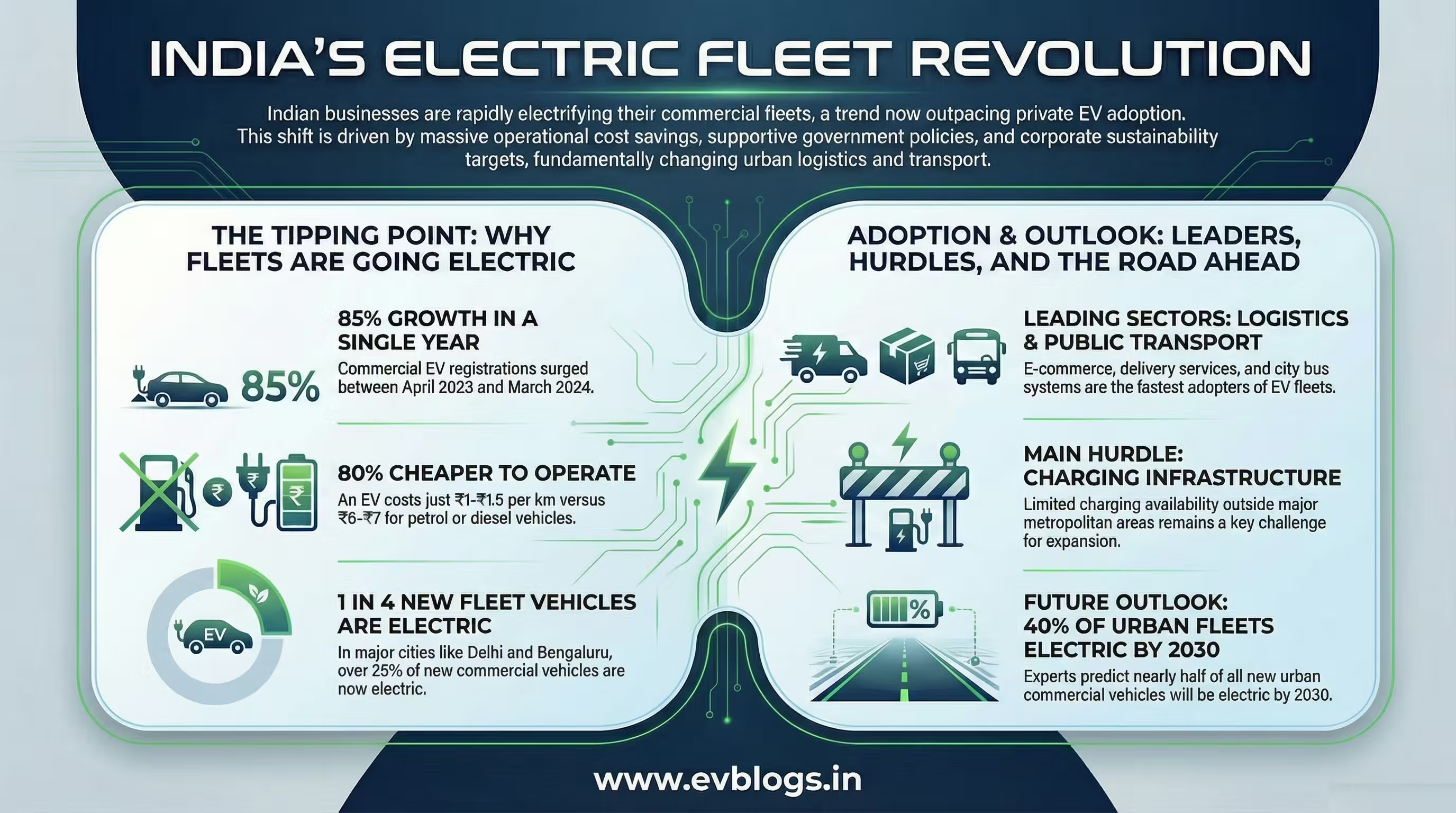
For fleet operators and taxi services in India’s major cities, this means lower maintenance costs and improved operational efficiency.
5. Implications for India’s EV Industry
China’s breakthrough is likely to accelerate the global shift towards solid-state batteries, pushing Indian automakers and battery manufacturers to innovate and adapt quickly.
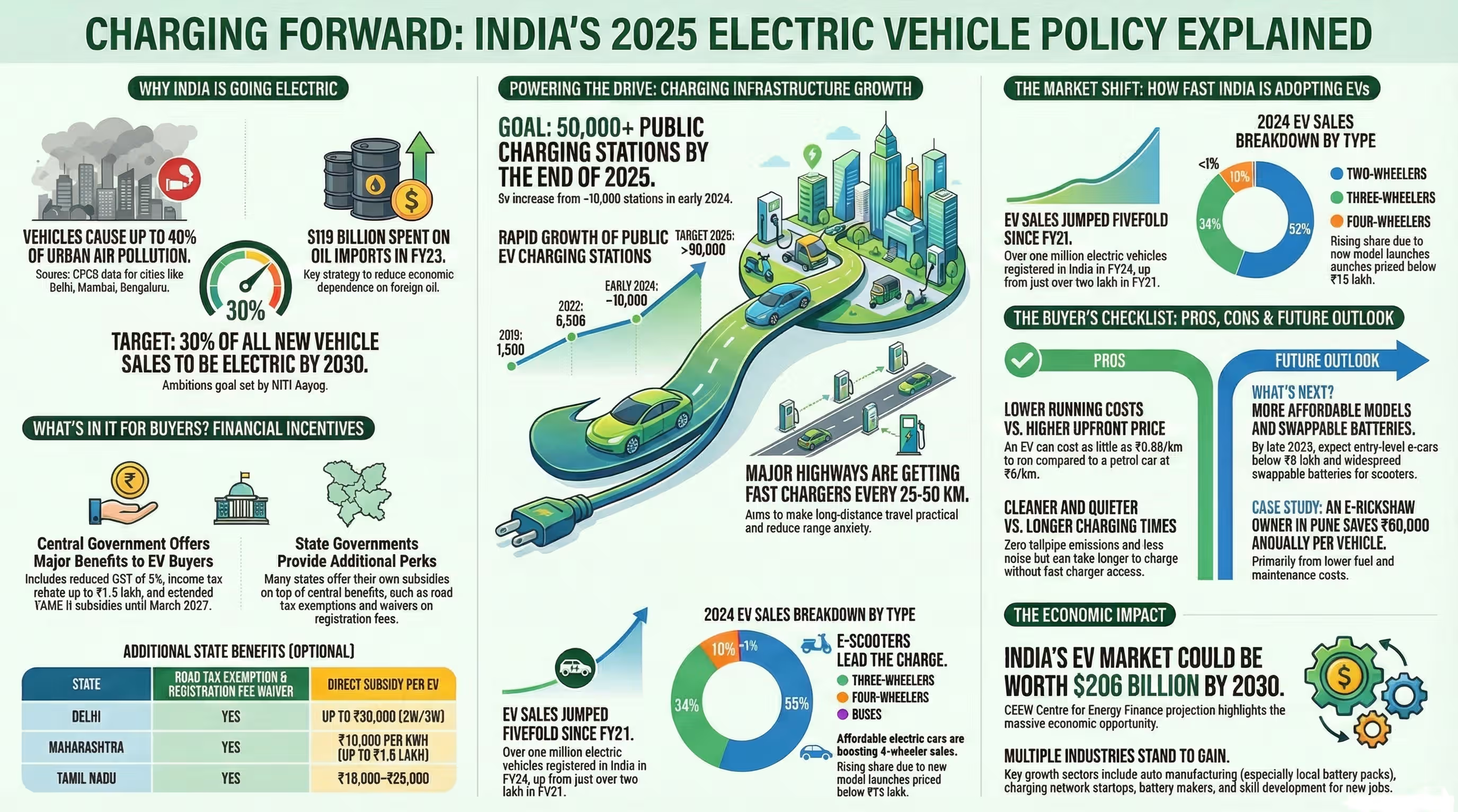
India’s EV market is projected to reach $206 billion by 2030, according to government estimates.
Local companies like Tata Motors, Mahindra Electric, and Ola Electric may need to invest in R&D and form partnerships to stay competitive as solid-state technology becomes mainstream.
6. Challenges Ahead: Manufacturing and Cost
Despite their advantages, mass production of all-solid-state batteries remains a challenge due to costs and complex manufacturing processes. China’s progress could help bring down prices over time, but initial costs are expected to be higher than those of current lithium-ion batteries.
Industry analysts predict solid-state batteries could become commercially viable in India by 2026-2028.
The Indian government’s focus on battery localisation and its Production Linked Incentive (PLI) scheme could help bridge the gap.
7. Boost for India’s Clean Mobility Goals
The adoption of all-solid-state batteries aligns with the government’s ambition to promote clean mobility and reduce dependence on fossil fuels.
India aims for 30% electric vehicle penetration by 2030.
Wider adoption of advanced battery technologies will be crucial for achieving this target, improving air quality, and reducing greenhouse gas emissions.
China’s recent breakthrough in all-solid-state battery technology marks a pivotal moment for the global EV industry. For India, it presents both challenges and opportunities to accelerate the adoption of electric vehicles, enhance safety, and make clean mobility more accessible to millions. As the technology matures and becomes more affordable, its impact on the Indian automotive landscape could be transformative.
Sources
Original Source
google.com - Read original
Quotes
- Publishing Domain: google.com
- Published Date: 2025-11-24T13:30:00+05:30
- Original URL: Read original (news.google.com/rss/articles/CBMinwFBVV95cUxQWlg0WlRFZnVVMHA1ck9aaXFSTGFfZ… …)
Editorial Check
- Originality: 65 / 100 — The article covers a significant technological milestone—China’s progress with all-solid-state EV batteries, which is a trending topic in electric vehicle innovation. While the subject is widely reported, the specific milestone and its implications for doubling EV range add a moderately original angle.
- Helpfulness: 80 / 100 — The article is helpful for readers interested in EV technology and advancements, providing timely information about a breakthrough that could impact future electric vehicles. However, without technical details or broader context, its usefulness is somewhat limited for experts.