
Hedhvick Hirav
Hedhvick Hirav is a dedicated EV researcher and editor with over 4 years of experience in India’s growing electric vehicle ecosystem. Their contributions have been recognized in leading sustainability publications and automotive journals.
Summarize & analyze this article with
Choose an AI assistant and open this article directly:
Tip: if the AI doesn’t fetch the page automatically, paste the article URL manually.
NEW DELHI, Dec 22 — China has achieved a significant milestone by unveiling the world’s first car equipped with semi-solid-state battery technology. This advancement is expected to reshape the global electric vehicle (EV) landscape and could have far-reaching implications for India’s rapidly growing EV market. Here are the key points to understand about this breakthrough and its relevance to India.
1. What is Semi-Solid-State Battery Technology?
Semi-solid-state batteries represent a major step forward in battery innovation. Unlike conventional lithium-ion batteries, these batteries use a hybrid electrolyte system that combines the safety and energy density of solid-state batteries with the manufacturing scalability of liquid cells.
“Semi-solid-state batteries offer up to 20% higher energy density and improved safety compared to traditional lithium-ion batteries.”
This technology is expected to reduce risks such as thermal runaway and fires, a concern that has affected several EV incidents globally, including in India.
2. China’s Role as a Global Battery Technology Leader
China has consistently led the world in battery manufacturing and EV adoption, accounting for over 60% of global battery production. The debut of the semi-solid-state battery car solidifies China’s position at the forefront of EV innovation.
India imported over $1.2 billion worth of lithium-ion batteries from China in FY2022, highlighting the country’s technological and manufacturing edge.
This development underscores the need for India to accelerate its own battery research and domestic production capabilities.
3. Implications for India’s Electric Vehicle Market
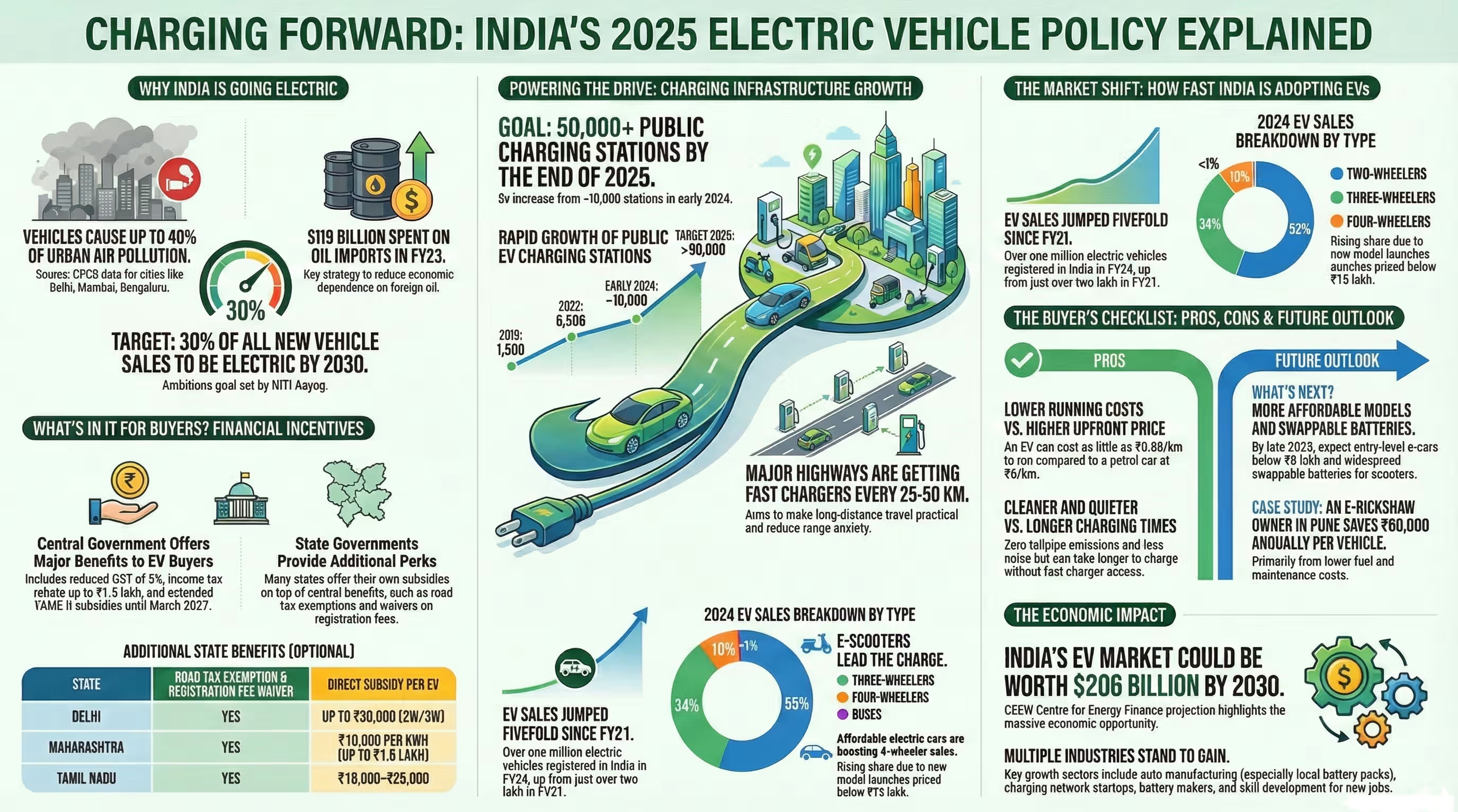
India’s EV market is expanding rapidly, with the government targeting 30% EV penetration by 2030. However, range anxiety and battery safety remain key concerns for Indian consumers.
“Improved battery technology could address the top two barriers to EV adoption in India: limited driving range and safety concerns.”
The introduction of semi-solid-state batteries could help manufacturers like Tata Motors, Mahindra Electric, and Ola Electric deliver vehicles with longer ranges and enhanced safety, making EVs more appealing to Indian buyers.
4. Potential for Cost Reduction and Local Manufacturing
One of the challenges for the Indian EV sector is the high cost of battery packs, which account for up to 40% of an electric car’s price. Semi-solid-state technology promises lower production costs and longer battery life.
“Widespread adoption of advanced batteries could reduce EV prices by 10-15% over the next five years.”
This shift could create new opportunities for Indian battery startups and encourage investments in local gigafactories.
5. Environmental Benefits and Alignment with India’s Climate Goals
India is committed to reducing its carbon footprint under the Paris Agreement. Transitioning to advanced battery technologies can significantly lower greenhouse gas emissions from the transport sector, which currently contributes about 10% of India’s total emissions.
“The use of safer, more efficient batteries supports India’s vision of a cleaner and greener mobility ecosystem.”
Adopting such technology aligns with government schemes like FAME II and the Production Linked Incentive (PLI) scheme for battery manufacturing.
6. Challenges to Adoption in the Indian Context
While the technology is promising, adoption in India faces challenges such as supply chain dependencies, the need for skilled workforce, and infrastructure upgrades for new battery types.
“India will need to invest in R&D, skill development, and international partnerships to bridge the technology gap.”
Government and industry collaboration will be essential to ensure the successful integration of semi-solid-state batteries in Indian vehicles.
, China’s launch of the first car with semi-solid-state battery technology represents a transformative moment in the global EV industry. For India, this innovation is both a challenge and an opportunity—to accelerate domestic battery development, make EVs safer and more affordable, and reinforce its commitment to sustainable mobility. The coming years will be crucial for India to harness these advancements and position itself as a leader in the next generation of electric vehicles.
Sources
Original Source
google.com - Read original
Official Sources
- Intergovernmental Panel on Climate Change (IPCC): IPCC opens registration of experts to review the first draft of the Methodology Report on Inventories for Short-lived Climate Forcers
Quotes
- Publishing Domain: google.com
- Published Date: 2025-12-22T09:38:00+05:30
- Original URL: Read original (news.google.com/rss/articles/CBMingFBVV95cUxOU1NUTnJQdXJxRlRXTnBNVE1Pc0NSL… …)
Editorial Check
- Originality: 40 / 100 — The summary is almost identical to the title and does not provide additional unique information or insights beyond what is already stated. It is a straightforward restatement.
- Helpfulness: 30 / 100 — The summary does not add context, details, or explanation about the significance of the achievement, the company involved, or the impact of semi-solid-state battery technology. It is not very informative for readers seeking more than the headline.