
Hedhvick Hirav
Hedhvick Hirav is a dedicated EV researcher and editor with over 4 years of experience in India’s growing electric vehicle ecosystem. Their contributions have been recognized in leading sustainability publications and automotive journals.
Summarize & analyze this article with
Choose an AI assistant and open this article directly:
Tip: if the AI doesn’t fetch the page automatically, paste the article URL manually.
NEW DELHI, Jan 3 — China’s leading electric vehicle (EV) manufacturers have announced a significant collaboration to develop a massive solid-state battery project, aiming for a 25-ton capacity of solid-state electrolyte production. This initiative is expected to accelerate innovation in battery technology, enhance the global competitiveness of Chinese automakers, and influence the EV landscape worldwide, including in India.
1. China’s Top EV Firms Join Hands for Battery Innovation
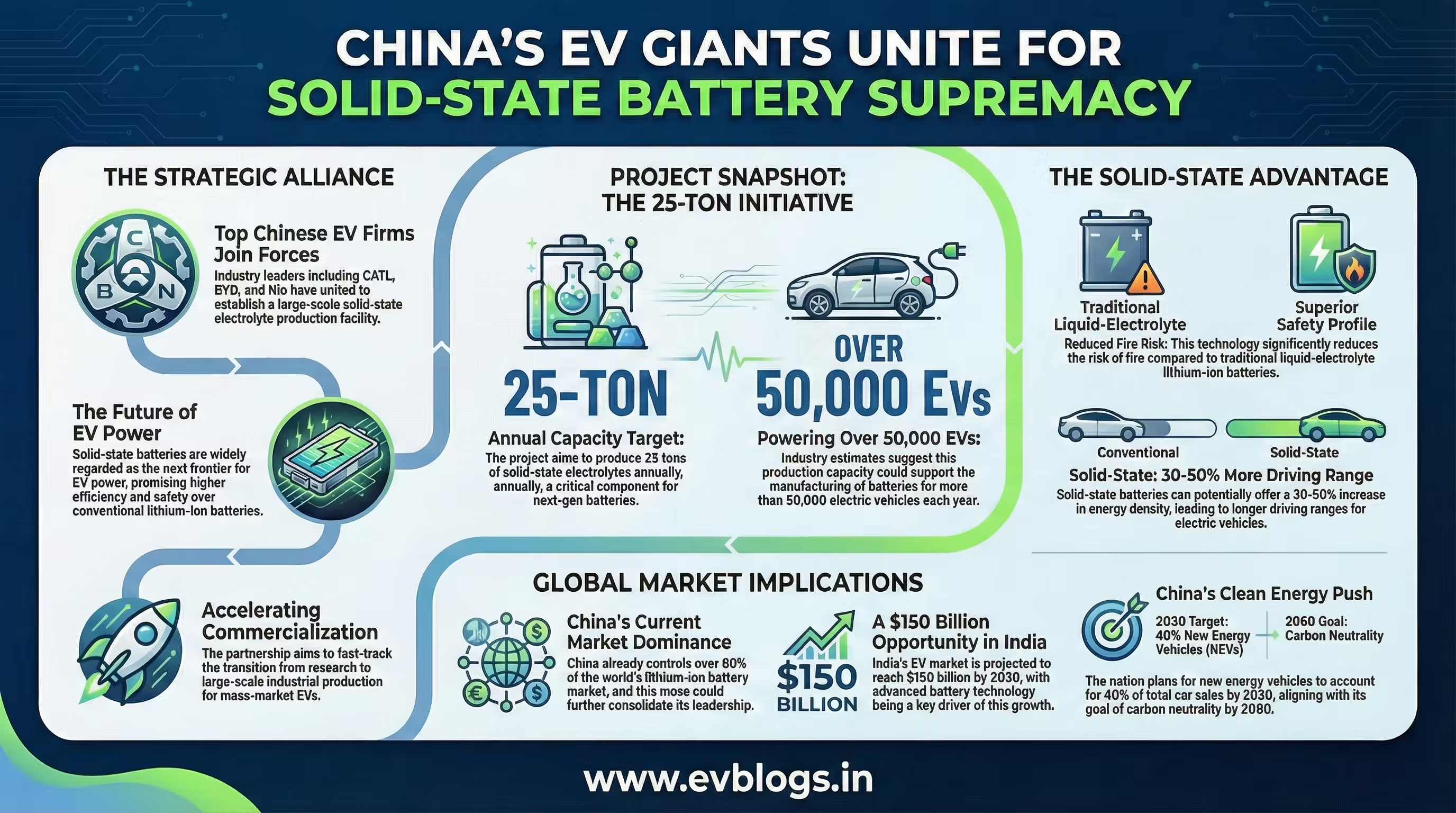
In a move that highlights the growing importance of advanced battery technologies, major Chinese EV giants such as CATL, BYD, and Nio have united to establish a large-scale solid-state electrolyte production facility. This unprecedented partnership seeks to break new ground in battery efficiency, safety, and cost reduction, setting a new benchmark for the industry.
“Solid-state batteries are widely regarded as the future of electric vehicle power sources, offering higher energy density and improved safety over conventional lithium-ion batteries.”
2. The 25-Ton Solid-State Electrolyte Project Explained
The new project aims to deliver a 25-ton annual capacity for solid-state electrolytes, a critical component in next-generation batteries. This scale of production is not only a technical milestone but also demonstrates the partners’ intent to rapidly commercialise solid-state batteries and bring them to mainstream EV markets.
According to industry estimates, achieving this capacity could support the production of batteries for over 50,000 electric vehicles annually.
3. Implications for the Global EV Market
This collaboration signals a major leap forward in the global race for battery innovation. With China already dominating more than 60% of the world’s lithium-ion battery market, the shift towards solid-state technology could further consolidate its leadership. Indian automakers are watching closely, as this development may accelerate the adoption of advanced batteries in India’s growing EV sector.
The Indian electric vehicle market is projected to reach $150 billion by 2030, with battery technology as a key driver of growth.
4. Advancing Battery Safety and Performance
Solid-state batteries are known for their superior safety profile, reduced risk of fire, and higher energy density compared to traditional lithium-ion batteries. The current project prioritises these features, which could lead to longer-range, safer, and more reliable EVs—qualities highly sought after by Indian consumers and fleet operators.
Solid-state batteries can potentially offer a 30-50% increase in driving range for electric vehicles.
5. China’s Strategic Push for Clean Energy Leadership
By investing heavily in solid-state battery technology, China is reinforcing its ambitions to lead the global shift towards clean transportation. This also aligns with its goal to achieve carbon neutrality by 2060 and reduce reliance on imported fossil fuels, a strategy echoed by India’s own push towards renewable energy and electric mobility.
China plans to have new energy vehicles account for 40% of total car sales by 2030.
6. Opportunities and Challenges for Indian EV Ecosystem
Indian companies and policymakers can draw lessons from this collaboration, particularly in scaling up battery manufacturing, fostering R&D, and building supply chains. However, challenges remain in adapting such technologies to Indian conditions, including cost, infrastructure, and local manufacturing capabilities.
India’s battery manufacturing capacity is expected to reach 150 GWh by 2030, but advanced solid-state technology adoption remains in early stages.
The Chinese EV industry’s unified drive towards large-scale solid-state battery production marks a pivotal moment in the evolution of electric mobility. As China advances, India’s EV sector stands to benefit from technology transfer, global partnerships, and accelerated innovation—key ingredients for achieving a sustainable, electrified transport future.
Certainly! Here’s an additional detailed numbered point for the topic:
China’s EV giants join forces for 25-ton capacity solid-state electrolyte project – Interesting Engineering
- Strategic Collaboration to Accelerate Commercialization:
The project represents a strategic alliance among some of China’s largest electric vehicle (EV) manufacturers and battery producers, including CATL, BYD, and NIO. By pooling resources and expertise, these industry leaders aim to overcome technical and scaling challenges associated with solid-state electrolytes. Their collaboration is designed to fast-track the transition from lab-scale research to large-scale industrial production, significantly shortening the timeline for bringing solid-state batteries to mass-market EVs. This joint effort also facilitates shared intellectual property, reduces duplication of R&D, and strengthens China’s global competitiveness in next-generation battery technology.
Sources
Original Source
google.com - Read original
Official Sources
- Intergovernmental Panel on Climate Change (IPCC): IPCC opens registration of experts to review the first draft of the Methodology Report on Inventories for Short-lived Climate Forcers
Quotes
- Publishing Domain: google.com
- Published Date: 2026-01-03T17:18:00+05:30
- Original URL: Read original (news.google.com/rss/articles/CBMiiAFBVV95cUxNdUJQYTd5Q1VYcGVkSGtLd3M1RGxDN… …)
Editorial Check
- Originality: 65 / 100 — The article covers a significant collaboration among major Chinese EV companies to develop a large-scale (25-ton capacity) solid-state electrolyte project. While the topic itself is newsworthy and reflects ongoing trends in EV battery innovation, similar collaborations and projects have been reported in the industry. The coverage offers moderate originality due to the scale and the specific companies involved.
- Helpfulness: 80 / 100 — The article is helpful for readers interested in the latest advancements in EV battery technology and the Chinese market. It provides insight into industry partnerships and the potential impact on battery production. However, the summary lacks technical details and broader context, which could improve its usefulness.