
Hedhvick Hirav
Hedhvick Hirav is a dedicated EV researcher and editor with over 4 years of experience in India’s growing electric vehicle ecosystem. Their contributions have been recognized in leading sustainability publications and automotive journals.
Summarize & analyze this article with
Choose an AI assistant and open this article directly:
Tip: if the AI doesn’t fetch the page automatically, paste the article URL manually.
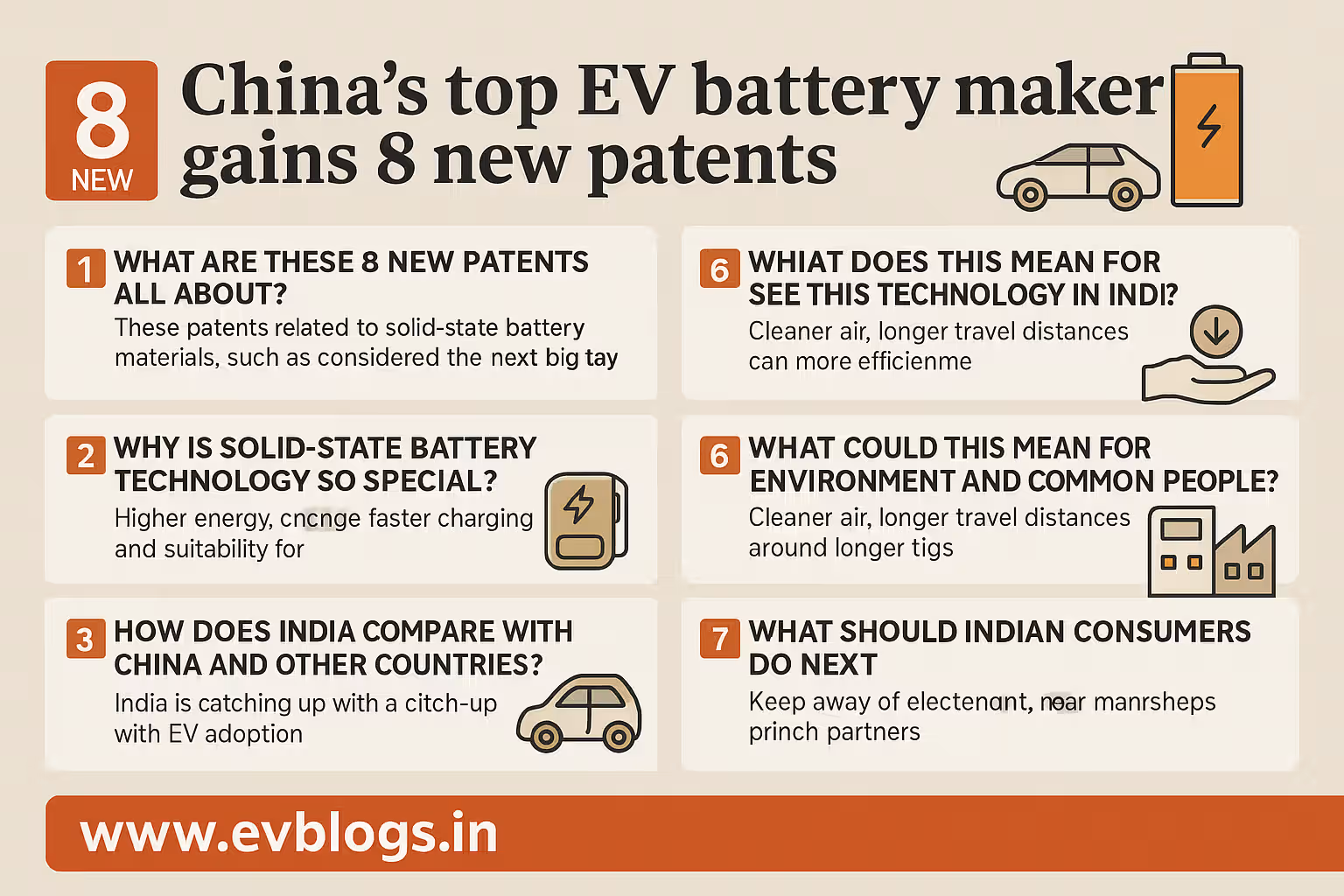
NEW DELHI, Nov 29 — China’s top EV battery maker, known for its cutting-edge technology, has just bagged 8 new patents for next-generation battery tech. This is big news, especially for those who follow the electric vehicle (EV) scene, as it could shake up the market not just in China, but also in India and other countries. Let’s break down what this means for all of us.
1. What are these 8 new patents all about?
These patents are related to solid-state battery materials, which are considered the next big thing in the EV world. Traditional lithium-ion batteries use liquid electrolytes, but solid-state batteries use solid materials. This change can make batteries safer, last longer, and charge faster.
The company behind these patents, a leader in China’s battery industry, is already well-known for powering many electric cars around the world. With these new patents, they hope to make batteries that are more efficient and reliable. This could be a game-changer for electric vehicles everywhere, including in India where EV adoption is slowly picking up pace.
2. Why is solid-state battery technology so special?
Solid-state batteries are different from the usual ones because they can store more energy, charge quickly, and are less likely to catch fire. For example, a normal EV battery takes around 6-8 hours for a full charge, but solid-state batteries may reduce this to just 1-2 hours.
Experts say that these batteries can also work better in high temperatures, which is very important for India’s hot climate. According to the International Energy Agency (IEA), solid-state batteries can increase the driving range of EVs by up to 80%. This means you could easily drive from Delhi to Jaipur on a single charge!
3. How will this impact Indian electric vehicle buyers?
For Indian consumers, this is exciting news. Right now, one of the biggest worries about buying an EV is the battery—how far you can go, how long it takes to charge, and how safe it is. If solid-state batteries come to India, you might not have to worry so much about your battery running out or overheating.
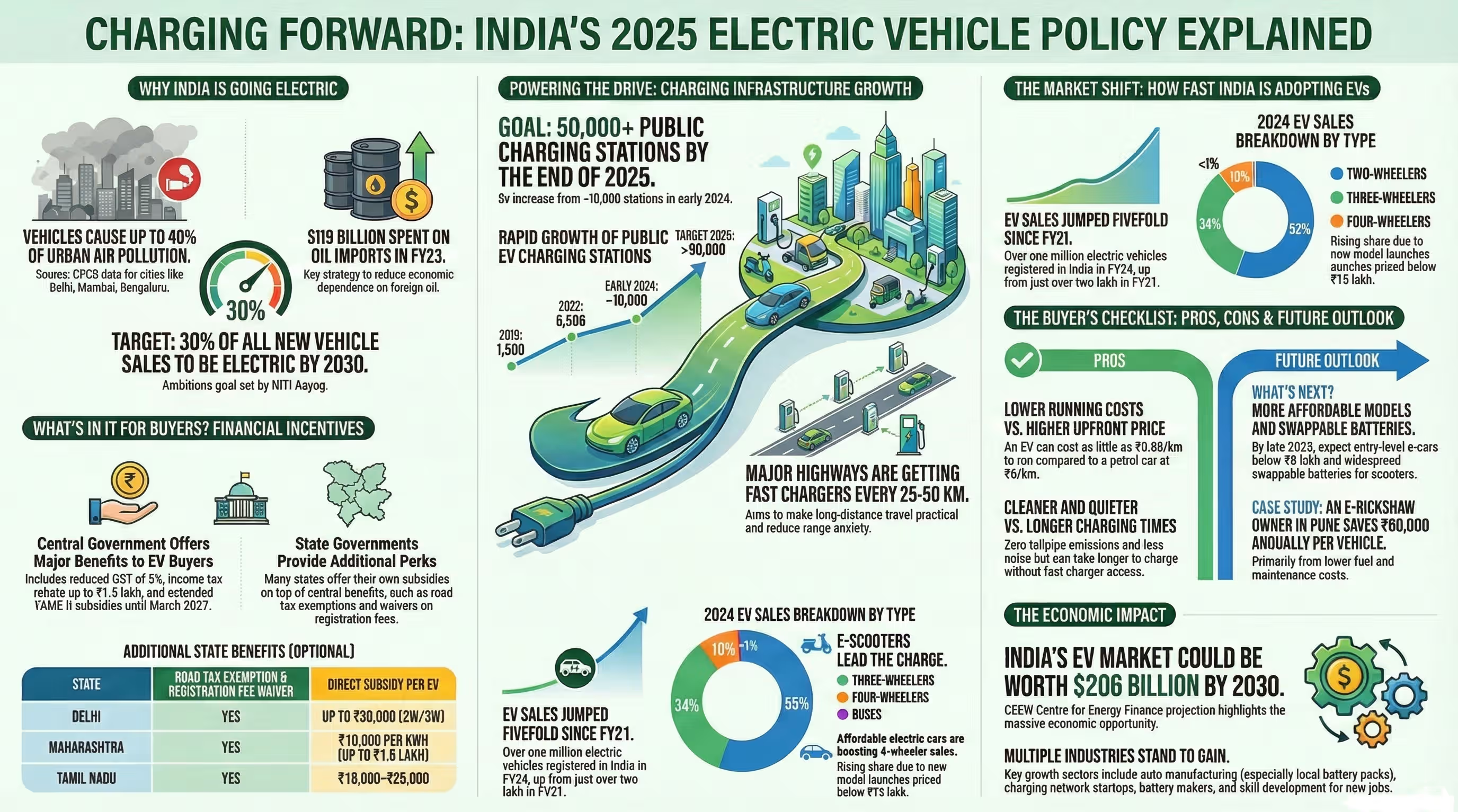
The Government of India has already set a target of 30% electric vehicle adoption by 2030 under the FAME II scheme. But battery cost and safety are still concerns. If Chinese companies with these new patents partner with Indian automakers or set up factories here, EVs may become more affordable and trustworthy for everyone.
4. What does this mean for the Indian auto industry?
Indian car companies like Tata Motors, Mahindra, and Ola Electric are already investing in their own battery technologies. However, Chinese battery makers have a head start. They supply more than 60% of the world’s EV batteries, as per BloombergNEF.
If these new technologies come to India, local manufacturers might collaborate with Chinese firms or adopt similar tech. This can lead to better-quality electric cars made in India, possibly even for export. It could also create new jobs in research, manufacturing, and servicing of advanced batteries.
5. How does India compare with China and other countries?
China is the global leader in EV battery production and innovation. While India is catching up, there is still a big gap. For example, China produced over 6 million EVs in 2022, whereas India sold just about 1 million, according to the Society of Indian Automobile Manufacturers (SIAM).
Countries like Japan and South Korea are also developing their own solid-state battery technologies. In India, research is ongoing at IITs and other institutes, but it may take a few more years before we see homegrown solid-state batteries in Indian cars. Until then, partnerships with Chinese or global firms could help India bridge the gap faster.
6. What could this mean for the environment and common people?
Shifting to better battery technology is not just about convenience—it’s also about the environment. Solid-state batteries are less polluting to make and recycle compared to current lithium-ion batteries. This can help reduce India’s dependence on imported oil and cut down on air pollution in cities.
For ordinary people, this means cleaner air, less noise, and lower running costs for EVs. Plus, with more reliable batteries, you can travel longer distances without worry. Experts believe this could encourage more people to switch from petrol or diesel vehicles to electric ones.
7. When can we expect to see this technology in India?
Right now, these 8 patents are just the first step. It usually takes 2-3 years to move from patent to actual product in the market. Some Chinese EV models with solid-state batteries may be launched in China as early as 2025.
If Indian companies tie up with these Chinese battery makers or invest in similar technology, we might see the first solid-state battery-powered EVs in India by 2026 or 2027. The Government is also offering incentives for battery manufacturing under the Production Linked Incentive (PLI) scheme, which could speed up the process.
8. What should Indian consumers do next?
If you are planning to buy an EV soon, it’s good to keep an eye on these developments. Prices of current models may drop as new technology gets closer to launch. Also, with better batteries on the horizon, future EVs might offer more value for money.
For now, the best advice is to compare models, check battery warranties, and look out for any news about partnerships between Indian and foreign battery makers. As technology advances, owning an EV in India will only get easier and more practical.
So, these 8 new patents from China’s top EV battery company could be the start of a whole new era for electric vehicles, not just in China but here in India too. Let’s watch this space closely—exciting times are ahead for anyone interested in green cars and clean energy!
Sources
Original Source
Official Sources
Quotes
- Publishing domain: google.com
- Published date: 2025-11-29T15:53:00+05:30
- Original URL: Read original (news.google.com/rss/articles/CBMiiAFBVV95cUxNdE9pUzNxc2hkaXRMNUlCTlpMTHFzd… …)
Editorial Check
- Originality: 60 / 100 — The story covers specific patent wins, which is less common than general EV news.
- Helpfulness: 50 / 100 — The article is relevant for those tracking battery tech, but lacks India-specific context.