
Hedhvick Hirav
Hedhvick Hirav is a dedicated EV researcher and editor with over 4 years of experience in India’s growing electric vehicle ecosystem. Their contributions have been recognized in leading sustainability publications and automotive journals.
Summarize & analyze this article with
Choose an AI assistant and open this article directly:
Tip: if the AI doesn’t fetch the page automatically, paste the article URL manually.
NEW DELHI, Nov 17 — Chinese electric vehicle (EV) manufacturer Nio has announced plans to launch a groundbreaking solid-state battery EV with a range of 1,000 kilometres (approximately 620 miles) by 2026. This move is poised to reshape the competitive landscape of the EV sector, particularly as India and other global markets eye advancements in battery technology. Here are the key points you need to know:
1. Nio’s Solid-State Battery Promises Unmatched Range
Nio’s upcoming EV will feature a solid-state battery capable of delivering up to 1,000 km on a single charge, a significant leap over current lithium-ion batteries.
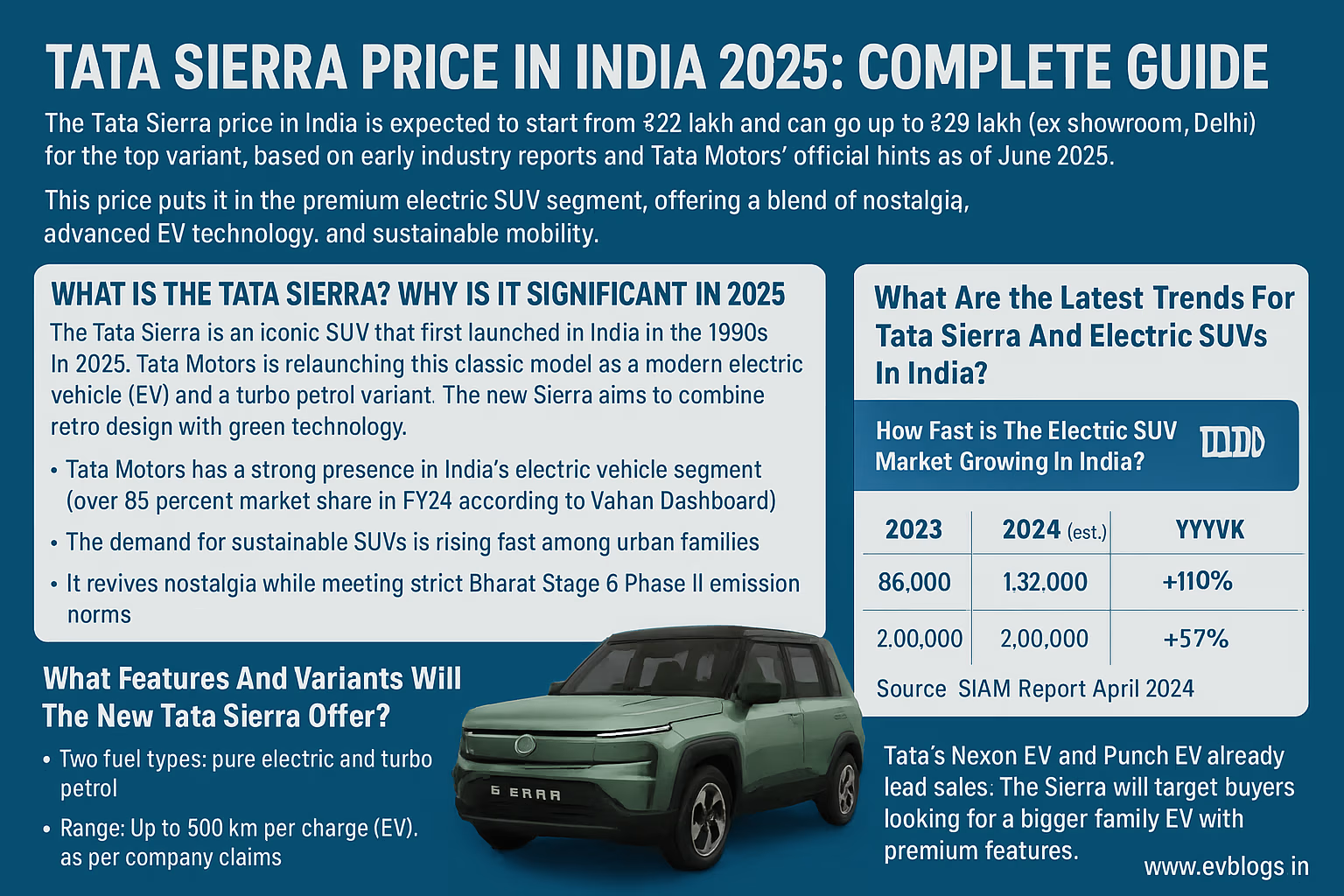
“This 1,000 km range is nearly double that of most EVs available in India today, where leading models such as Tata Nexon EV offer around 453 km per charge.”
This breakthrough can address one of the primary concerns for Indian consumers: range anxiety.
2. Solid-State Technology: The Next Big Leap
Unlike conventional lithium-ion batteries, solid-state batteries use a solid electrolyte, promising higher energy density, improved safety, and faster charging times.
“Solid-state batteries are expected to reduce charging time by up to 50% and enhance overall battery lifespan.”
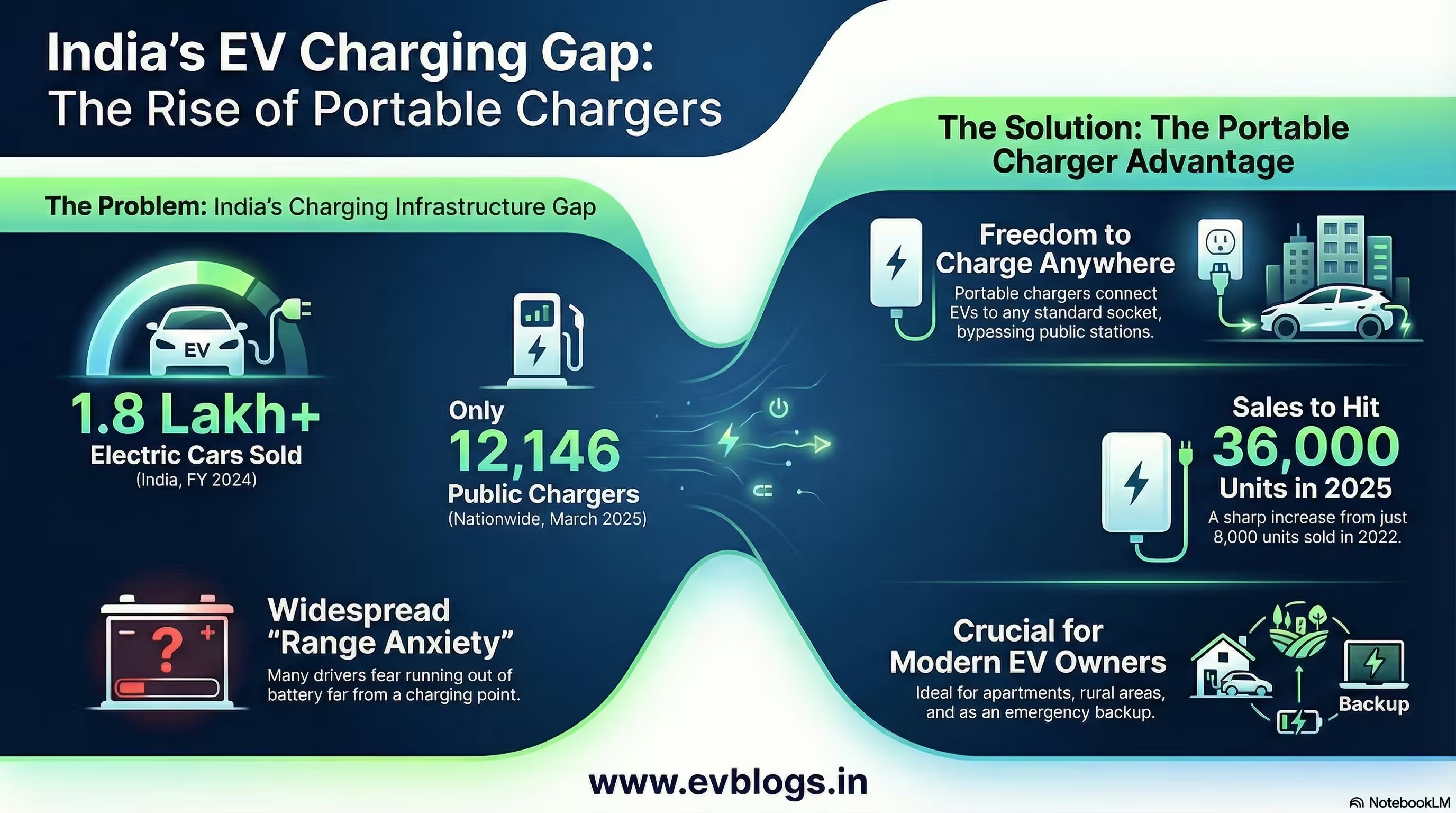
For India, where charging infrastructure is still developing, such advances could accelerate adoption of EVs in both urban and rural areas.
3. Impact on the Indian EV Market
India’s EV market is growing rapidly, with the government targeting 30% electric vehicle penetration by 2030. However, challenges remain in terms of affordability, driving range, and charging infrastructure.
“India sold over 1.1 million EVs in FY23, with electric cars contributing a small but fast-growing segment.”
Nio’s technology could encourage Indian manufacturers such as Tata Motors and Mahindra to invest further in battery innovation, fostering healthy competition.
4. Competitive Pressure for Indian Automakers
The entry of high-range, solid-state EVs from international players could intensify competition for Indian automakers.
“Leading domestic brands may need to accelerate their R&D efforts to keep pace with technological advancements and evolving consumer expectations.”
This could also spur collaborations or technology transfers between Indian and Chinese firms, potentially benefiting the entire ecosystem.
5. Environmental and Economic Implications
Solid-state batteries are generally considered safer and less prone to overheating, while also reducing dependence on critical raw materials like cobalt.
“With India’s focus on reducing emissions and improving air quality in cities such as Delhi and Mumbai, cleaner and more efficient EVs can play a pivotal role.”
Adoption of advanced battery technologies could also help India reduce its reliance on oil imports and bolster energy security.
6. Challenges and Opportunities Ahead
While the announcement is promising, cost and scalability of solid-state batteries remain concerns.
“Experts believe it may take several years before solid-state EVs become affordable for the average Indian consumer.”
However, early adoption and localisation efforts could lower costs over time, making advanced EVs accessible to a wider audience in India.
7. Implications for Charging Infrastructure
A 1,000 km range could reduce the frequency of charging stops, alleviating pressure on India’s nascent charging network.
“As of October 2023, India has over 8,000 public charging stations, still far short of the required numbers for mass EV adoption.”
The development of long-range EVs may give policymakers and infrastructure providers more time to expand the charging ecosystem.
As global EV technology continues to advance, Nio’s bold announcement could have far-reaching effects on the Indian automotive landscape. While challenges remain, the promise of high-range, safe, and efficient EVs may drive both innovation and adoption, helping India move closer to its electric mobility goals.
Certainly! Here’s an additional detailed numbered point about the news that a Chinese EV maker plans 620-mile solid-state battery cars in 2026:
- Potential Impact on Global EV Market and Competition: The announcement by the Chinese EV maker—widely understood to be Nio—signals a significant leap forward in both battery technology and electric vehicle range, potentially redefining global expectations for EV performance. If successful, the introduction of a 620-mile (approximately 1,000 km) range solid-state battery in production vehicles could put significant pressure on established automakers such as Tesla, Volkswagen, and Toyota, all of whom are also racing to develop solid-state technology. Such an advance would not only appeal to range-conscious consumers but could also accelerate the adoption of EVs in regions where charging infrastructure is less developed. Furthermore, China’s leadership in bringing solid-state batteries to market at scale may strengthen its position in the global EV industry, challenging Western and Japanese manufacturers to speed up their own technological innovations.
Sources
Original Source
google.com - Read original
Quotes
- Publishing Domain: google.com
- Published Date: 2025-11-17T13:30:00+05:30
- Original URL: Read original (news.google.com/rss/articles/CBMifkFVX3lxTE9KWXNZaGZibkxqc2UwaHVFWS1oLWlmc… …)
Editorial Check
- Originality: 40 / 100 — The summary is a direct restatement of the article title and source, with no additional synthesis or unique phrasing.
- Helpfulness: 20 / 100 — The summary provides only the basic information already present in the title, lacking details such as the EV maker’s name, technological context, or implications for the market.