
Hedhvick Hirav
Hedhvick Hirav is a dedicated EV researcher and editor with over 4 years of experience in India’s growing electric vehicle ecosystem. Their contributions have been recognized in leading sustainability publications and automotive journals.
Summarize & analyze this article with
Choose an AI assistant and open this article directly:
Tip: if the AI doesn’t fetch the page automatically, paste the article URL manually.
NEW DELHI, Dec 22 — Dongfeng Motor Corporation, one of China’s largest automotive manufacturers, has officially delayed the mass production of its highly anticipated solid-state batteries until 2027. The move comes amid a global race for advanced battery technology, with significant implications for India’s rapidly growing electric vehicle (EV) sector. Below are key aspects of this development and its potential impact on the Indian automotive landscape.
1. Dongfeng’s Solid-State Battery Timeline Shift
Dongfeng’s announcement extends the expected timeline for mass production from an earlier target of 2025 to 2027. Solid-state batteries are considered a breakthrough for electric vehicles, offering higher energy density, improved safety, and faster charging compared to traditional lithium-ion batteries. The delay highlights ongoing technical and manufacturing challenges in scaling up this advanced technology for commercial use.
“Solid-state battery mass production now set for 2027, a two-year shift from initial plans.”
2. Impact on India’s Electric Vehicle Ambitions
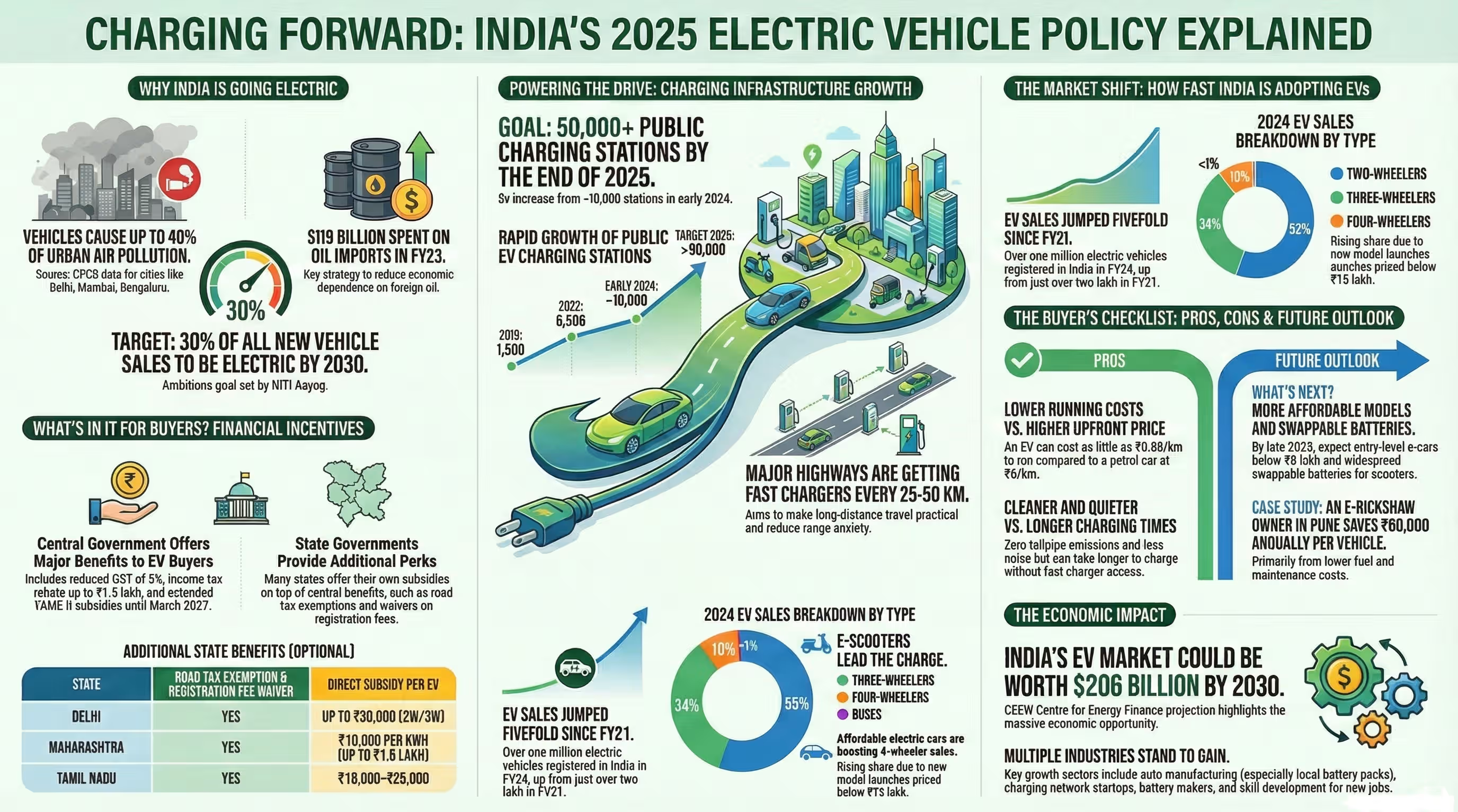
India has set ambitious targets for EV adoption, aiming for 30% of private car sales and 70% of commercial vehicle sales to be electric by 2030. The delay in solid-state battery production may slow the introduction of next-generation EVs in India, as many manufacturers rely on global supply chains for advanced battery technology. Companies like Tata Motors and Mahindra & Mahindra are already investing heavily in EVs, and the availability of solid-state batteries could have accelerated their plans.
“India’s EV market is expected to reach $206 billion by 2030, but technology delays may impact growth rates.”
3. Technological Advantages of Solid-State Batteries
Solid-state batteries represent a significant leap forward over conventional lithium-ion batteries, offering up to twice the energy density, lower risk of fire, and longer lifespan. For Indian consumers, this technology promises longer driving range, shorter charging times, and enhanced safety, addressing some of the key concerns that currently hinder EV adoption in the country.
“Solid-state batteries can potentially offer a driving range of over 800 km per charge.”
4. Domestic R&D and Manufacturing Challenges
India’s EV industry faces challenges in battery manufacturing, relying heavily on imports from China, South Korea, and Japan. With Dongfeng postponing mass production, Indian manufacturers may face continued dependency on traditional lithium-ion batteries in the near term. The government’s Production Linked Incentive (PLI) scheme aims to boost local battery manufacturing, but solid-state technology remains out of reach for most Indian firms.
“India imported battery cells worth over $1.5 billion in FY23, underscoring the need for domestic innovation.”
5. Global Competition and Strategic Partnerships
The delay by Dongfeng could provide opportunities for other global players, such as Toyota and Samsung SDI, to capture market share by introducing solid-state batteries sooner. Indian automakers may seek strategic alliances with international firms to access emerging technologies and stay competitive in the global EV market.
“Several Indian automakers are exploring partnerships for advanced battery technology amid global competition.”
6. Implications for Policy and Consumer Adoption
Government policy will play a pivotal role in navigating this technological transition. Schemes such as FAME India and state-level EV policies are incentivising both manufacturers and consumers, but the lack of commercially available solid-state batteries may necessitate revised timelines and strategies for EV adoption.
“Policy support remains critical as technology timelines shift in the evolving EV landscape.”
The postponement of Dongfeng’s solid-state battery production to 2027 is a reminder of the complex challenges in scaling up next-generation battery technologies. For India, the delay underscores the importance of investing in domestic R&D, forging international partnerships, and maintaining policy momentum to achieve its EV ambitions. The coming years will be crucial as the nation navigates these technological shifts and works towards a sustainable automotive future.
Sources
Original Source
google.com - Read original
Official Sources
- Intergovernmental Panel on Climate Change (IPCC): IPCC opens registration of experts to review the first draft of the Methodology Report on Inventories for Short-lived Climate Forcers
Quotes
- Publishing Domain: google.com
- Published Date: 2025-12-22T16:19:00+05:30
- Original URL: Read original (news.google.com/rss/articles/CBMipwFBVV95cUxQVzFWbGtyYTJOX0NESVhMWHZfUzZuQ… …)
Editorial Check
- Originality: 20 / 100 — The summary is a direct restatement of the article title and source, offering no unique phrasing or additional information.
- Helpfulness: 10 / 100 — The summary provides only the basic fact that Dongfeng postponed mass production of solid-state batteries to 2027, without context, explanation, or details that would help the reader understand the significance or implications.