
Hedhvick Hirav
Hedhvick Hirav is a dedicated EV researcher and editor with over 4 years of experience in India’s growing electric vehicle ecosystem. Their contributions have been recognized in leading sustainability publications and automotive journals.
Summarize & analyze this article with
Choose an AI assistant and open this article directly:
Tip: if the AI doesn’t fetch the page automatically, paste the article URL manually.
NEW DELHI, Dec 4 — Two of the world’s leading electric vehicle (EV) battery manufacturers have announced a strategic partnership to accelerate the development of all-solid-state battery technology. This collaboration is expected to significantly impact the EV industry, especially in India, where the demand for cleaner, more efficient vehicles is rapidly increasing.
1. All-Solid-State Batteries: The Next Leap in EV Technology
All-solid-state batteries represent the future of electric mobility. Unlike conventional lithium-ion batteries that use liquid electrolytes, solid-state batteries employ solid electrolytes. This technology promises higher energy density, faster charging times, and improved safety.
“Solid-state batteries are projected to offer up to 50% higher energy density than traditional lithium-ion batteries.”
For India, where EV adoption is gaining traction but range anxiety remains a concern, this leap could address key consumer hesitations.
2. Key Players Join Hands for Innovation
The partnership announced brings together two global giants in the battery sector, combining their expertise in manufacturing scale and advanced materials research.
“Collaborative innovation can reduce the time-to-market for next-generation battery solutions by several years.”
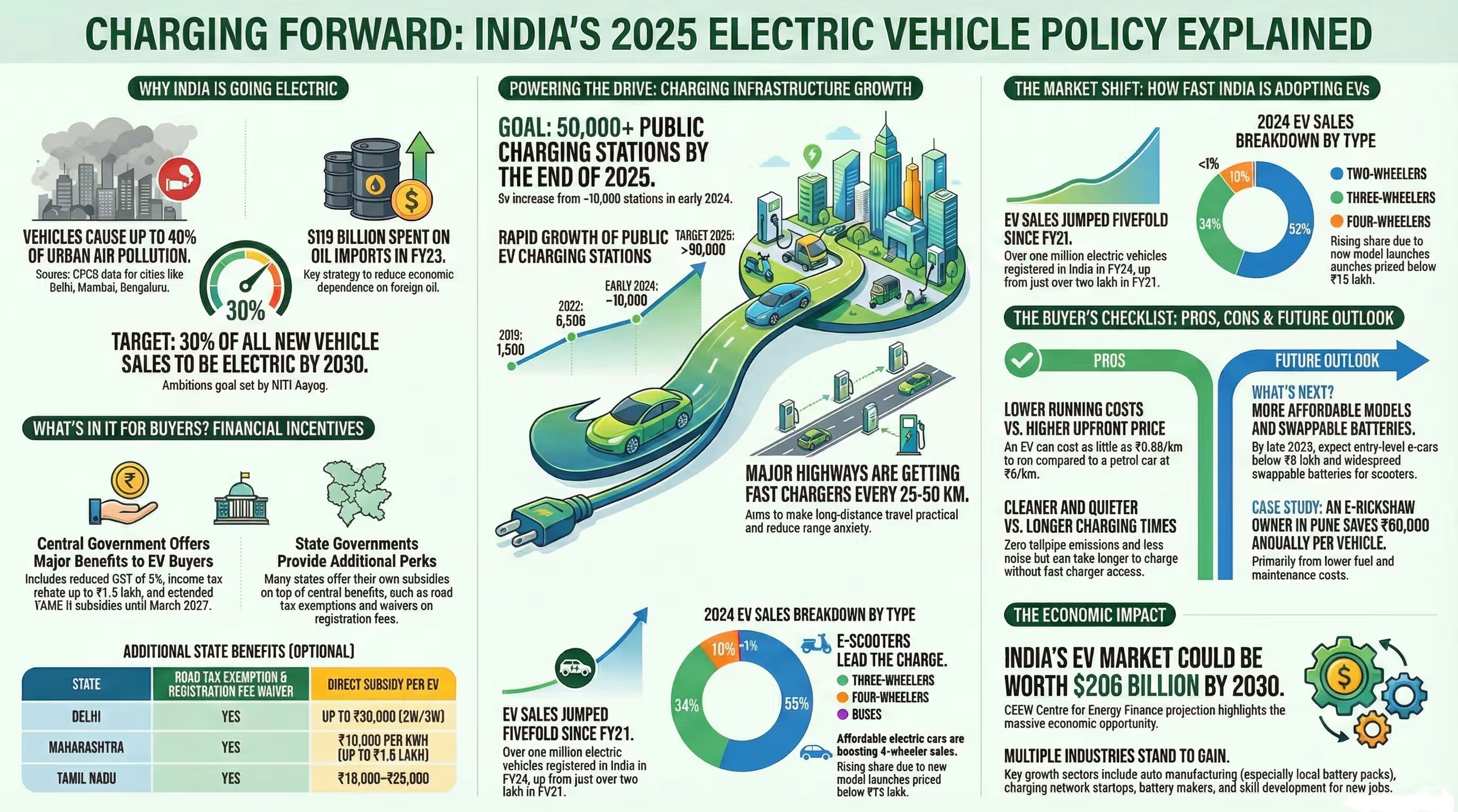
Such collaborations are crucial for India, which is targeting 30% EV penetration in the passenger vehicle segment by 2030, according to NITI Aayog.
3. Potential Impact on India’s EV Market
India is currently the world’s third-largest automobile market, and the government’s push for EVs is intensifying. All-solid-state batteries could drastically reduce the cost and increase the reliability of EVs, making them more accessible to Indian consumers.
“India’s EV sales crossed 1.15 million units in FY 2023, a 154% growth over the previous year.”
Adoption of these advanced batteries will support local manufacturing and help meet ambitious climate targets.
4. Addressing Safety and Sustainability Concerns
One of the main challenges with traditional lithium-ion batteries is safety, especially the risk of overheating and fire. All-solid-state technology significantly reduces the risk of thermal runaway, making EVs safer for Indian roads, which often see extreme weather conditions.
“Solid-state batteries are inherently safer due to the absence of flammable liquid electrolytes.”
This advancement also aligns with India’s commitment to sustainable and green mobility.
5. Boost to Local Manufacturing and Skill Development
With the global shift towards advanced battery technologies, this partnership is expected to spur investment in Indian manufacturing and research. It will also create new opportunities for skill development in next-generation battery design and production.
“The Indian battery manufacturing sector is projected to attract investments of up to $6 billion by 2030.”
Such a boost is vital for India’s vision of becoming a global EV manufacturing hub.
6. Challenges Ahead: Scaling and Commercialisation
Despite the promise, commercialising all-solid-state batteries at scale remains a major challenge. Issues such as high production costs, material availability, and the need for adapted manufacturing infrastructure must be addressed.
“Mass adoption in India will depend on cost competitiveness with existing battery technologies.”
Continued collaboration, government support, and policy incentives will be essential to overcome these barriers.
7. Paving the Way for a Greener Future
This collaboration marks a significant step towards cleaner mobility and energy independence for India. As the world’s most populous country seeks to reduce carbon emissions and dependence on imported oil, breakthroughs in battery technology will play a pivotal role.
“Achieving 2070 net-zero goals will require rapid advances in battery technology and EV adoption.”
A successful rollout of all-solid-state batteries could set a global benchmark, positioning India as a leader in sustainable transportation.
The strategic alliance between EV battery leaders to develop all-solid-state technology is poised to reshape the future of electric mobility. For India, this represents not just a technological milestone but a crucial move towards achieving sustainable growth, energy security, and climate goals.
Sources
Original Source
google.com - Read original
Official Sources
- Intergovernmental Panel on Climate Change (IPCC): IPCC opens registration of experts to review the first draft of the Methodology Report on Inventories for Short-lived Climate Forcers
Quotes
- Publishing Domain: google.com
- Published Date: 2025-12-04T13:30:00+05:30
- Original URL: Read original (news.google.com/rss/articles/CBMilwFBVV95cUxQQ2pHV09qR2xVQnBYN05nSmdmWUZBY… …)
Editorial Check
- Originality: 30 / 100 — The summary is almost identical to the article title and does not add new information or unique phrasing. It simply repeats the main point without elaboration.
- Helpfulness: 40 / 100 — The summary provides a basic idea of the article’s content (two EV battery companies collaborating on solid-state batteries), but lacks detail, context, or explanation that would help a reader understand the significance or specifics of the news.