
Hedhvick Hirav
Hedhvick Hirav is a dedicated EV researcher and editor with over 4 years of experience in India’s growing electric vehicle ecosystem. Their contributions have been recognized in leading sustainability publications and automotive journals.
Summarize & analyze this article with
Choose an AI assistant and open this article directly:
Tip: if the AI doesn’t fetch the page automatically, paste the article URL manually.
NEW DELHI, Dec 20 — India’s electric vehicle (EV) battery sector is poised for rapid expansion, with annual growth projected at 35%. As demand for cleaner transportation escalates and government initiatives intensify, the industry is expected to increase its battery capacity from 18 GWh currently to an impressive 256 GWh by 2030. Below, we explore the key drivers, challenges, and opportunities shaping this transformative sector.
1. Robust Policy Support Accelerates Growth
Government policies are a major catalyst in the sector’s expansion. The Faster Adoption and Manufacturing of Hybrid and Electric Vehicles (FAME) scheme, along with the Production Linked Incentive (PLI) scheme for Advanced Chemistry Cell (ACC) batteries, has incentivised both manufacturing and adoption of EVs.
“The PLI scheme aims to attract investments worth Rs 45,000 crore, targeting 50 GWh of advanced battery storage manufacturing capacity.”
These policies not only boost domestic production but also promote localisation and reduce import dependency.
2. Surging Domestic Demand for Electric Vehicles
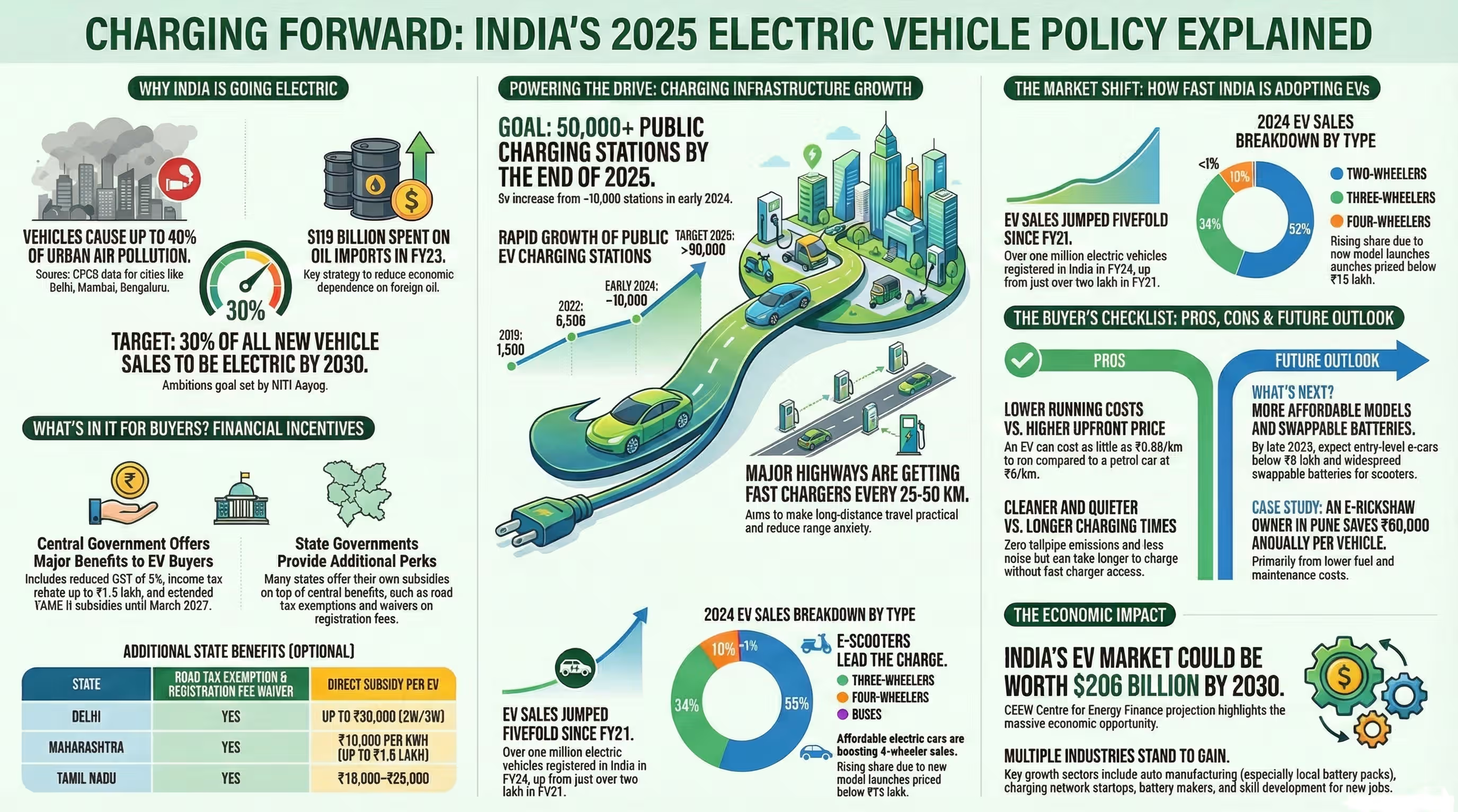
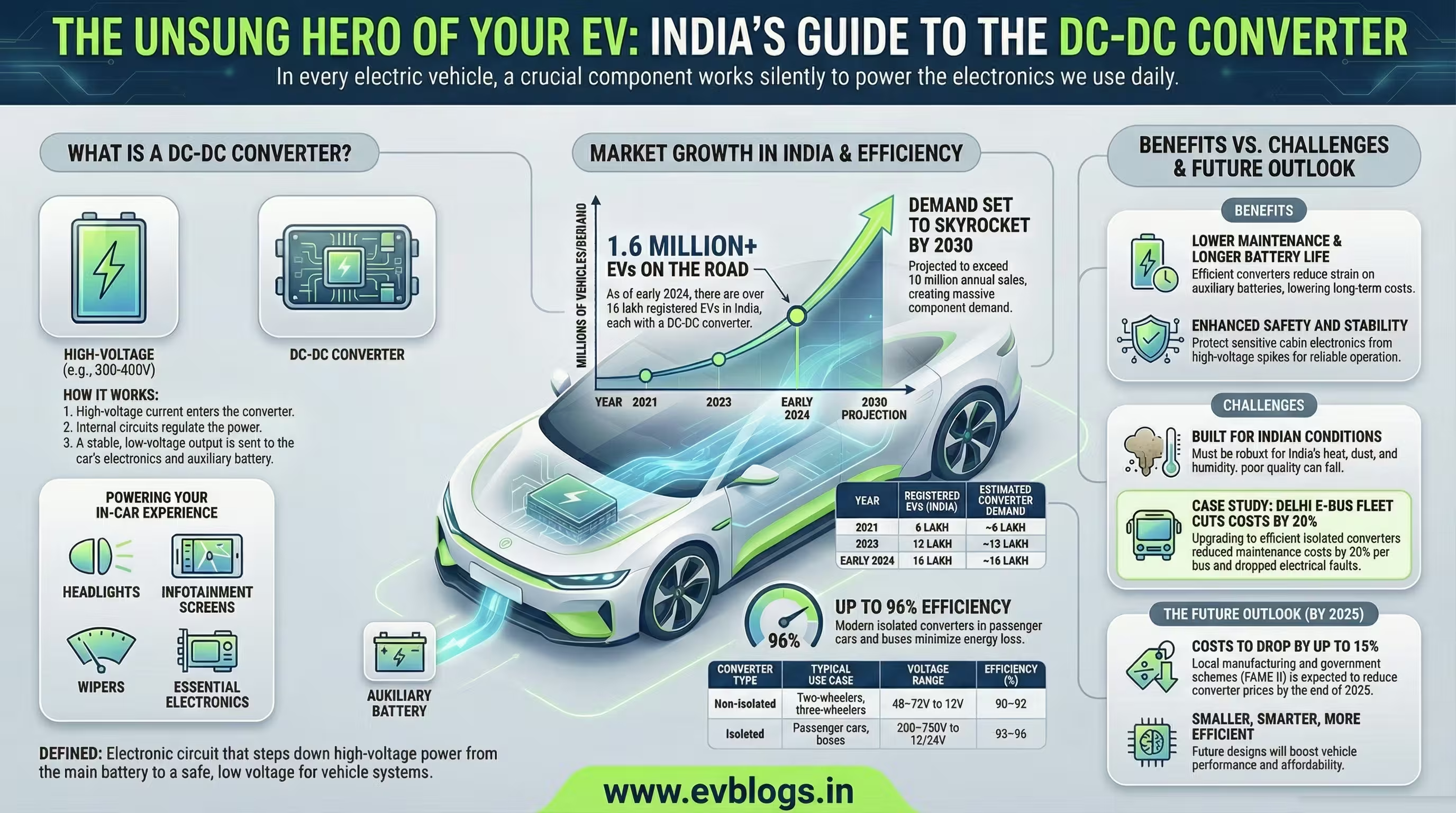
India’s EV market is witnessing exponential growth, driving battery demand. Sales of electric two-wheelers and three-wheelers have surged in the past year. According to the Ministry of Road Transport and Highways, over 1 million EVs were registered in India in 2022 alone.
“By 2030, EVs are projected to account for 30% of all vehicles sold in India.”
Major cities like Delhi, Bengaluru, and Mumbai are leading the adoption, with state governments offering additional subsidies and tax incentives.
3. Advances in Battery Technology
Technological innovation is central to the sector’s rapid expansion. Indian companies and research institutes are increasingly focusing on lithium-ion and alternative chemistries such as solid-state and sodium-ion batteries. These advancements promise improved energy density, longer life cycles, and enhanced safety.
“Innovations in battery recycling and second-life applications are also gaining traction, reducing environmental impact and costs.”
Collaboration with global technology leaders is helping Indian manufacturers bridge the technology gap and compete internationally.
4. Investments and Entry of New Players
The sector is attracting significant investments from both domestic and international players. Large Indian conglomerates like Reliance Industries, Tata Group, and Ola Electric are making substantial investments in battery manufacturing and gigafactory infrastructure.
“India’s battery sector has seen investment commitments exceeding USD 10 billion in the last two years.”
These developments are expected to create thousands of jobs and enhance the country’s technological capabilities.
5. Supply Chain and Raw Material Challenges
Securing a reliable supply chain remains a critical challenge. India currently imports most of its lithium, cobalt, and nickel, which are essential for battery production. Volatility in global commodity prices and geopolitical uncertainties can impact costs and supply reliability.
“India is actively exploring domestic mineral resources and international partnerships to secure key raw materials.”
Efforts are underway to develop local supply chains and promote recycling to address these risks.
6. Focus on Sustainability and Circular Economy
Environmental sustainability is increasingly at the forefront of industry strategies. Battery recycling plants are being set up to recover valuable materials and reduce waste. The government is also formulating Extended Producer Responsibility (EPR) guidelines for battery manufacturers.
“Effective recycling could reduce raw material imports by up to 25% and significantly lower the sector’s carbon footprint.”
This transition towards a circular economy is crucial for long-term sector resilience.
7. Infrastructure Development and Skill Building
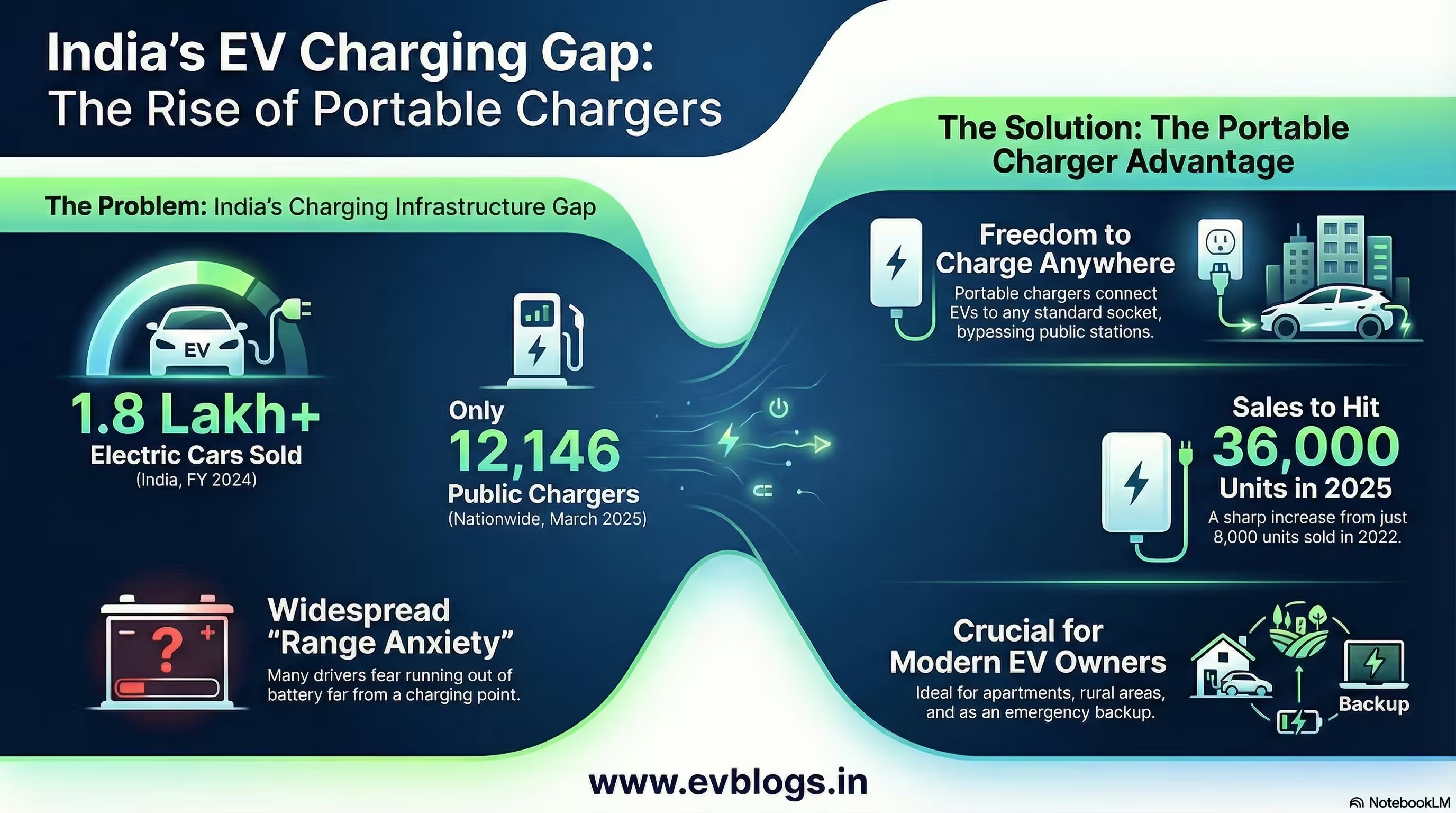
Developing robust infrastructure and skilled manpower is vital for sectoral growth. Charging infrastructure is expanding rapidly, with over 8,000 public charging stations operational nationwide. Additionally, vocational training and upskilling initiatives are being implemented to meet the sector’s employment needs.
“The EV ecosystem could generate over 10 million direct and indirect jobs by 2030.”
Industry-academia collaborations are helping to build a future-ready workforce.
As India accelerates towards an electric future, the EV battery sector stands at the heart of this transformation. With strong policy support, technological advancements, and a growing market, the industry is set for unprecedented growth. Addressing supply chain challenges and ensuring sustainability will be key to realising the sector’s full potential and securing India’s leadership in the global EV transition.
Sources
Original Source
google.com - Read original
Official Sources
- Intergovernmental Panel on Climate Change (IPCC): IPCC opens registration of experts to review the first draft of the Methodology Report on Inventories for Short-lived Climate Forcers
Quotes
- Publishing Domain: google.com
- Published Date: 2025-12-20T16:00:00+05:30
- Original URL: Read original (news.google.com/rss/articles/CBMiswFBVV95cUxOaHhhaGpBdmVhdTFRTlhLM2VRaHV0T… …)
Editorial Check
- Originality: 35 / 100 — The title and summary primarily restate widely reported industry growth projections and trends in the EV battery sector. The phrasing and data (18 GWh to 256 GWh, 35% annual growth) are standard figures cited in many reports and articles, offering little unique analysis or perspective.
- Helpfulness: 60 / 100 — The headline provides a clear snapshot of projected growth in the EV battery sector and hints at coverage of policies and technologies. However, the summary is repetitive and lacks specific details, limiting its usefulness for readers seeking in-depth information.