
Hedhvick Hirav
Hedhvick Hirav is a dedicated EV researcher and editor with over 4 years of experience in India’s growing electric vehicle ecosystem. Their contributions have been recognized in leading sustainability publications and automotive journals.
Summarize & analyze this article with
Choose an AI assistant and open this article directly:
Tip: if the AI doesn’t fetch the page automatically, paste the article URL manually.
NEW DELHI, Dec 15 —
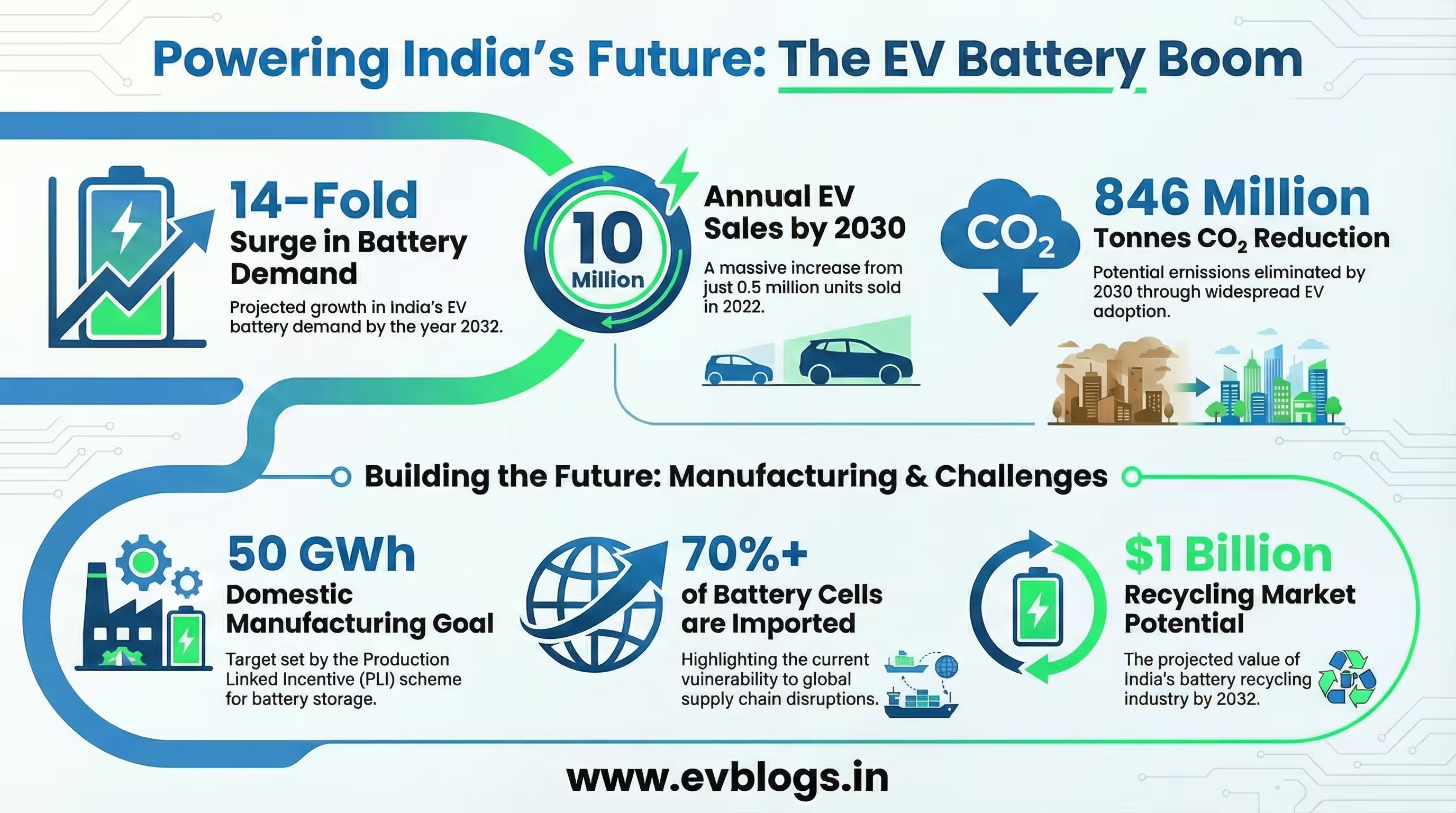
India’s electric vehicle (EV) sector is poised for a dramatic transformation, with battery demand projected to surge 14-fold by 2032, according to a recent report by the Council on Energy, Environment and Water (CEEW) and the Centre for Energy Storage (CES). This anticipated growth underscores the country’s ongoing transition towards sustainable mobility and highlights both emerging opportunities and critical challenges for the industry.
1. Rapid Growth in EV Adoption Driving Battery Demand
India’s push towards clean mobility is accelerating at an unprecedented pace. The government’s Faster Adoption and Manufacturing of Electric Vehicles (FAME) scheme, coupled with various state-level incentives, has catalysed a significant increase in EV sales.
“India’s EV market is expected to reach annual sales of 10 million units by 2030, up from just 0.5 million units in 2022.”
This rapid adoption is directly fuelling the demand for advanced battery technologies, particularly lithium-ion batteries, which are at the core of most modern EVs.
2. Domestic Battery Manufacturing Gaining Momentum
To meet soaring demand and reduce reliance on imports, India is rapidly scaling up its domestic battery manufacturing capabilities.
“The Production Linked Incentive (PLI) scheme for Advanced Chemistry Cell (ACC) battery storage aims to add 50 GWh of manufacturing capacity.”
Major Indian conglomerates, including Reliance Industries and Tata Group, have announced multi-billion-dollar investments in battery gigafactories. This localisation is expected to boost the domestic supply chain, create jobs, and bring down costs over the next decade.
3. Strategic Importance for Energy Security
Dependence on imported batteries and raw materials, especially lithium, poses a significant risk to India’s energy security. By ramping up local production and diversifying supply sources, India aims to mitigate potential disruptions.
“India currently imports over 70% of its battery cells and components, making the sector vulnerable to global supply chain shocks.”
Developing indigenous alternatives and fostering international collaborations are becoming central to India’s EV strategy.
4. Environmental and Economic Implications
The transition to EVs is set to yield substantial environmental benefits, notably in reducing urban air pollution and greenhouse gas emissions.
“Widespread EV adoption could eliminate up to 846 million tonnes of CO₂ emissions by 2030.”
Economically, the battery sector is projected to generate thousands of new jobs, spur investment in R&D, and foster ancillary industries, from recycling to logistics.
5. Challenges in Raw Material Sourcing and Recycling
Securing a stable supply of critical raw materials such as lithium, cobalt, and nickel remains a pressing challenge. India is also grappling with the need to develop efficient battery recycling infrastructure to manage end-of-life batteries sustainably.
“By 2032, India’s battery recycling industry could become a $1 billion market, if robust standards and infrastructure are established.”
Policy support and private sector participation will be key to overcoming these hurdles.
6. Opportunities in Innovation and Skill Development
With the EV battery landscape evolving rapidly, there is a significant opportunity for innovation in battery chemistry, charging technologies, and energy management systems.
“India’s workforce will need upskilling and reskilling, with estimates suggesting over 2 million jobs could be created across the battery value chain by 2030.”
Institutions and startups are increasingly focusing on research, skilling programmes, and pilot projects to build a globally competitive ecosystem.
7. Policy Roadmap and Future Outlook
Government policies—ranging from tax incentives to infrastructure development—are pivotal in shaping the future of India’s EV battery market. Continued policy clarity, public-private partnerships, and international cooperation will be essential for sustained growth.
“A clear and consistent policy framework is crucial to attract long-term investments and technology transfer in the battery sector.”
The coming years will be decisive in determining whether India can become a global leader in EV battery manufacturing and innovation.
, India’s EV battery demand is set for exponential growth over the next decade, presenting vast opportunities for economic development, innovation, and environmental sustainability. Strategic investments, robust policies, and a focus on local manufacturing and recycling will be critical for India to realise its ambitions as a key player in the global EV ecosystem.
Sources
Original Source
google.com - Read original
Official Sources
- Intergovernmental Panel on Climate Change (IPCC): IPCC opens registration of experts to review the first draft of the Methodology Report on Inventories for Short-lived Climate Forcers
Quotes
- Publishing Domain: google.com
- Published Date: 2025-12-15T11:34:17+05:30
- Original URL: Read original (news.google.com/rss/articles/CBMifEFVX3lxTE44OWM1NHFQMTdUMC1ha2o5NU9VdkpXU… …)
Editorial Check
- Originality: 20 / 100 — The summary is a direct repetition of the article title and does not provide any unique phrasing or additional information. It is not original.
- Helpfulness: 10 / 100 — The summary adds no value beyond the title and does not elaborate on the content, context, or findings of the CES report. It is minimally helpful for understanding the article.