
Hedhvick Hirav
Hedhvick Hirav is a dedicated EV researcher and editor with over 4 years of experience in India’s growing electric vehicle ecosystem. Their contributions have been recognized in leading sustainability publications and automotive journals.
Summarize & analyze this article with
Choose an AI assistant and open this article directly:
Tip: if the AI doesn’t fetch the page automatically, paste the article URL manually.
NEW DELHI, Dec 9 —
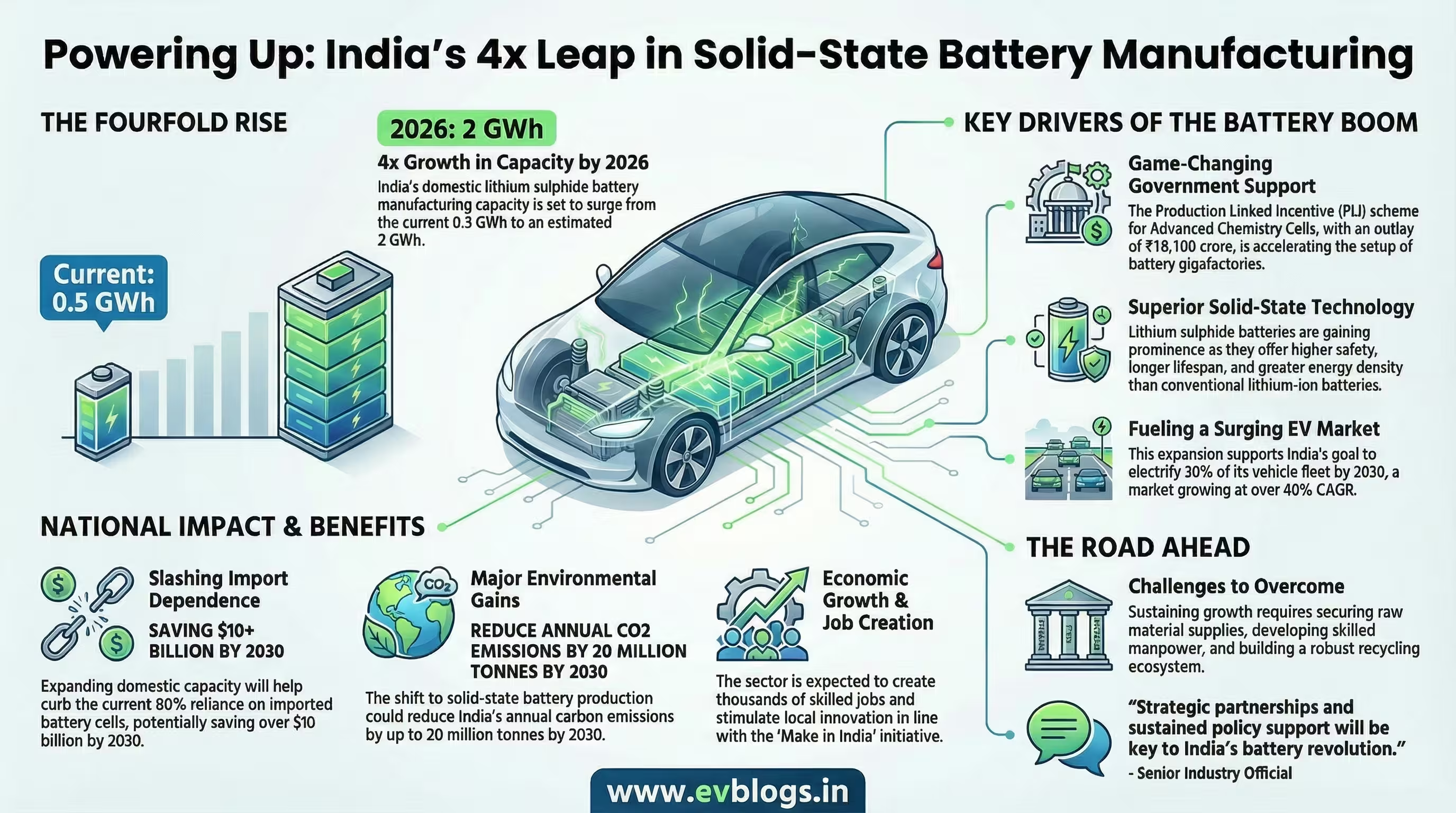
India’s ambitious push towards clean energy is set to achieve a significant milestone, as its lithium sulphide battery capacity is projected to increase fourfold by 2026. The expansion, from the current 0.5 GWh to an estimated 2 GWh, marks a major step for the country’s solid-state battery sector. Below is an in-depth analysis of the key factors driving this transformation and what it means for India’s energy landscape.
1. Surge in Domestic Manufacturing Capacity
India’s lithium sulphide battery manufacturing is witnessing rapid growth, fuelled by government incentives and private sector investments.
Major companies are ramping up production lines to meet both domestic and export demand.
India’s battery manufacturing capacity is expected to touch 2 GWh by 2026, a fourfold rise from the existing 0.5 GWh.
This surge is in line with the government’s “Make in India” initiative, which seeks to reduce reliance on imports and position India as a global battery manufacturing hub.
2. Policy Support and PLI Schemes
The government’s Production Linked Incentive (PLI) scheme for Advanced Chemistry Cell (ACC) batteries has been a game changer.
The scheme, with an outlay of ₹18,100 crore, incentivises manufacturers to set up battery gigafactories in India.
PLI-backed projects are expected to add over 50 GWh of battery capacity in the coming years, with lithium sulphide technology gaining prominence due to its high energy density and safety.
The robust policy framework has attracted both domestic and international investments, accelerating technology adoption.
3. Advancements in Solid-State Battery Technology
Lithium sulphide solid-state batteries are at the forefront of innovation, offering higher safety, longer lifespan, and greater energy density compared to conventional lithium-ion batteries.
Indian firms are increasingly investing in R&D to localise these advanced technologies.
“Solid-state batteries can potentially double the driving range of electric vehicles and reduce charging times,” say industry experts.
Such technological advancements are vital for India’s fast-growing electric vehicle (EV) market and stationary energy storage applications.
4. Meeting the Demand for Electric Vehicles
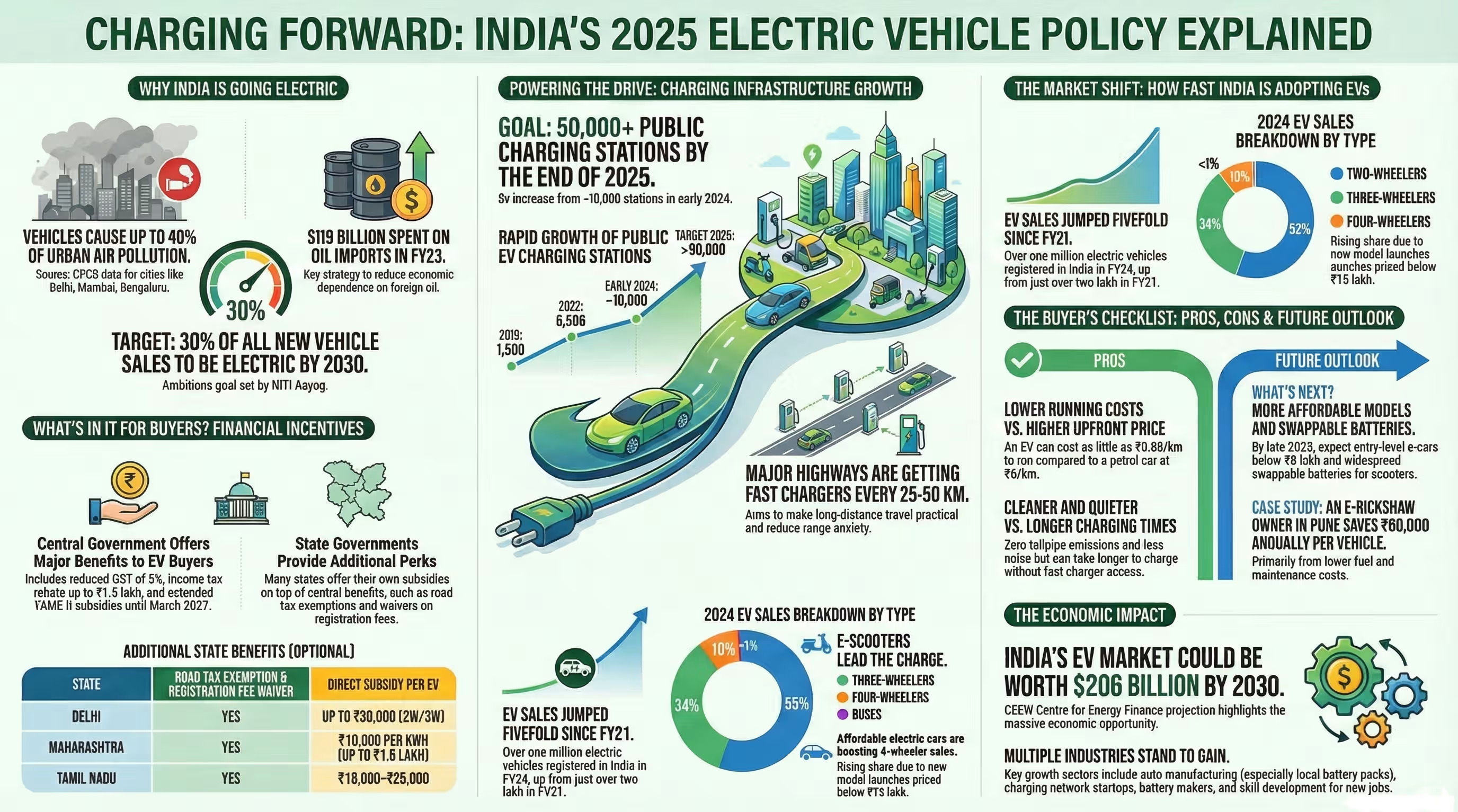
India’s EV market is expanding rapidly, with sales projected to grow at a CAGR of over 40% through 2030.
Battery technology is a key enabler for this growth, and the shift to lithium sulphide solid-state batteries addresses concerns around safety, cost, and performance.
By 2030, India aims to electrify 30% of its vehicle fleet, significantly increasing demand for advanced batteries.
This transition will not only support the automotive sector but also create new opportunities for ancillary industries.
5. Reducing Import Dependence
Currently, India imports over 80% of its battery cells, mainly from China, South Korea, and Japan.
Expanding domestic capacity will help curb the import bill, improve energy security, and support the rupee.
“A robust local battery ecosystem could save India over $10 billion in imports by 2030,” according to industry estimates.
This move aligns with national priorities of self-reliance and Atmanirbhar Bharat (self-sufficient India).
6. Environmental and Economic Impact
Wider adoption of lithium sulphide solid-state batteries will have significant environmental benefits.
These batteries are more recyclable and have a lower risk of fire, contributing to safer and greener energy storage solutions.
Solid-state battery production could reduce India’s carbon emissions by up to 20 million tonnes annually by 2030.
Economically, the sector is expected to create thousands of skilled jobs and stimulate local innovation.
7. Challenges and the Road Ahead
While the outlook is positive, India faces challenges such as securing raw material supplies, scaling up skilled manpower, and developing a robust recycling ecosystem.
Addressing these hurdles will be crucial for sustaining growth in the battery sector.
“Strategic partnerships and sustained policy support will be key to India’s battery revolution,” notes a senior industry official.
Continuous investment in R&D, global collaborations, and policy stability will ensure that India realises its potential as a major player in next-generation battery technologies.
, India’s lithium sulphide battery capacity is poised for a transformative leap, promising to reshape the nation’s energy and mobility landscape. With strong policy backing, technological innovation, and a clear focus on sustainability, India is well on its way to becoming a global leader in advanced battery manufacturing.
Sources
Original Source
google.com - Read original
Official Sources
- Intergovernmental Panel on Climate Change (IPCC): IPCC opens registration of experts to review the first draft of the Methodology Report on Inventories for Short-lived Climate Forcers
Quotes
- Publishing Domain: google.com
- Published Date: 2025-12-09T11:55:15+05:30
- Original URL: Read original (news.google.com/rss/articles/CBMi2wFBVV95cUxOY3hHTEJZT0EtR1lvTEVKbTU1SnpSQ… …)
Editorial Check
- Originality: 35 / 100 — The title and summary present a factual report on the projected growth of lithium sulphide solid-state battery capacity, which is a common topic in industry news. The phrasing and focus are standard for market analysis articles, with no unique insights or novel angles evident from the provided information.
- Helpfulness: 70 / 100 — The article likely provides useful data on capacity expansion and industry trends, which can inform stakeholders about market developments. However, without specific details or actionable insights in the summary, its practical value is moderate rather than exceptional.