
Hedhvick Hirav
Hedhvick Hirav is a dedicated EV researcher and editor with over 4 years of experience in India’s growing electric vehicle ecosystem. Their contributions have been recognized in leading sustainability publications and automotive journals.
Summarize & analyze this article with
Choose an AI assistant and open this article directly:
Tip: if the AI doesn’t fetch the page automatically, paste the article URL manually.
NEW DELHI, Dec 8 —
LG Energy Solution, a leading South Korean battery manufacturer, has announced a significant USD 1.4 billion deal to supply electric vehicle (EV) batteries to Mercedes-Benz. This agreement marks a major step in the global shift towards sustainable mobility and holds considerable implications for the Indian automotive sector, which is actively pursuing electrification.
1. LG Energy Solution’s Strategic Partnership with Mercedes-Benz
The USD 1.4 billion agreement between LG Energy Solution and Mercedes-Benz underscores the growing demand for advanced EV batteries worldwide.
“Global sales of EVs are projected to reach 17 million units by 2024, up from 10.5 million in 2022,”
highlighting the rapid pace of adoption. This partnership also reflects the increasing need for reliable, high-capacity batteries to support the electric transition of luxury automotive brands.
2. Implications for India’s EV Ecosystem
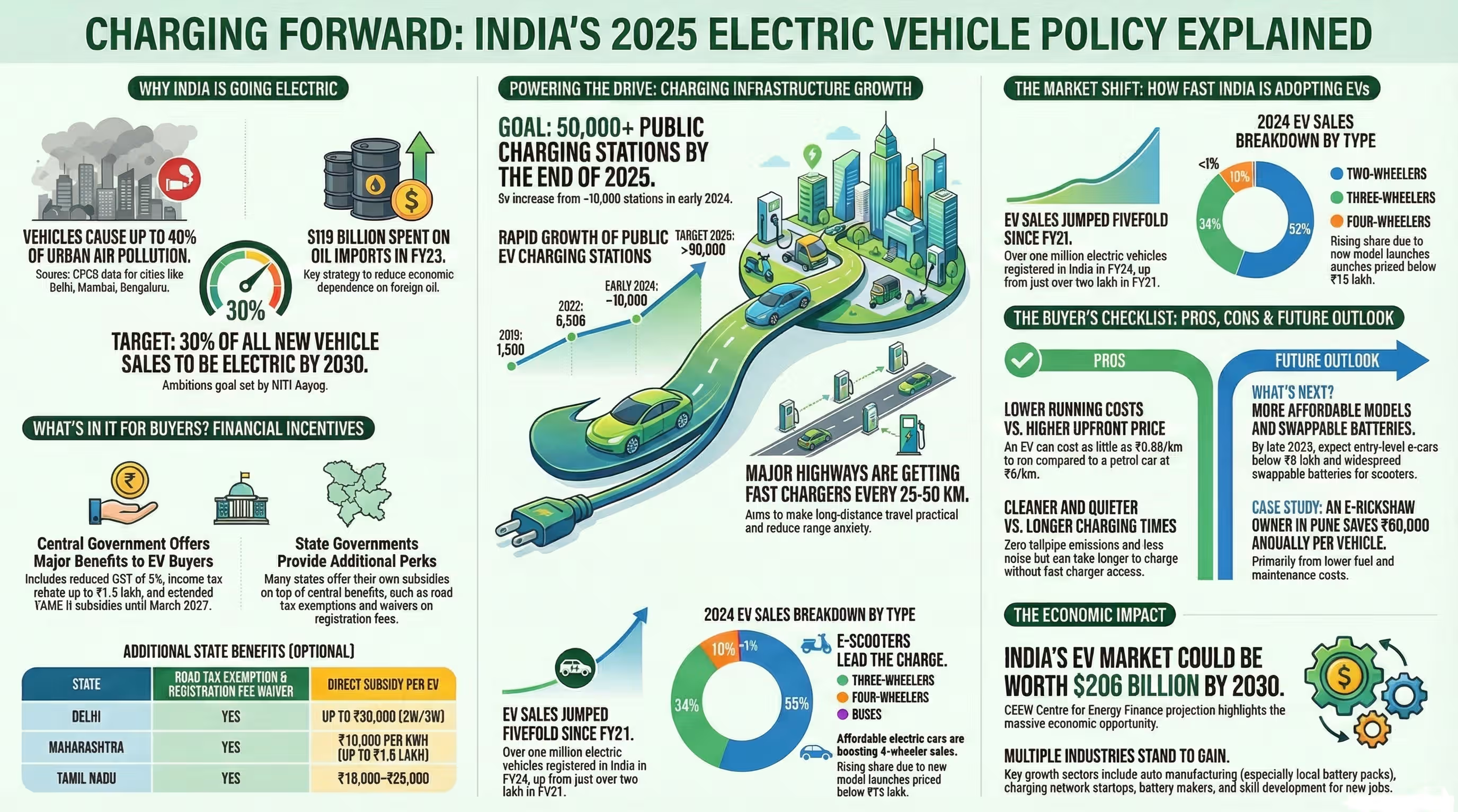
India’s EV market is expanding at an unprecedented rate, with the government aiming for 30% electric vehicle penetration by 2030. The success of such large-scale battery deals is expected to accelerate technology transfer and drive investments in local battery manufacturing.
“India recorded a 155% year-on-year growth in EV sales in FY2023,”
demonstrating robust consumer interest and policy support.
3. Opportunities for Indian Battery Manufacturers
The LG-Mercedes deal sets a benchmark for Indian battery producers. To remain competitive, Indian companies like Exide Industries and Amara Raja Batteries are investing in local gigafactories and R&D. Such global collaborations provide technological blueprints and encourage domestic players to scale up production, ensuring the availability of advanced battery technology in India.
4. Encouraging Investments and Joint Ventures
Major international battery agreements frequently spur further foreign direct investment (FDI) and joint ventures in emerging markets. India has already witnessed partnerships such as Tata Group’s plans for a lithium-ion cell factory in Gujarat, and Reliance Industries’ foray into battery manufacturing. These ventures are critical for reducing India’s dependence on imports and for building a robust supply chain.
5. Boost to Sustainable Mobility Initiatives
Battery technology is central to India’s broader climate and mobility goals. The government’s FAME II scheme and various state-level incentives are designed to promote EV adoption, while such global deals showcase the importance of battery innovation.
“Advanced batteries can reduce EV costs by up to 30%, making them more accessible to Indian consumers,”
according to industry experts.
6. Challenges and the Road Ahead
Despite significant progress, India faces challenges such as raw material sourcing, recycling infrastructure, and skilled workforce development. Learning from global leaders like LG Energy Solution will be pivotal in overcoming these hurdles. Stakeholders must focus on building an integrated ecosystem to enable sustainable and scalable growth in the EV sector.
7. Strengthening India’s Position in the Global EV Supply Chain
By aligning with international trends and investing in cutting-edge battery technologies, India can position itself as a key player in the global EV supply chain. The LG Energy Solution-Mercedes-Benz partnership serves as a timely reminder of the opportunities and responsibilities that lie ahead for Indian industry.
As the world moves rapidly towards electrification, landmark deals like LG Energy Solution’s agreement with Mercedes-Benz reinforce the need for innovation, investment, and collaboration. For India, this is both a challenge and an opportunity to accelerate its transition towards clean mobility and to establish itself as a leader in the global EV revolution.
Certainly! Here’s an additional detailed numbered point for “LG Energy Solution secures USD 1.4 billion EV battery deal with Mercedes-Benz” for BioEnergy Times:
- Focus on Next-Generation Battery Technology:
As part of the agreement, LG Energy Solution will supply Mercedes-Benz with advanced, high-nickel NCMA (Nickel, Cobalt, Manganese, Aluminum) lithium-ion battery cells designed to deliver higher energy density, improved safety, and longer driving ranges for Mercedes-Benz’s upcoming electric vehicle models. The partnership also includes joint efforts in research and development to accelerate the commercialization of solid-state batteries and other next-generation energy storage solutions. This technological collaboration aims to strengthen both companies’ competitive edge in the rapidly evolving global EV market, while supporting Mercedes-Benz’s ambition to achieve a fully electric vehicle lineup by 2030.
Sources
Original Source
google.com - Read original
Official Sources
- Intergovernmental Panel on Climate Change (IPCC): IPCC opens registration of experts to review the first draft of the Methodology Report on Inventories for Short-lived Climate Forcers
Quotes
- Publishing Domain: google.com
- Published Date: 2025-12-08T13:56:02+05:30
- Original URL: Read original (news.google.com/rss/articles/CBMiqAFBVV95cUxNV0ZCblJtOUtCWjZCNzl6RzRXaFJhU… …)
Editorial Check
- Originality: 20 / 100 — The summary is a direct restatement of the article title and provides no additional unique information or analysis.
- Helpfulness: 30 / 100 — The summary communicates the core news (the deal and its value), but lacks context, details, or explanation that would help a reader understand the significance or implications of the deal.