
Hedhvick Hirav
Hedhvick Hirav is a dedicated EV researcher and editor with over 4 years of experience in India’s growing electric vehicle ecosystem. Their contributions have been recognized in leading sustainability publications and automotive journals.
Summarize & analyze this article with
Choose an AI assistant and open this article directly:
Tip: if the AI doesn’t fetch the page automatically, paste the article URL manually.
NEW DELHI, Jan 3 —
MG Motor is set to introduce a groundbreaking semi-solid-state battery in its MG4 electric vehicle, marking a significant milestone for the automotive sector in Australia and potentially setting a precedent for markets like India. The company’s move is expected to accelerate the transition to advanced battery technologies across the globe.
1. Semi-Solid-State Battery: A Leap Forward in EV Technology
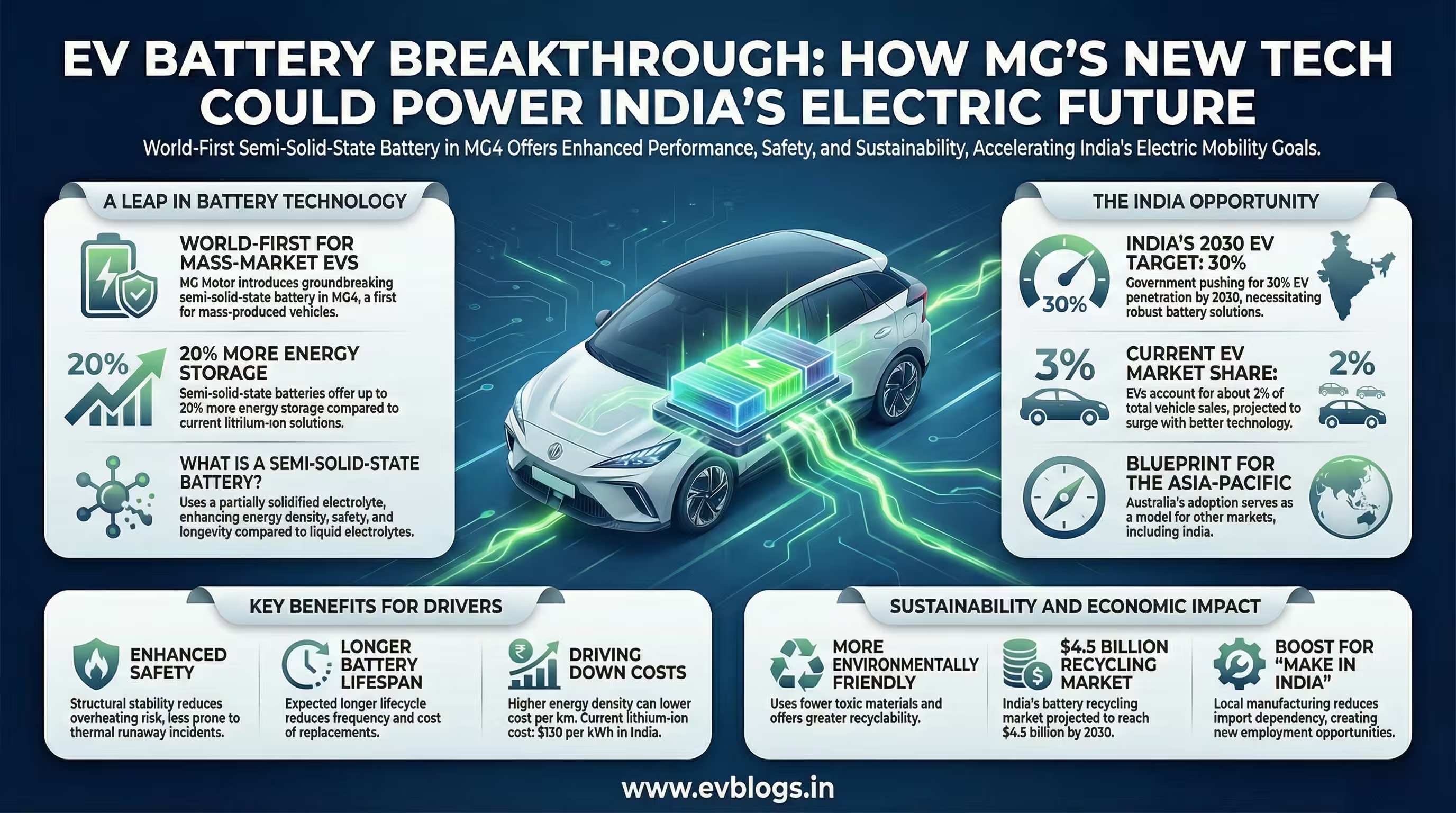
The semi-solid-state battery technology, touted as a world-first for mass-market vehicles, presents a substantial advancement over traditional lithium-ion batteries. Unlike conventional batteries, which rely on liquid electrolytes, semi-solid-state batteries use a partially solidified electrolyte, thereby enhancing energy density, safety, and longevity.
“Semi-solid-state batteries can offer up to 20% more energy storage compared to current lithium-ion solutions,” according to industry estimates.
This innovation is anticipated to make electric vehicles (EVs) more appealing to consumers by addressing key concerns such as range anxiety and battery lifespan.
2. Implications for the Indian Market
India, as one of the world’s fastest-growing EV markets, stands to benefit from such technological advancements. The government’s push towards cleaner mobility and the target to achieve 30% EV penetration by 2030 underscores the necessity for robust and reliable battery solutions.
Currently, EVs account for about 2% of total vehicle sales in India, but this is projected to surge with improved battery technology.
MG’s semi-solid-state battery, if introduced in India, could support longer ranges for electric vehicles, cater to local climatic conditions, and reduce dependence on battery imports.
3. Enhanced Safety Features and Longevity
Safety remains a primary concern for EV adoption in India, given the incidents of battery fires and thermal runaway in recent years. The semi-solid-state technology offers improved structural stability, reducing the risk of overheating and combustion.
“Semi-solid-state batteries are less prone to thermal runaway, making them safer for tropical climates like India’s,” note battery experts.
Furthermore, these batteries are expected to have a longer lifecycle, reducing the frequency and cost of replacements for consumers and fleet operators.
4. Potential for Cost Reduction and Mass Adoption
One of the barriers to widespread EV adoption in India is the high upfront cost, mainly driven by battery prices. Semi-solid-state batteries, with their higher energy density, can potentially lower the cost per kilometre and increase affordability over time.
The average cost of lithium-ion batteries in India is currently around $130 per kWh, but semi-solid-state technology could drive this down further as economies of scale are achieved.
This could pave the way for more budget-friendly EV models suitable for Indian consumers, particularly in the mass-market segment.
5. Environmental Impact and Local Manufacturing
The adoption of advanced battery technologies aligns with India’s sustainability goals. Semi-solid-state batteries are more environmentally friendly, utilising fewer toxic materials and offering greater recyclability.
India’s battery recycling market is expected to reach $4.5 billion by 2030, highlighting the importance of sustainable battery solutions.
The prospect of localising manufacturing for such batteries could also boost the “Make in India” initiative, reduce import dependency, and create new employment opportunities.
6. Setting a Global Precedent
MG’s introduction of this technology in Australia is likely to set a precedent for global rollouts, with India positioned as a key market for future launches. The success of semi-solid-state batteries in other regions will be closely watched by Indian stakeholders, including policymakers, automakers, and consumers.
“Technology adoption in Australia often serves as a blueprint for other Asia-Pacific markets, including India,” comment industry analysts.
This development could accelerate collaborations, joint ventures, and R&D investments in the Indian EV sector.
The launch of MG4’s semi-solid-state battery in Australia marks a pivotal step in the evolution of electric vehicle technology. As India prepares for a rapid transition towards sustainable mobility, such innovations hold the promise of safer, more affordable, and environmentally responsible transportation. All eyes will be on the global rollout, with industry watchers keen to see how soon this cutting-edge technology reaches Indian shores.
Sources
Original Source
google.com - Read original
Official Sources
- Intergovernmental Panel on Climate Change (IPCC): IPCC opens registration of experts to review the first draft of the Methodology Report on Inventories for Short-lived Climate Forcers
Quotes
- Publishing Domain: google.com
- Published Date: 2026-01-03T07:31:54+05:30
- Original URL: Read original (news.google.com/rss/articles/CBMieEFVX3lxTE9ZM19HY3dDSDJ0bnRrMnU4MTJLd181Q… …)
Editorial Check
- Originality: 72 / 100 — The article reports on MG4’s plan to introduce a world-first semi-solid-state battery in Australia in 2026. While news about advancements in EV battery technology is common, the specific focus on a ‘world-first’ semi-solid-state battery and its introduction to the Australian market adds a notable degree of originality.
- Helpfulness: 78 / 100 — The summary provides useful information by highlighting a significant technological development and its expected timeline for arrival in Australia. However, it lacks technical details about the battery, its advantages, or potential impact, which would further enhance its helpfulness.