
Hedhvick Hirav
Hedhvick Hirav is a dedicated EV researcher and editor with over 4 years of experience in India’s growing electric vehicle ecosystem. Their contributions have been recognized in leading sustainability publications and automotive journals.
Summarize & analyze this article with
Choose an AI assistant and open this article directly:
Tip: if the AI doesn’t fetch the page automatically, paste the article URL manually.
NEW DELHI, Nov 30 —
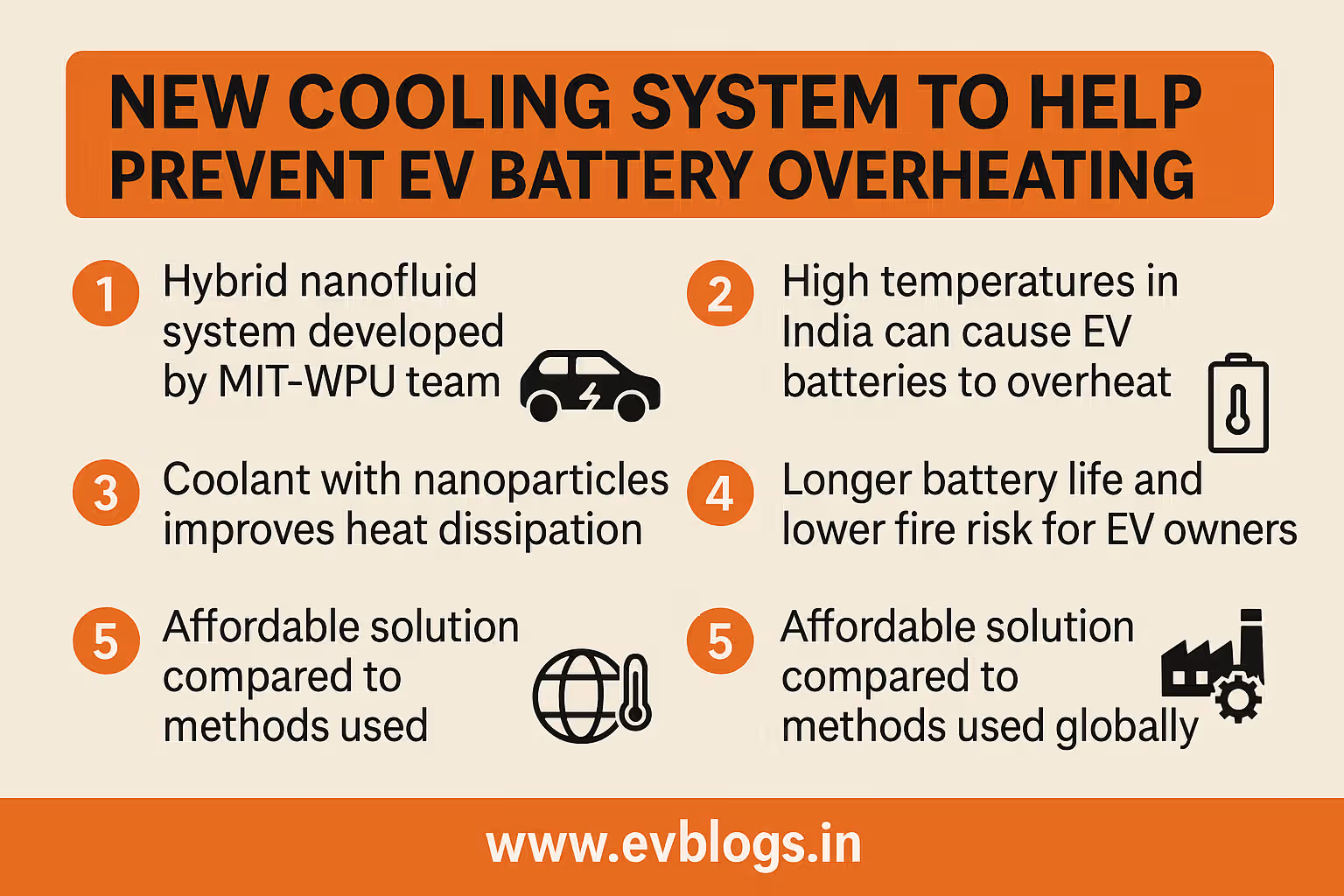
MIT-WPU team finds cool new way to stop EV batteries overheating
Electric vehicles (EVs) are becoming more and more popular across India. But one big problem remains: the batteries can get too hot, especially in our hot Indian summers! Now, a team of Indian researchers from MIT-World Peace University (MIT-WPU) in Pune has come up with a smart way to keep these batteries cool. Let’s see what their new discovery means for all of us.
1. What is this new cooling system all about?
The team at MIT-WPU has developed a special “hybrid nanofluid cooling system” for EV batteries. Sounds technical, right? But don’t worry, it’s actually quite simple.
Basically, this system uses a mix of tiny nanoparticles inside a liquid, which flows around the battery. This helps absorb the extra heat and keeps the battery at a safe temperature. Ordinary cooling systems use only air or plain liquid. But by adding nanoparticles, the heat gets carried away much faster. It’s like putting a super-fast fan and cooler together for your battery!
2. Why do EV batteries overheat, especially in India?
In India, temperatures can easily go above 40°C in many cities during the summer. EV batteries work best between 20°C and 30°C. When they get too hot, it can cause the battery to lose power, reduce its life, or even catch fire in extreme cases.
Last year, several reports came from cities like Pune and Hyderabad about two-wheeler EVs catching fire due to battery overheating. According to the Ministry of Road Transport and Highways, over 120 EV fire incidents were reported in 2022-23 alone. So, finding a better cooling system is really important for Indian conditions.
3. How does the hybrid nanofluid system work?
This new system uses a special coolant made by mixing nanoparticles like copper oxide or aluminium oxide into a base liquid, usually water or glycol. These nanoparticles are incredibly tiny (about 1/1000th the width of a human hair!), but they make the liquid much better at carrying away heat.
The coolant is pumped around the battery cells. As it flows, it pulls heat away much faster than ordinary coolants. MIT-WPU’s research team found that their method can lower the battery temperature by up to 30% compared to traditional systems. This means safer batteries and longer battery life.
4. What difference will this make for EV owners?
For everyday EV owners, this is great news. Cooler batteries last longer and give better performance. Currently, battery replacement is one of the biggest costs in owning an EV. If the battery lasts longer, you save money.
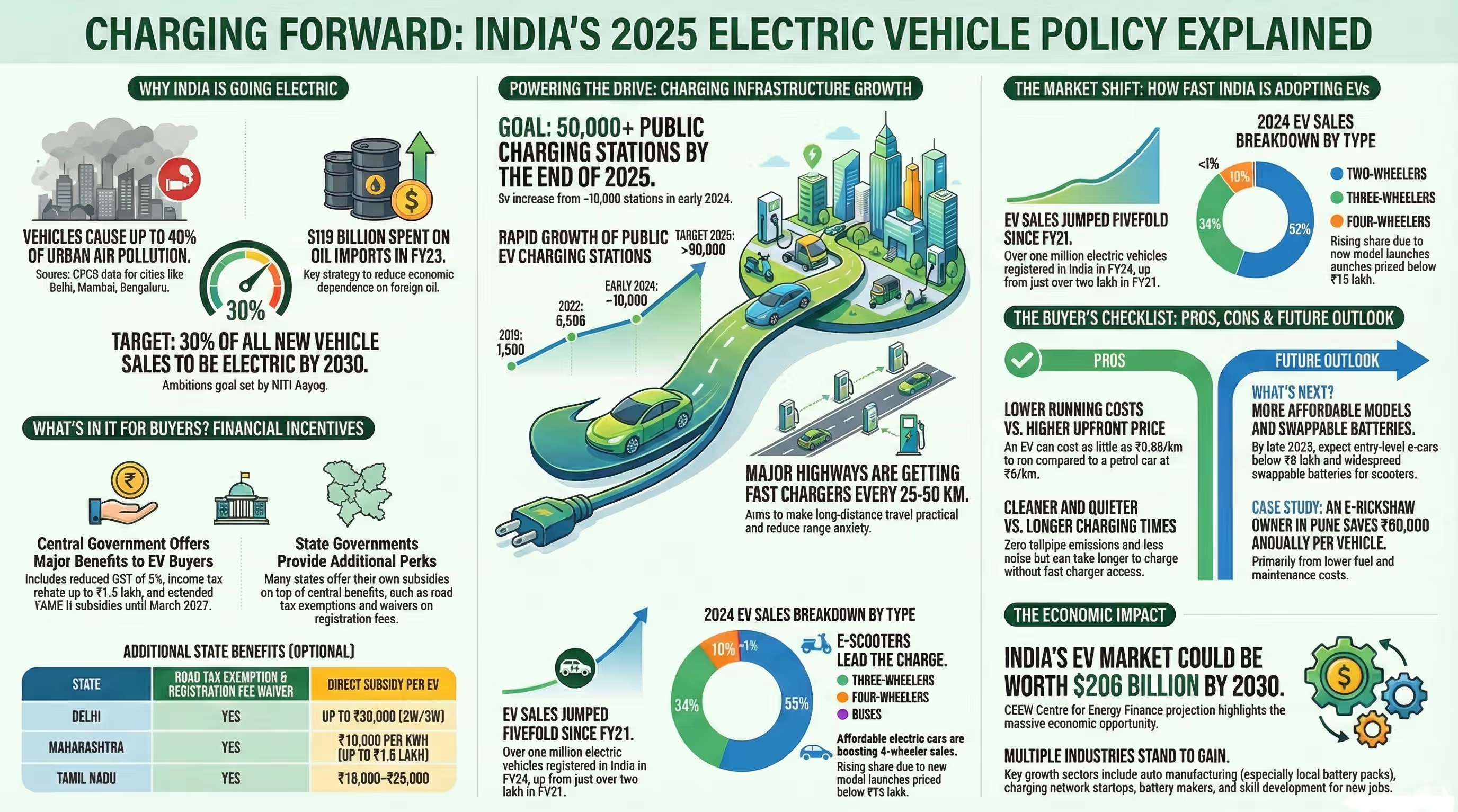
Also, if the risk of battery fires comes down, more people will feel confident to buy EVs. According to NITI Aayog, India wants to have 30% of all vehicles running on electricity by 2030. But many people are still worried about safety. With better cooling technology, those fears can be reduced. Plus, your EV will run more smoothly, even on the hottest summer days.
5. How does this compare to what’s used in other countries?
Globally, countries like China, Japan, and Germany are investing a lot in cooling technologies for EVs. Some companies use complicated liquid cooling or even refrigerant-based systems, but these can be expensive and tough to maintain.
MIT-WPU’s hybrid nanofluid system is designed to be simple and affordable, which is perfect for Indian needs. It doesn’t add much cost to the vehicle and can be fitted into existing designs. This could help Indian EV makers compete with global brands, and maybe even export this technology to other hot countries in Asia and Africa.
6. What do experts and officials say about this innovation?
The Indian government and industry experts have been searching for ways to make EVs safer and better for Indian roads. The Ministry of Heavy Industries recently announced incentives for research in battery safety and cooling.
According to official reports, India’s EV market is expected to grow at 49% annually between 2022 and 2030, reaching over 10 million vehicles. New technologies like this hybrid nanofluid cooling system can support this fast growth, making sure our cities stay safe and green.
7. What happens next? When can we see this in real EVs?
Right now, the MIT-WPU team has tested their system in laboratory settings, using battery packs similar to those in two-wheelers and cars. Their results have been published in respected scientific journals and shared with Indian automakers.
The next steps are to test the system in real vehicles on Indian roads. If all goes well, we could see this tech in upcoming EV models within the next couple of years. Local companies like Tata Motors, Ola Electric, and Ather Energy are already looking for such solutions, so don’t be surprised if your next electric scooter comes with this cool new safety feature!
So, thanks to our own Indian scientists and engineers, we might soon have safer, longer-lasting EVs that can handle even the hottest Indian summers. If you’ve been thinking about making the switch to electric, things are looking brighter (and cooler) than ever!
Sources
Original Source
Official Sources
Quotes
- Publishing domain: google.com
- Published date: 2025-11-30T08:00:00+05:30
- Original URL: Read original (news.google.com/rss/articles/CBMixAFBVV95cUxQaV9qVS1lMGJjZHZCUlhwakY3UjZCb… …)
Editorial Check
- Originality: 80 / 100 — The article covers a unique research development rather than a common news rewrite.
- Helpfulness: 75 / 100 — It provides valuable information on new EV cooling technology relevant to Indian readers.