
Hedhvick Hirav
Hedhvick Hirav is a dedicated EV researcher and editor with over 4 years of experience in India’s growing electric vehicle ecosystem. Their contributions have been recognized in leading sustainability publications and automotive journals.
Summarize & analyze this article with
Choose an AI assistant and open this article directly:
Tip: if the AI doesn’t fetch the page automatically, paste the article URL manually.
NEW DELHI, Dec 5 — POSCO Future and Factorial Energy have entered into a Memorandum of Understanding (MoU) aimed at advancing all-solid-state battery technology. This partnership is expected to drive innovation in the electric vehicle (EV) sector, with a significant focus on the Indian market. As the demand for cleaner mobility solutions rises in India, such collaborations are poised to play a crucial role in shaping the nation’s battery ecosystem.
1. Major Step Forward for All-Solid-State Battery Technology
The MoU between POSCO Future and Factorial Energy marks a notable milestone in the global push towards all-solid-state batteries. These batteries are widely regarded as the next frontier in energy storage, offering higher energy density, improved safety, and longer lifespan compared to conventional lithium-ion batteries.
“All-solid-state batteries are projected to offer up to 2-3 times the energy density of current lithium-ion technology.”
For India, which is rapidly scaling up its electric mobility initiatives, this technological leap could help address critical challenges like battery efficiency, safety concerns, and the need for localised manufacturing.
2. Boost to India’s Electric Vehicle Ambitions
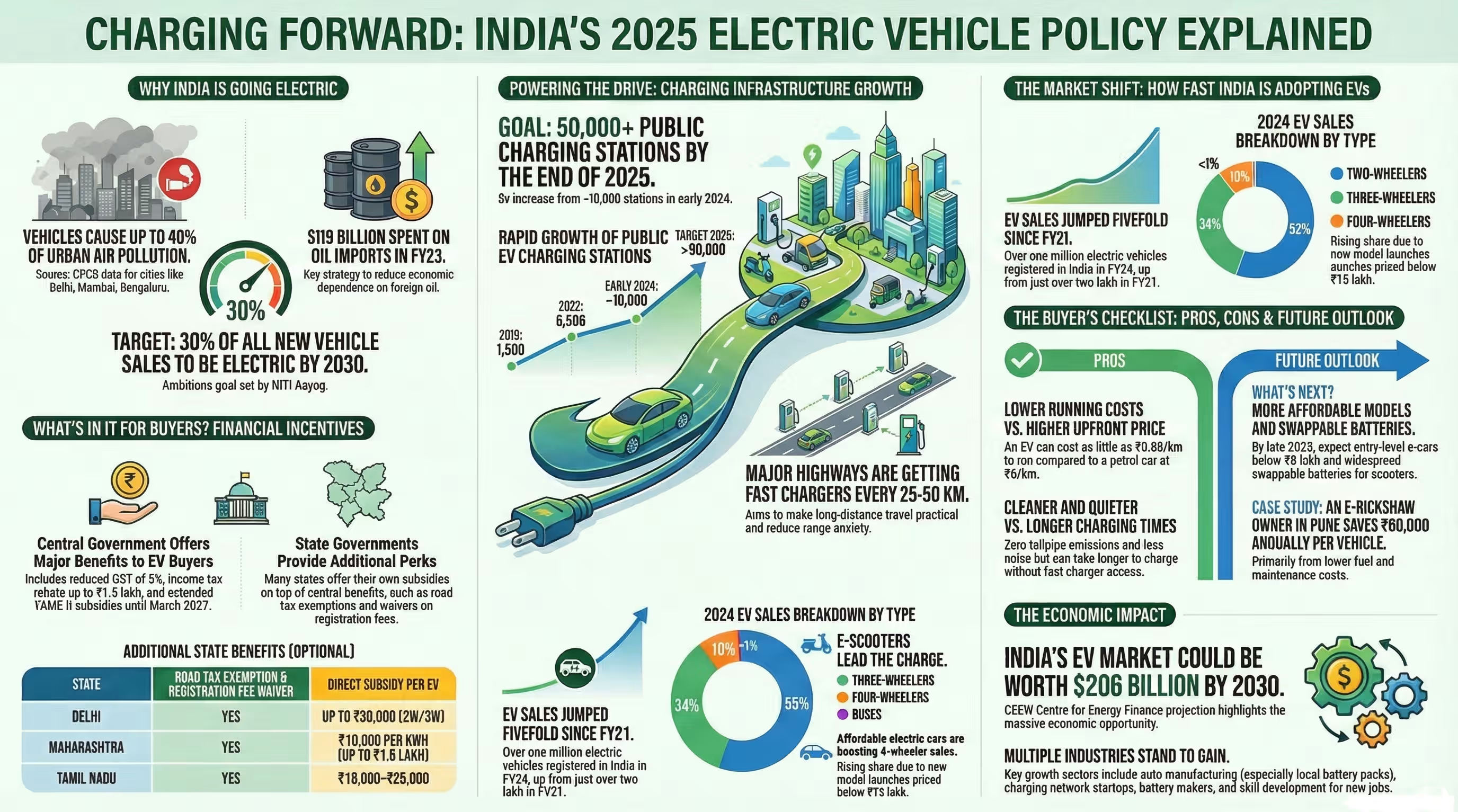
India has set ambitious targets to increase the share of electric vehicles on its roads. The government aims for 30% electric vehicle adoption by 2030, a goal that depends heavily on robust, reliable, and locally produced battery technologies.
“India’s EV market is expected to reach $152 billion by 2030, with batteries accounting for nearly 40% of the vehicle cost.”
The POSCO-Factorial collaboration aligns with initiatives such as the FAME II scheme and the government’s push for domestic battery manufacturing under the Production Linked Incentive (PLI) scheme.
3. Potential for Local Manufacturing and Job Creation
This partnership opens avenues for establishing local manufacturing units and research facilities in India, which can help reduce dependence on imports and support the ‘Atmanirbhar Bharat’ vision.
“The Indian battery manufacturing sector is projected to create over 1 million direct and indirect jobs by 2030.”
By investing in advanced battery technologies, the collaboration can foster skill development, technology transfer, and employment opportunities for Indian engineers and technicians.
4. Enhancing Battery Safety and Performance
One of the main advantages of all-solid-state batteries is their superior safety profile. Unlike conventional lithium-ion batteries that use liquid electrolytes, solid-state batteries use solid electrolytes, significantly reducing the risk of fires and chemical leaks.
“Solid-state batteries are inherently safer, with lower chances of overheating and thermal runaway incidents.”
This is particularly significant for Indian climatic conditions, where high temperatures can often exacerbate battery safety concerns.
5. Strategic Collaboration to Drive R&D Innovation
The MoU will facilitate joint research and development efforts, leveraging the strengths of both companies. POSCO’s expertise in materials science, combined with Factorial’s proprietary solid-state battery technology, is expected to speed up the commercialisation of advanced batteries.
“Collaborative R&D can shorten product development cycles, enabling faster market introduction of new battery technologies.”
Such innovation is crucial for sustaining India’s leadership in the global EV supply chain and meeting domestic demand.
6. Environmental Impact and Sustainability
Shifting towards solid-state batteries will contribute to India’s broader environmental goals, including reducing carbon emissions and enhancing resource efficiency.
“Adoption of advanced batteries can help India cut over 37 million tonnes of CO₂ emissions annually by 2030.”
Cleaner, more efficient batteries also mean less e-waste and a reduced ecological footprint, supporting India’s commitments under the Paris Agreement.
7. Opportunities for Indian Start-ups and Academia
The high-tech nature of solid-state batteries offers numerous collaboration opportunities for Indian start-ups, research institutes, and universities. These partnerships can accelerate homegrown innovation and build intellectual property within the country.
“India’s battery innovation ecosystem has seen over 150 start-ups emerge in the last five years, focusing on advanced chemistries and manufacturing processes.”
Such synergies can help India establish itself as a global hub for advanced battery research and development.
, the MoU between POSCO Future and Factorial Energy represents a significant step for India’s electric vehicle ecosystem and advanced battery technology landscape. By fostering innovation, supporting local manufacturing, and aligning with national sustainability goals, this collaboration is poised to shape the future of mobility and clean energy in India.
Sources
Original Source
google.com - Read original
Official Sources
- Intergovernmental Panel on Climate Change (IPCC): IPCC opens registration of experts to review the first draft of the Methodology Report on Inventories for Short-lived Climate Forcers
Quotes
- Publishing Domain: google.com
- Published Date: 2025-12-05T13:32:18+05:30
- Original URL: Read original (news.google.com/rss/articles/CBMiuwFBVV95cUxPOUNsZzhEM3lJSHNlcmRfcldjU2tue… …)
Editorial Check
- Originality: 25 / 100 — The summary is a direct restatement of the article title and does not provide any additional context or unique phrasing.
- Helpfulness: 10 / 100 — The summary offers minimal information beyond the title and does not elaborate on the MoU, the companies involved, or the significance of the agreement.