
Hedhvick Hirav
Hedhvick Hirav is a dedicated EV researcher and editor with over 4 years of experience in India’s growing electric vehicle ecosystem. Their contributions have been recognized in leading sustainability publications and automotive journals.
Summarize & analyze this article with
Choose an AI assistant and open this article directly:
Tip: if the AI doesn’t fetch the page automatically, paste the article URL manually.
NEW DELHI, Dec 10 —
India’s electric vehicle (EV) sector is set for a significant boost as the Sanand facility gears up to enhance domestic EV battery production. This development is expected to accelerate the country’s transition towards clean mobility, reduce reliance on imports, and support the government’s ambitious electrification goals. Below are the key ways the Sanand facility will strengthen India’s EV battery output:
1. Expansion of Domestic Manufacturing Capacity
The Sanand facility represents a major step forward in India’s efforts to localise EV battery production. With a projected capacity to produce several gigawatt-hours (GWh) of lithium-ion batteries annually, the facility will help bridge the gap between domestic demand and supply.
“India currently imports over 80% of its lithium-ion battery cells, highlighting the need for robust local manufacturing.”
By reducing import dependence, the facility will help stabilise costs and ensure a steady supply for the country’s growing EV market.
2. Boost to Employment and Skill Development
The establishment of the Sanand facility is expected to generate thousands of new jobs, ranging from engineering and operations to research and development.
“Industry experts estimate that battery manufacturing could create over 10,000 direct and indirect jobs in the region.”
This will not only support local economies, especially in Gujarat, but also foster skill development in advanced manufacturing technologies.
3. Support for Government’s EV Ambitions
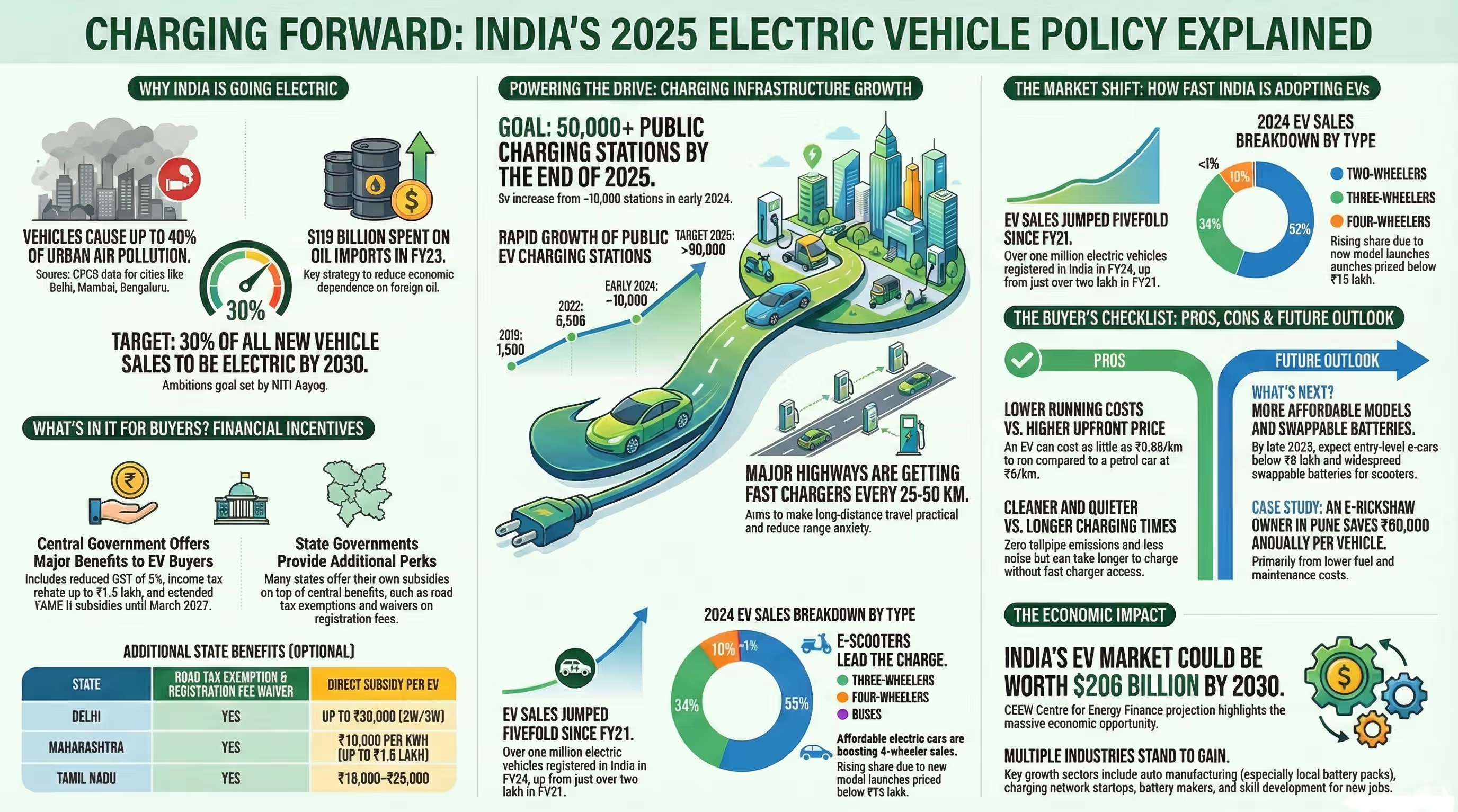
The Indian government has set a bold target of 30% electric vehicle penetration by 2030. The Sanand facility’s output will be instrumental in meeting this goal by making EVs more affordable and accessible.
“Affordable batteries are crucial for lowering the overall cost of EVs, which remains a key barrier for mass adoption in India.”
Domestic production will also align with initiatives such as the Production Linked Incentive (PLI) scheme for Advanced Chemistry Cell (ACC) battery storage.
4. Acceleration of Technological Innovation
The Sanand facility is poised to become a hub for cutting-edge battery research and innovation. By fostering partnerships with Indian research institutes and global technology leaders, it will drive advancements in cell chemistry, battery management systems, and recycling techniques.
“India’s battery R&D ecosystem is expected to grow significantly, attracting investments and nurturing home-grown innovation.”
This will position India as a competitive player in the global EV supply chain.
5. Strengthening Supply Chain Resilience
The facility is strategically located in Gujarat, a state known for its strong industrial base and robust logistics network. This ensures efficient supply of batteries to automakers across India, reducing lead times and transportation costs.
“A resilient domestic battery supply chain is essential for the timely rollout of new EV models and supporting India’s automotive industry.”
In addition, local sourcing of raw materials and components will further enhance supply chain security.
6. Environmental and Economic Impact
By increasing the availability of locally produced batteries, the Sanand facility will help reduce the carbon footprint associated with imported batteries and support India’s climate commitments.
“India aims to cut its emission intensity by 45% by 2030, and EV adoption plays a key role in achieving this target.”
The economic benefits include reduced import bills and improved trade balance, strengthening the nation’s economic resilience.
, the Sanand facility is set to play a pivotal role in shaping the future of India’s EV ecosystem. Its capacity to ramp up local battery production will not only meet rising demand but also catalyse innovation, employment, and environmental sustainability. As the country accelerates its shift towards electric mobility, such investments will be central to achieving both economic growth and climate goals.
Certainly! Here’s an additional detailed numbered point for the topic “Sanand Facility to Boost India EV Battery Production” as would be suitable for a piece in Entrepreneur India:
Creation of a Localized Supply Chain Ecosystem
The establishment of the Sanand facility is set to catalyze the development of a robust, localized supply chain for EV battery manufacturing in India. By sourcing key raw materials, components, and advanced machinery domestically or through strategic partnerships with local suppliers, the facility will reduce dependency on imports and mitigate supply chain disruptions. This localized ecosystem will not only drive down production costs but also encourage ancillary industries—such as battery management systems, thermal management solutions, and recycling units—to set up operations in the vicinity. Furthermore, the presence of a strong supply chain network around Sanand is expected to foster innovation, enable faster turnaround times, and enhance India’s self-reliance in the rapidly growing EV sector.
Sources
Original Source
google.com - Read original
Official Sources
- Intergovernmental Panel on Climate Change (IPCC): IPCC opens registration of experts to review the first draft of the Methodology Report on Inventories for Short-lived Climate Forcers
Quotes
- Publishing Domain: google.com
- Published Date: 2025-12-10T14:32:37+05:30
- Original URL: Read original (news.google.com/rss/articles/CBMiqAFBVV95cUxQTFZkMUhwSEhXRVJ0eUczUkpWSmdHU… …)
Editorial Check
- Originality: 35 / 100 — The summary is almost identical to the article title and does not provide unique phrasing or additional insights. It is a direct restatement.
- Helpfulness: 20 / 100 — The summary provides minimal information beyond the title and does not elaborate on how the Sanand Facility will boost EV battery production or its significance for India.