
Hedhvick Hirav
Hedhvick Hirav is a dedicated EV researcher and editor with over 4 years of experience in India’s growing electric vehicle ecosystem. Their contributions have been recognized in leading sustainability publications and automotive journals.
Summarize & analyze this article with
Choose an AI assistant and open this article directly:
Tip: if the AI doesn’t fetch the page automatically, paste the article URL manually.
NEW DELHI, Nov 9 — Toyota has made a significant breakthrough in electric vehicle (EV) technology by unveiling solid-state batteries that promise a remarkable 40-year lifespan. This development is poised to revolutionise the EV market, particularly in India, where long-term durability and range are key concerns for buyers. Here are the main highlights of Toyota’s new battery innovation and its implications for Indian consumers and the automotive industry.
1. Exceptional Battery Longevity
Toyota’s newly announced solid-state batteries are engineered to last up to 40 years, far surpassing the typical lifespan of current lithium-ion batteries, which generally range between 8 to 10 years.
“A battery lifespan of up to four decades could drastically reduce replacement costs for vehicle owners in India, making EV ownership more affordable in the long run.”
This extended lifespan addresses one of the primary worries for Indian consumers—the high cost and frequency of battery replacement.
2. Enhanced Electric Vehicle Range
A key feature of these solid-state batteries is their ability to deliver longer driving ranges on a single charge. Current EVs in India often struggle to offer ranges suitable for intercity travel, limiting their appeal.
“Toyota’s innovation could enable EVs to achieve ranges exceeding 1,000 km on a single charge, potentially transforming long-distance travel across India.”
This improvement is particularly significant for a country where intercity connectivity and charging infrastructure are still under development.
3. Faster Charging Capabilities
Solid-state batteries are known for their ability to support rapid charging. Toyota claims its technology can significantly reduce charging times, which is a critical factor for EV adoption in India.
“Reduced charging times can help overcome range anxiety and promote wider EV acceptance, especially in urban centres like Mumbai, Delhi, and Bengaluru.”
Quick charging aligns well with the fast-paced lifestyle in India’s metropolitan cities, aiding the transition from conventional vehicles to EVs.
4. Improved Safety and Reliability
One of the major drawbacks of conventional lithium-ion batteries is the risk of overheating and fire. Solid-state batteries are inherently safer due to their solid electrolytes, which minimise such risks.
“Solid-state batteries offer improved thermal stability, reducing the likelihood of battery-related incidents on Indian roads.”
This is especially important in India’s varied climates, where high temperatures can exacerbate battery safety concerns.
5. Potential to Lower Total Cost of Ownership
The introduction of long-lasting, robust batteries could lower the total cost of EV ownership over the vehicle’s lifetime. Although initial costs may be higher, reduced maintenance and replacement expenses will benefit Indian consumers.
“With battery replacements being infrequent, Indian EV owners could see significant savings over the vehicle’s lifespan.”
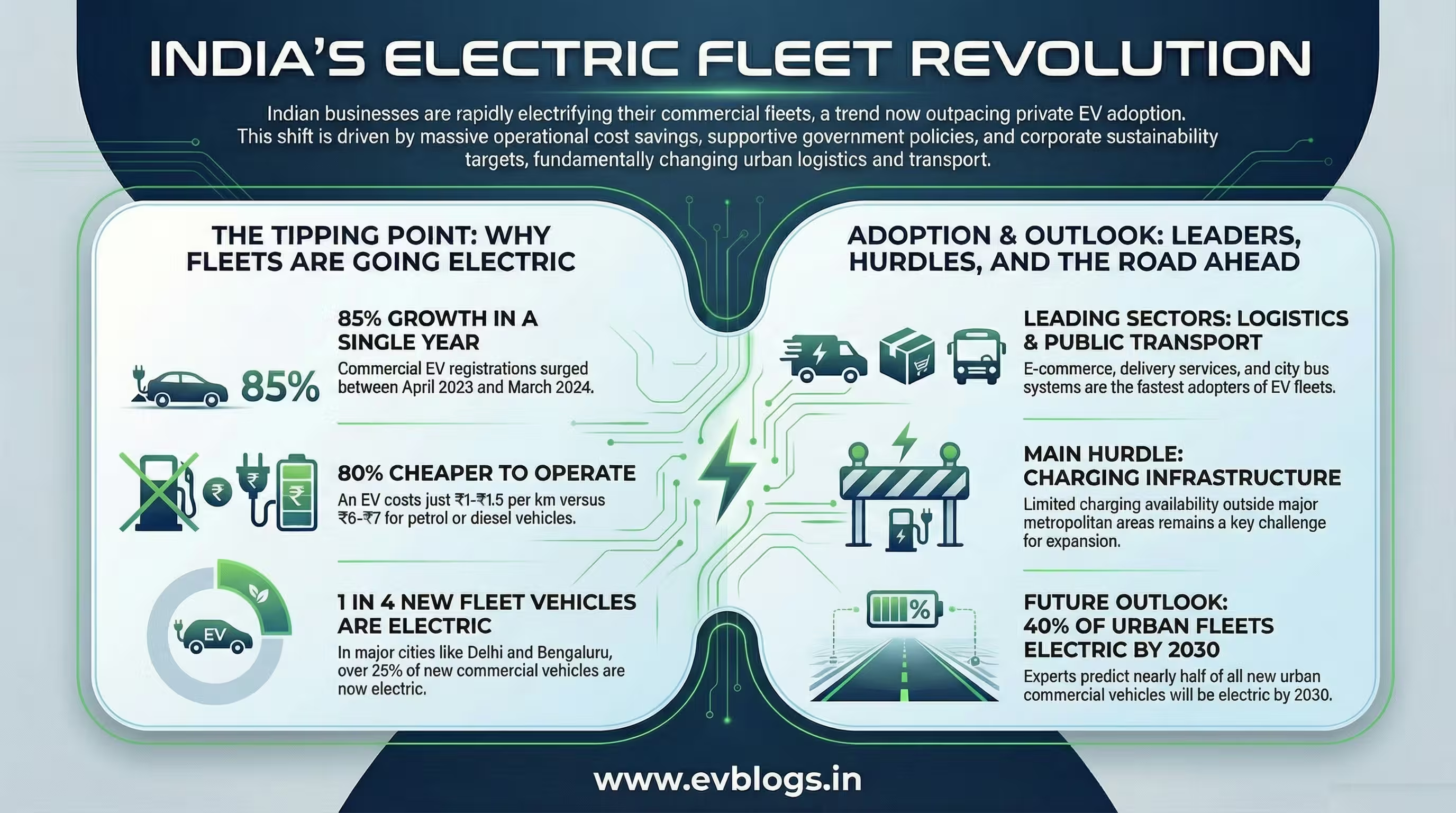
This development could make EVs more attractive not only to individual buyers but also to commercial and fleet operators in India.
6. Boost to India’s EV Adoption Targets
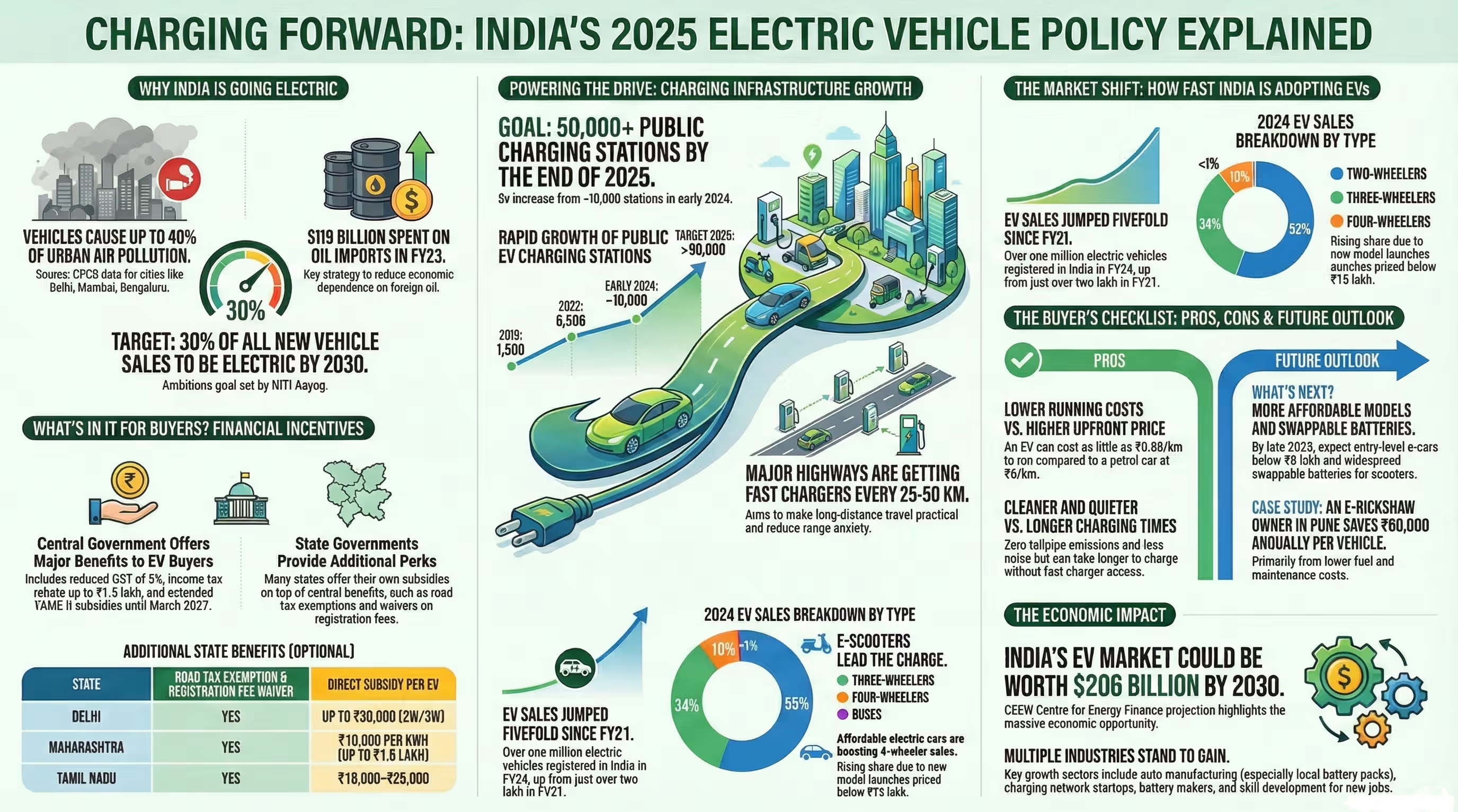
India has ambitious goals to increase EV adoption, with a target to have 30% of vehicles electric by 2030. Toyota’s innovation could play a vital role in helping the country achieve these targets.
“Technologies that extend battery life and range are critical for India to realise its vision of sustainable and widespread EV adoption.”
The government’s push for localisation of EV components and its support for battery manufacturing will further benefit from such advancements.
7. Environmental Impact and Sustainability
Solid-state batteries are more environmentally friendly than traditional batteries, using fewer hazardous materials and offering better recyclability.
“Longer-lasting batteries translate to fewer replacements and less electronic waste, supporting India’s environmental sustainability goals.”
This could help reduce the ecological footprint of India’s rapidly growing automotive sector.
Toyota’s solid-state battery breakthrough is set to address several longstanding challenges in the Indian EV market, from battery lifespan and safety to range and cost. As the country accelerates its move towards electric mobility, such innovations could mark a decisive shift, empowering both consumers and the automotive industry to embrace a cleaner, more reliable future.
Sources
Original Source
google.com - Read original
Quotes
- Publishing Domain: google.com
- Published Date: 2025-11-09T13:30:00+05:30
- Original URL: Read original (news.google.com/rss/articles/CBMijAFBVV95cUxPemNrdzU1NEprVS1UdDVoYjREWV9oQ… …)
Editorial Check
- Originality: 35 / 100 — The summary is almost identical to the article title and does not add new information or unique phrasing. It simply repeats the headline without additional context or insights.
- Helpfulness: 20 / 100 — The summary provides very limited information, merely restating the article’s title without elaborating on the specifics of Toyota’s solid-state batteries, their advantages, or implications for EV users.