
Hedhvick Hirav
Hedhvick Hirav is a dedicated EV researcher and editor with over 4 years of experience in India’s growing electric vehicle ecosystem. Their contributions have been recognized in leading sustainability publications and automotive journals.
Summarize & analyze this article with
Choose an AI assistant and open this article directly:
Tip: if the AI doesn’t fetch the page automatically, paste the article URL manually.
NEW DELHI, Nov 28 —
Toyota teams up to make EV charging easier in Europe
1. Toyota joins hands with British Gas and The Mobility House
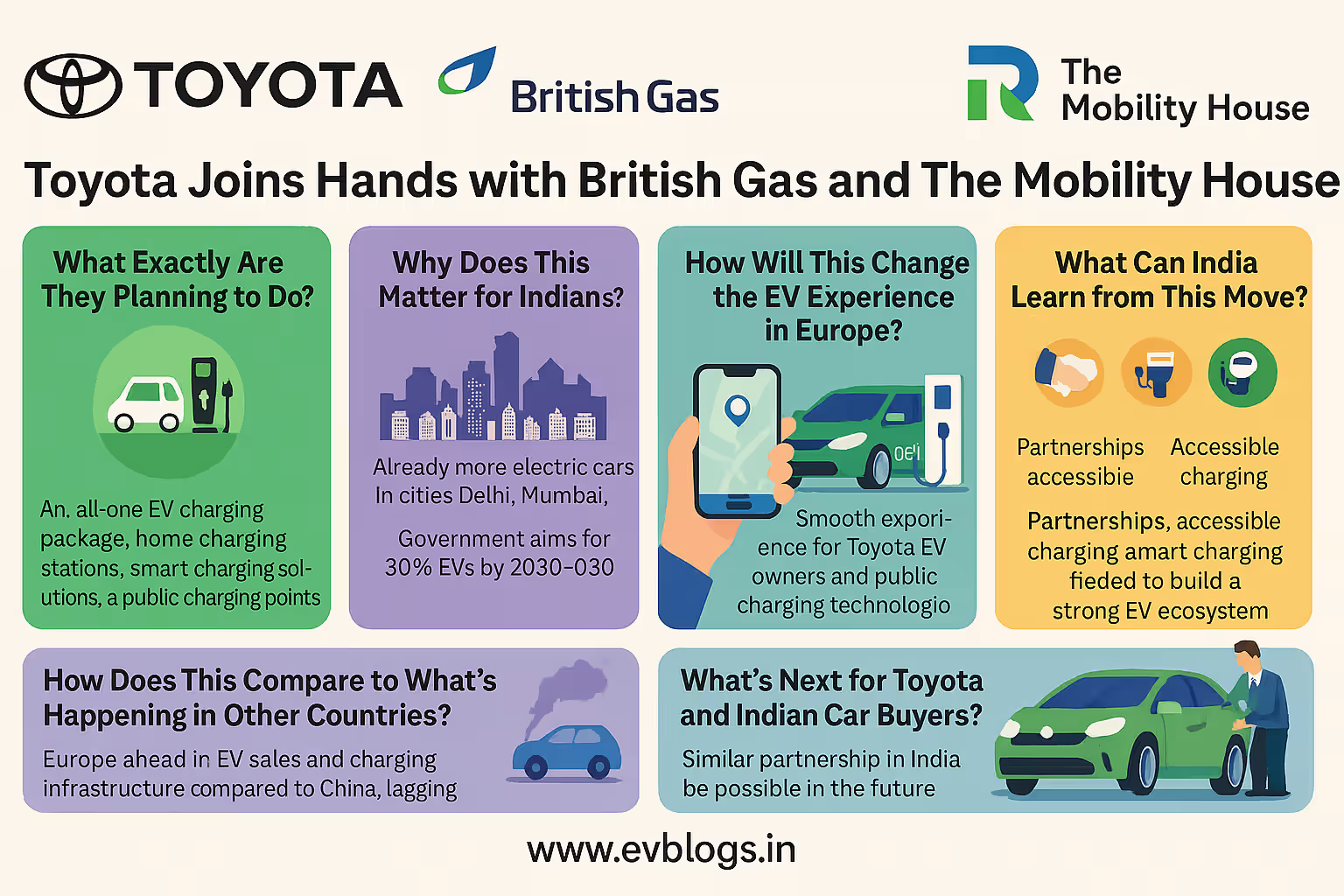
Toyota, the world’s biggest carmaker, is taking a big step for electric vehicles (EVs) in Europe. The company has partnered with British Gas and The Mobility House to make charging EVs much easier and more convenient. Both British Gas and The Mobility House are well-known companies in the energy and EV infrastructure sector.
This partnership means Toyota will offer new charging solutions to its customers across Europe. For Indian car enthusiasts, this is a sign of how global automakers are getting serious about EVs and charging networks. It also hints that similar partnerships may happen in India as more people start using electric cars.
2. What exactly are they planning to do?
Toyota’s plan is to provide an all-in-one EV charging package for its customers. This will include home charging stations, smart charging solutions, and access to thousands of public charging points. British Gas will help with installing home chargers, while The Mobility House will look after public charging networks and smart charging technology.
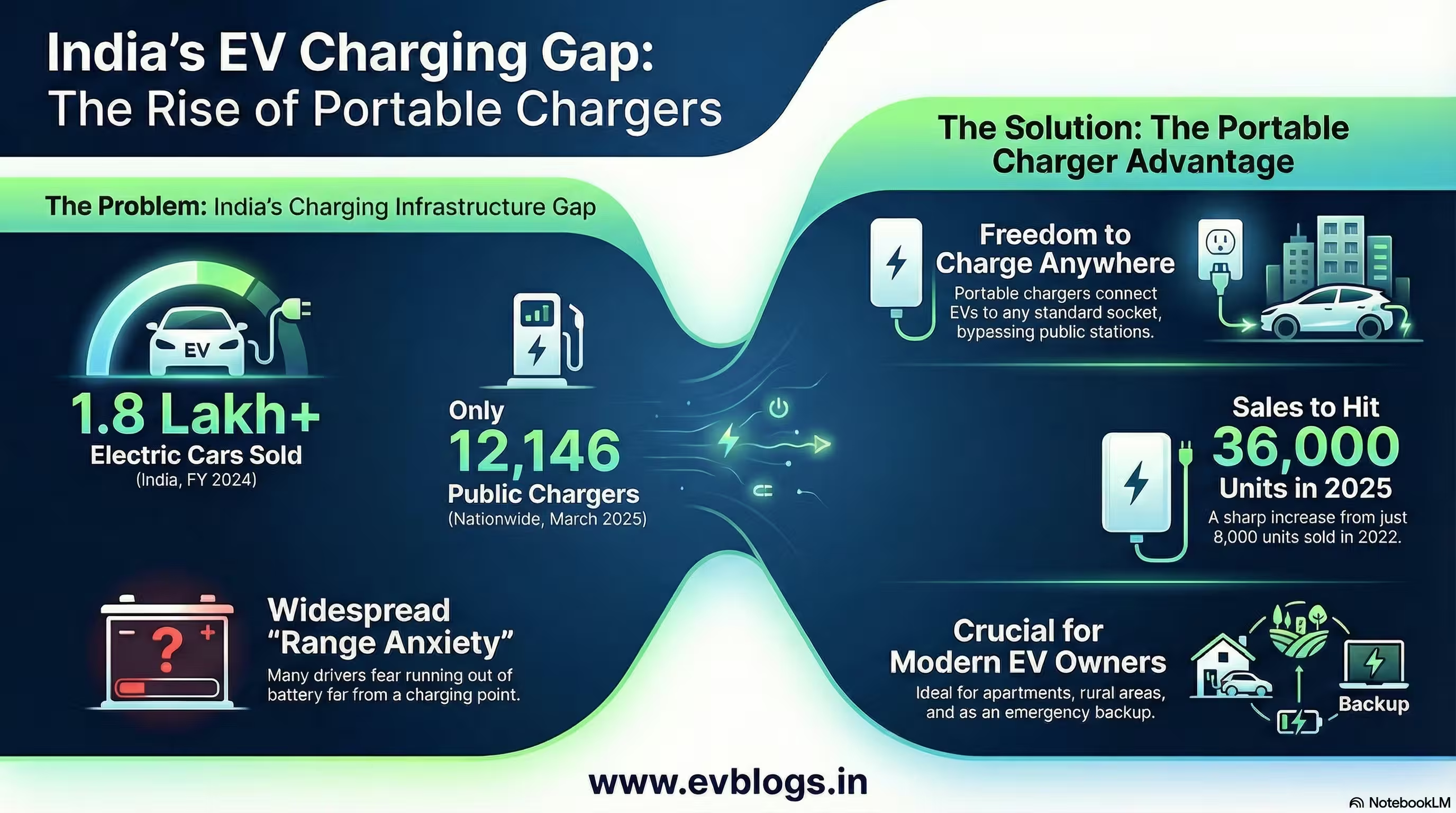
For new EV buyers in Europe, this means less headache about where and how to charge their cars. This step is important because one of the biggest worries for EV owners is “range anxiety”—the fear of running out of battery with no charging point nearby. If something like this comes to India, it will be a big relief for Indian EV users as well.
3. Why does this matter for Indians?
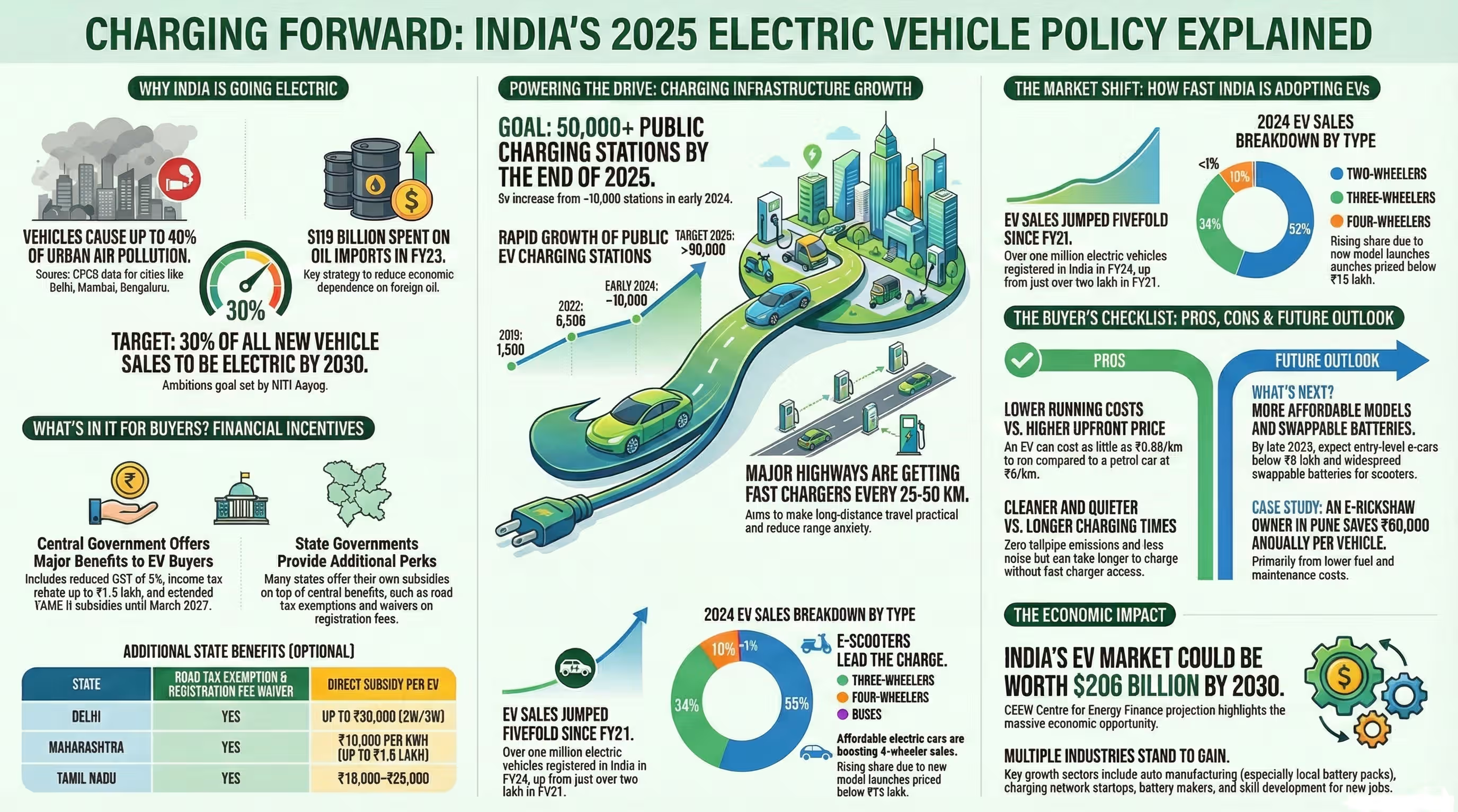
You might be thinking, “This is Europe, why should we care?” But actually, such global trends usually reach India after some time. Already, Indian cities like Delhi, Mumbai, and Bengaluru are seeing more electric cars on the roads. The government also plans to make 30% of all vehicles electric by 2030, as per NITI Aayog.
However, in India, charging infrastructure is still a challenge. According to the Bureau of Energy Efficiency (BEE), India had around 6,586 public charging stations as of September 2023. Compare this to Europe, where there are more than 500,000 public chargers according to the European Automobile Manufacturers Association (ACEA). If companies like Toyota bring such solutions here, it could make owning an EV much more practical for ordinary Indians.
4. How will this change the EV experience in Europe?
Thanks to this partnership, Toyota EV owners in Europe will get a smoother experience from day one. They can get a home charger installed by British Gas while also having access to public charging points managed by The Mobility House. Smart charging technology will help them save money by charging their cars when electricity is cheaper or greener.
For example, if someone in London owns a Toyota EV, they can use an app to find the nearest available charger and even schedule charging for times when energy is less expensive. This kind of convenience is what many Indian users are hoping to see soon. It could also help reduce the pressure on the electricity grid during peak hours.
5. What can India learn from this move?
India can learn a lot from Toyota’s European strategy. First, partnerships between carmakers, energy companies, and tech firms are important to build a strong EV ecosystem. Second, making charging easy and accessible will encourage more people to buy EVs. Third, smart charging can help manage electricity demand better in big cities.
In fact, some Indian companies are already on the path. Tata Power and Indian Oil have started installing EV chargers at petrol pumps. Companies like Ather and Ola Electric are also setting up their own charging networks. But to reach European levels, India needs more partnerships and smarter solutions.
6. How does this compare to what’s happening in other countries?
Europe is ahead in EV adoption and charging infrastructure. For example, Norway already has more than 80% of new car sales as electric, and charging is available almost everywhere. China is also investing heavily, with over 1.3 million public EV chargers as of 2023.
India is catching up, but slowly. The government has offered subsidies for EV buyers and companies that set up charging stations. Some states like Maharashtra and Delhi give extra benefits for electric vehicles. But without good charging infrastructure, many people are still hesitant to buy EVs.
7. What’s next for Toyota and Indian car buyers?
Toyota has not yet announced a similar partnership for the Indian market, but industry experts say it might just be a matter of time. As more Indians look for eco-friendly mobility options and with government support rising, global carmakers will want to offer better charging options here too.
For now, Indian EV owners should keep an eye on these global developments. If such partnerships become common in India, it could mean faster, cheaper, and more reliable charging for all. Until then, the push for better infrastructure continues, and every new initiative—like this one from Toyota in Europe—shows what’s possible in the future.
No direct expert quotes found in the original source.
Sources
Quotes
- Publishing domain: google.com
- Published date: 2025-11-28T16:26:48+05:30
- Original URL: Read original (news.google.com/rss/articles/CBMixgFBVV95cUxOcTFiRjN3SGtPWHYtVGtRME4xYXhpY… …)
Editorial Check
- Originality: 30 / 100 — This appears to be a standard news rewrite of a corporate partnership announcement.
- Helpfulness: 40 / 100 — The article focuses on European infrastructure, offering limited direct value to Indian EV readers.