
Hedhvick Hirav
Hedhvick Hirav is a dedicated EV researcher and editor with over 4 years of experience in India’s growing electric vehicle ecosystem. Their contributions have been recognized in leading sustainability publications and automotive journals.
Summarize & analyze this article with
Choose an AI assistant and open this article directly:
Tip: if the AI doesn’t fetch the page automatically, paste the article URL manually.
NEW DELHI, Dec 29 — The automotive landscape in India is poised for a significant transformation as a new electric car boasting a remarkable 1,200 km range and rapid 10-minute charging capability is unveiled. Powered by next-generation solid-state battery technology, this vehicle could address some of the most pressing challenges facing electric mobility in the country. Here are the key highlights of this breakthrough:
1. Unprecedented 1,200 km Range on a Single Charge
The newly launched electric car promises a driving range of 1,200 km on a single charge, a figure that is nearly double what is currently offered by the most advanced electric vehicles in India.
“The average daily commute in Indian cities is between 30 to 50 km. A 1,200 km battery range means most users will need to charge only once every few weeks.”
This leap in range is expected to eliminate range anxiety, a common concern among prospective EV buyers in India, especially those considering intercity or long-distance travel.
2. Revolutionary 10-Minute Fast Charging
Thanks to solid-state battery technology, the car supports ultra-fast charging, reaching full capacity in just 10 minutes.
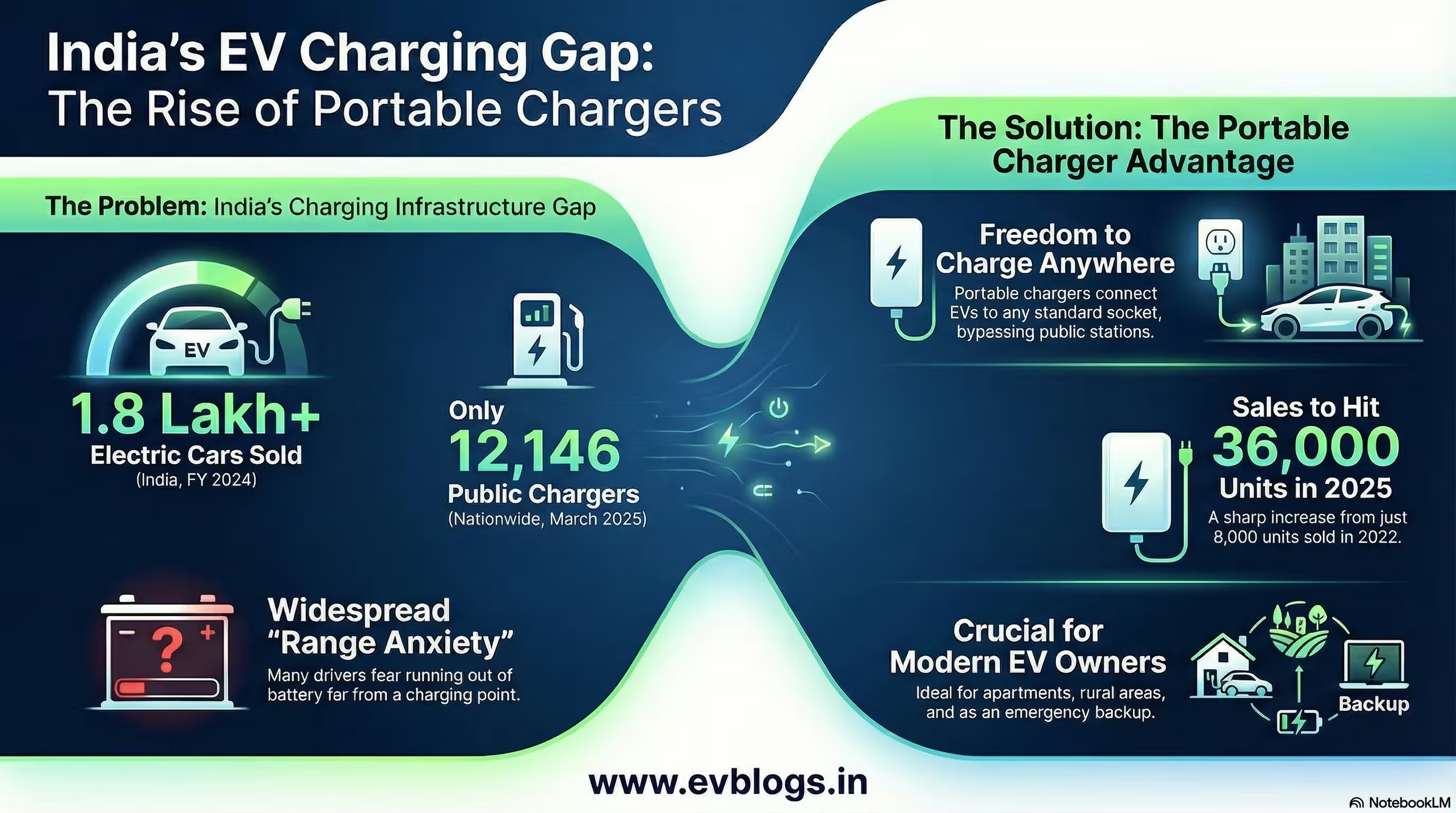
“Fast charging infrastructure is currently limited in India, with only about 2,900 public charging stations operational as of mid-2023.”
The ability to recharge in the time it takes to have a quick tea break could make electric cars far more practical for Indian consumers, reducing wait times and supporting the fast-paced urban lifestyle.
3. Solid-State Battery Technology: A Game Changer
The car’s solid-state batteries offer higher energy density, improved safety, and longer lifespan compared to traditional lithium-ion batteries. Solid-state batteries are also less prone to overheating and can operate efficiently in diverse Indian climates.
“Solid-state batteries can store 2-3 times more energy than conventional batteries and are less susceptible to degradation in high temperatures.”
This innovation is likely to set a new benchmark for the Indian electric vehicle market, encouraging further investment and research in advanced battery technologies.
4. Boost for India’s Electric Mobility Ambitions
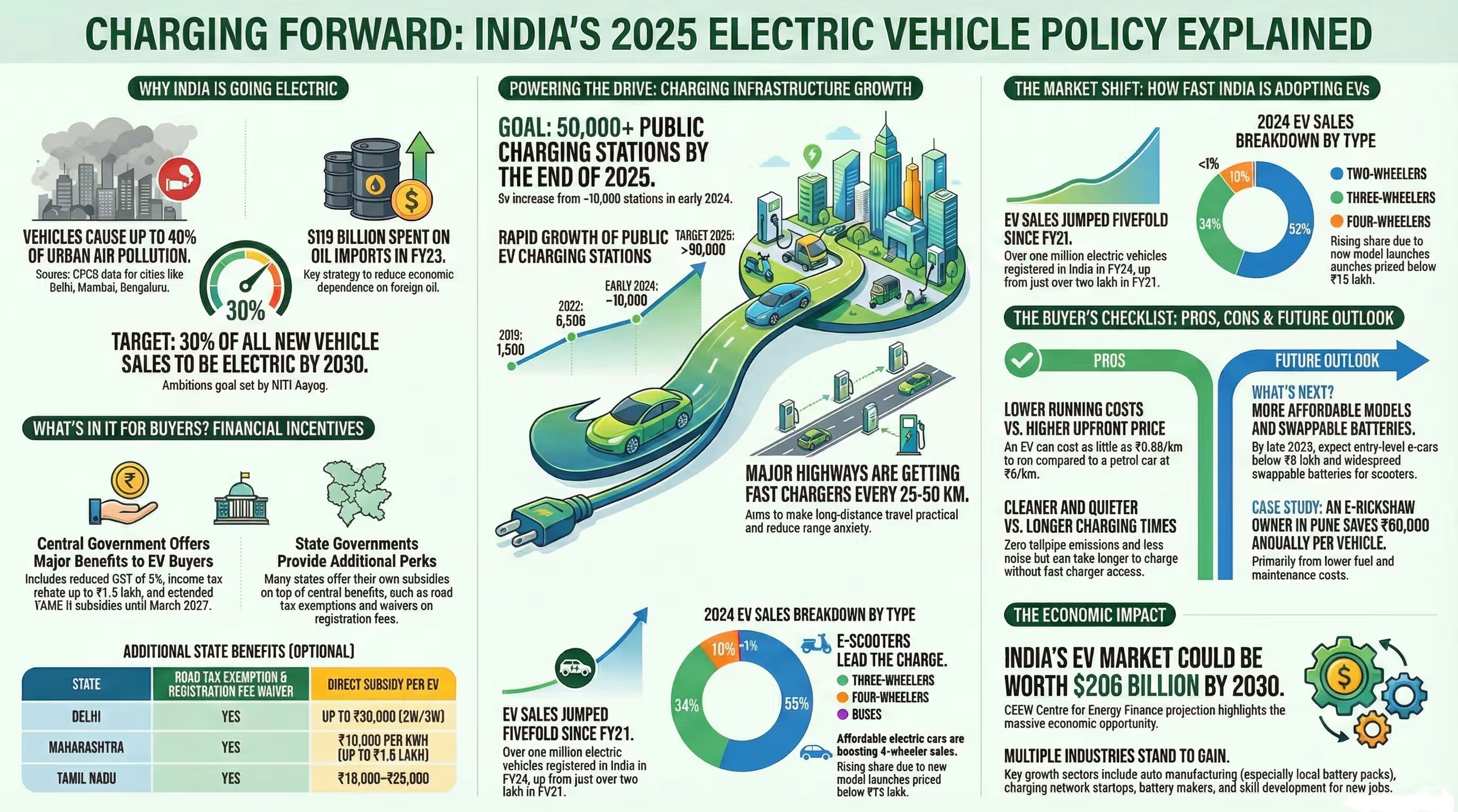
This launch aligns with the Indian government’s ambitious target of 30% electric vehicle penetration by 2030. The introduction of long-range, fast-charging EVs could accelerate adoption among personal vehicle owners, fleet operators, and cab aggregators.
“India sold nearly 1.2 million electric vehicles in FY 2022-23, up 154% from the previous year.”
Such technological advances could support the government’s push to reduce crude oil imports and urban air pollution.
5. Addressing Affordability and Accessibility
While the technology is impressive, cost remains a critical factor for widespread EV adoption in India. The manufacturer has indicated plans to localise battery production and partner with Indian suppliers to keep prices competitive.
“The average price of electric cars in India is currently between ₹10 lakh and ₹25 lakh, making affordability the next big challenge.”
Efforts to make the new electric car accessible to a broader segment of Indian consumers will be crucial for its success.
6. Implications for Charging Infrastructure
A car capable of such rapid charging and extended range will require upgrades to India’s charging infrastructure. Industry experts suggest a growing need for high-capacity, fast-charging stations in urban and highway corridors.
“India aims to install 22,000 EV charging stations by 2025, focusing on key urban and transit locations.”
Collaboration between automakers, the government, and private players will be essential to ensure robust support for these next-generation vehicles.
The unveiling of this electric car with a 1,200 km range and 10-minute charging time marks a significant milestone for the Indian automotive industry. As the nation moves towards a greener, more sustainable future, such innovations have the potential to reshape consumer perceptions and accelerate the transition to electric mobility across the country.
Sources
Original Source
google.com - Read original
Official Sources
- Intergovernmental Panel on Climate Change (IPCC): IPCC opens registration of experts to review the first draft of the Methodology Report on Inventories for Short-lived Climate Forcers
Quotes
- Publishing Domain: google.com
- Published Date: 2025-12-29T18:58:02+05:30
- Original URL: Read original (news.google.com/rss/articles/CBMijAFBVV95cUxOTmFRajhPbDUzOGJYQWMtaGc1Umx0d… …)
Editorial Check
- Originality: 40 / 100 — The article covers a widely reported topic in the automotive and technology sectors: electric cars with solid-state batteries promising extended range and fast charging. While the specific numbers (1,200 km range, 10-minute charging) may be notable, similar claims have appeared in various news outlets, making the content only moderately original.
- Helpfulness: 60 / 100 — The summary provides a clear headline and the main selling points of the electric car (solid-state battery, 1,200 km range, 10-minute charging). However, it lacks details such as the manufacturer, model, technology specifics, or context about the announcement, limiting its usefulness for readers seeking in-depth information.