
Hedhvick Hirav
Hedhvick Hirav is a dedicated EV researcher and editor with over 4 years of experience in India’s growing electric vehicle ecosystem. Their contributions have been recognized in leading sustainability publications and automotive journals.
Summarize & analyze this article with
Choose an AI assistant and open this article directly:
Tip: if the AI doesn’t fetch the page automatically, paste the article URL manually.
NEW DELHI, Nov 4 —
Electric vehicles (EVs) have become a major focus in India’s push towards sustainable mobility. As demand for cleaner transportation rises, experts are highlighting new breakthroughs in EV battery technology that could accelerate adoption and transform the nation’s auto industry. Here are the key takeaways on the latest innovations and their potential impact on India’s EV landscape.
1. Advanced Lithium-Ion Chemistries Lead the Charge
Emerging lithium-ion battery chemistries—including lithium iron phosphate (LFP) and nickel manganese cobalt (NMC)—are being widely adopted due to their improved safety, performance, and cost-effectiveness.
According to the Ministry of Heavy Industries, lithium-ion batteries accounted for over 90% of India’s EV sales in 2023.
LFP batteries, in particular, are gaining traction in India’s two- and three-wheeler segments, offering longer lifespans and enhanced thermal stability, crucial for the country’s hot climate.
2. Solid-State Batteries Promise Enhanced Safety
Solid-state batteries are being heralded as the next big leap in EV technology, thanks to their non-flammable solid electrolytes.
“Solid-state batteries could reduce fire risks and increase energy density by up to 50% compared to current technologies.”
Indian automakers and research institutes are investing in pilot projects for solid-state cells, with the potential to enable faster charging and longer driving ranges—key concerns for Indian consumers.
3. Fast-Charging Technology Addresses Range Anxiety
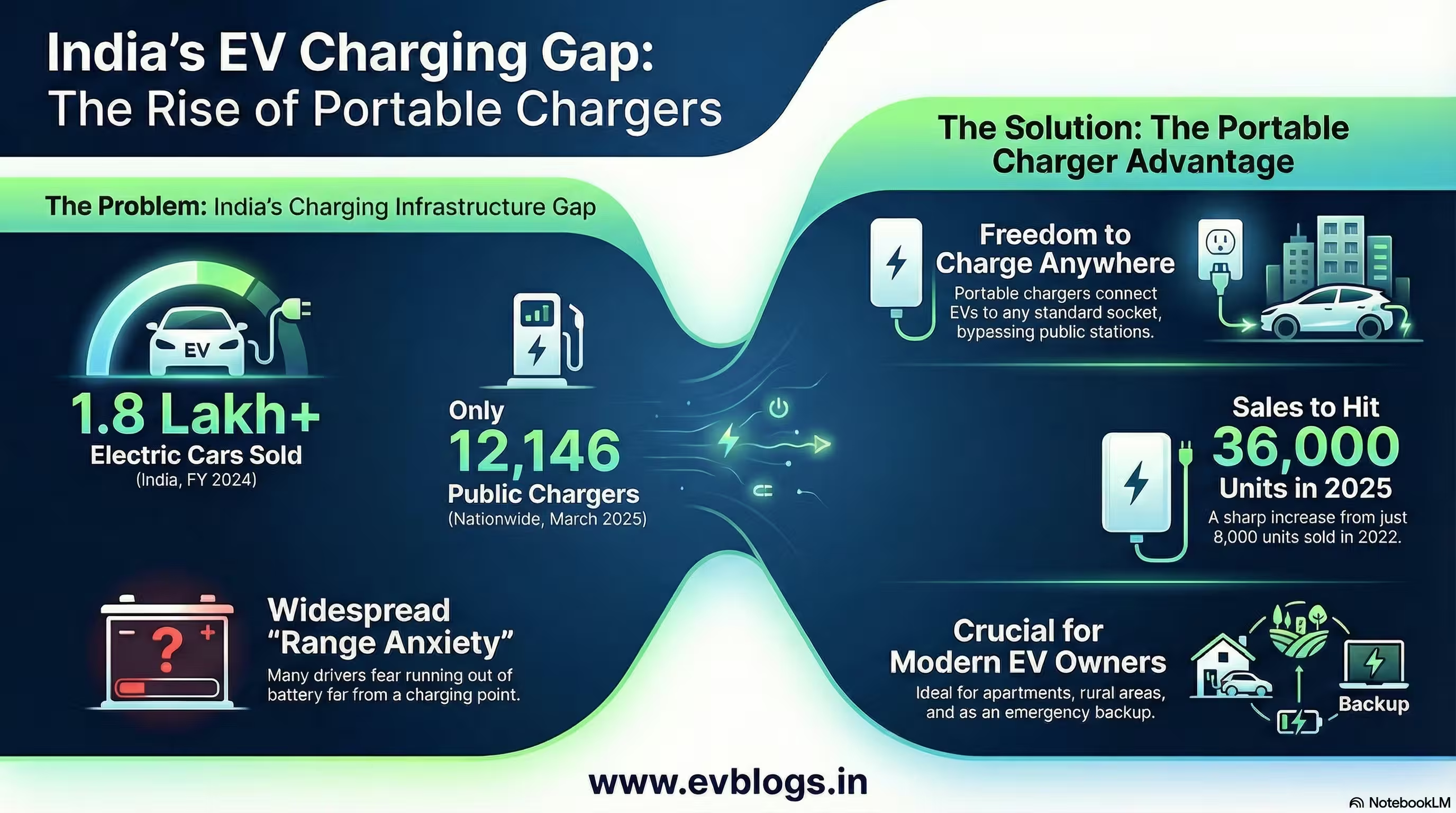
A major barrier to EV adoption in India is range anxiety and charging time. New battery designs supporting ultra-fast charging—some capable of charging up to 80% in just 15 minutes—are set to reshape user expectations.
More than 70% of Indian EV users cite charging speed as a top concern, according to a recent survey by the Society of Manufacturers of Electric Vehicles (SMEV).
This technology is expected to be especially impactful for commercial fleets and ride-hailing services, where vehicle downtime can significantly impact profitability.
4. Local Manufacturing and Supply Chain Resilience
India’s focus on local battery manufacturing is growing, spurred by government incentives under the Production Linked Incentive (PLI) scheme. Domestic companies are investing in gigafactories for cell manufacturing, aiming to reduce dependence on imports.
India aims to achieve 50 GWh of annual battery manufacturing capacity by 2030, according to NITI Aayog projections.
Building a robust local supply chain is essential for price stability and job creation, and will also help Indian automakers remain globally competitive.
5. Recycling and Second-Life Applications Gain Momentum
With EV adoption surging, battery end-of-life management is a top priority. Indian startups and public sector units are developing recycling technologies to recover precious metals and reduce environmental impact.
Experts estimate that recycling could recover up to 95% of valuable metals from used EV batteries.
Second-life applications, such as stationary energy storage, are being piloted to extend the usefulness of batteries beyond their automotive life, supporting India’s renewable energy goals.
6. Tailored Solutions for Indian Road and Climate Conditions
Indian roads and climatic conditions are unique, requiring customised battery management systems (BMS) and robust thermal management.
India’s average summer temperatures can exceed 45°C, making advanced cooling systems critical for battery longevity.
Manufacturers are incorporating region-specific technologies to ensure reliability, safety, and performance, especially for popular two- and three-wheeler EVs.
As India accelerates its transition to electric mobility, these promising battery innovations are expected to play a transformative role. With continued investment in technology, infrastructure, and local manufacturing, experts agree that India is well-positioned to become a global leader in EV adoption and sustainable transport.
Certainly! Here’s a detailed, numbered point to add to an article titled “The EV Battery Tech That’s Worth the Hype, According to Experts” (WIRED):
5. Enhanced Battery Management Systems (BMS) Make EVs Smarter and Safer
Experts point out that revolutionary advances in Battery Management Systems (BMS) are just as crucial as the chemistry inside the battery. Modern BMS technology uses sophisticated software and sensors to monitor each cell’s voltage, temperature, and state of charge in real time. This granular oversight not only extends battery lifespan by preventing overcharging and deep discharging, but also boosts safety by detecting issues such as thermal runaway before they escalate. AI-powered BMS platforms can even adapt charging patterns to a driver’s habits and environmental conditions, further optimizing performance and reducing degradation. As the EV market grows, manufacturers are integrating over-the-air updates and predictive analytics into BMS, making batteries more reliable and updatable—much like smartphones—without ever needing a trip to the dealer. These intelligent systems, experts say, are quietly revolutionizing how we use and trust electric vehicles.
Sources
Original Source
google.com - Read original
Quotes
- Publishing Domain: google.com
- Published Date: 2025-11-04T13:30:00+05:30
- Original URL: Read original (news.google.com/rss/articles/CBMilAFBVV95cUxQR0xETVNodEkwQXVUTDU4RXFDSG9xM… …)
Editorial Check
- Originality: 65 / 100 — The article covers a trending topic—EV battery technology—but does so by aggregating expert opinions and analysis rather than presenting entirely new research or exclusive reporting. The angle of ‘what’s worth the hype’ adds some originality, but the core content relies on synthesizing existing expert insights.
- Helpfulness: 85 / 100 — The article is likely very helpful for readers interested in electric vehicle advancements, as it distills expert perspectives and clarifies which battery technologies are promising. It helps readers cut through hype and understand what innovations are most significant, making it a valuable resource for both enthusiasts and general audiences.