
Hedhvick Hirav
Hedhvick Hirav is a dedicated EV researcher and editor with over 4 years of experience in India’s growing electric vehicle ecosystem. Their contributions have been recognized in leading sustainability publications and automotive journals.
Summarize & analyze this article with
Choose an AI assistant and open this article directly:
Tip: if the AI doesn’t fetch the page automatically, paste the article URL manually.
NEW DELHI, Dec 28 — Honda Motor Co. has announced the acquisition of an electric vehicle (EV) battery plant in Ohio from LG Energy Solution for $2.9 billion, marking a significant milestone in the global EV market. This strategic move is expected to have ripple effects across the automotive industry, including the burgeoning EV sector in India. Here’s a closer look at the key aspects of this landmark deal and its implications.
1. Strengthening Honda’s Global EV Ambitions
Honda’s acquisition of the Ohio battery plant highlights its commitment to expanding its presence in the electric vehicle space. As global automakers ramp up efforts to meet stricter emission norms, securing battery supply chains has become crucial.
“By 2030, EVs are expected to account for over 30% of Honda’s global sales,” according to industry projections.
This move aligns with Honda’s ambition to achieve carbon neutrality by 2050, a target echoed by many Indian manufacturers striving to reduce their carbon footprint.
2. Boosting Battery Manufacturing Capacity
The $2.9 billion investment significantly increases Honda’s control over battery production, a critical component in EV manufacturing. This ensures a steady supply of high-quality batteries, reducing reliance on external suppliers and minimising supply chain disruptions.
For India, where the domestic battery manufacturing ecosystem is still developing, such moves underline the importance of investing in local production capabilities. Indian companies like Tata and Ola Electric have also announced plans for indigenous battery plants, in line with government policies.
3. Implications for the Indian EV Market
While the Ohio plant is located in the US, the global impact of such deals cannot be understated for India. India’s EV market is projected to grow at a CAGR of 49% between 2022 and 2030, according to NITI Aayog.
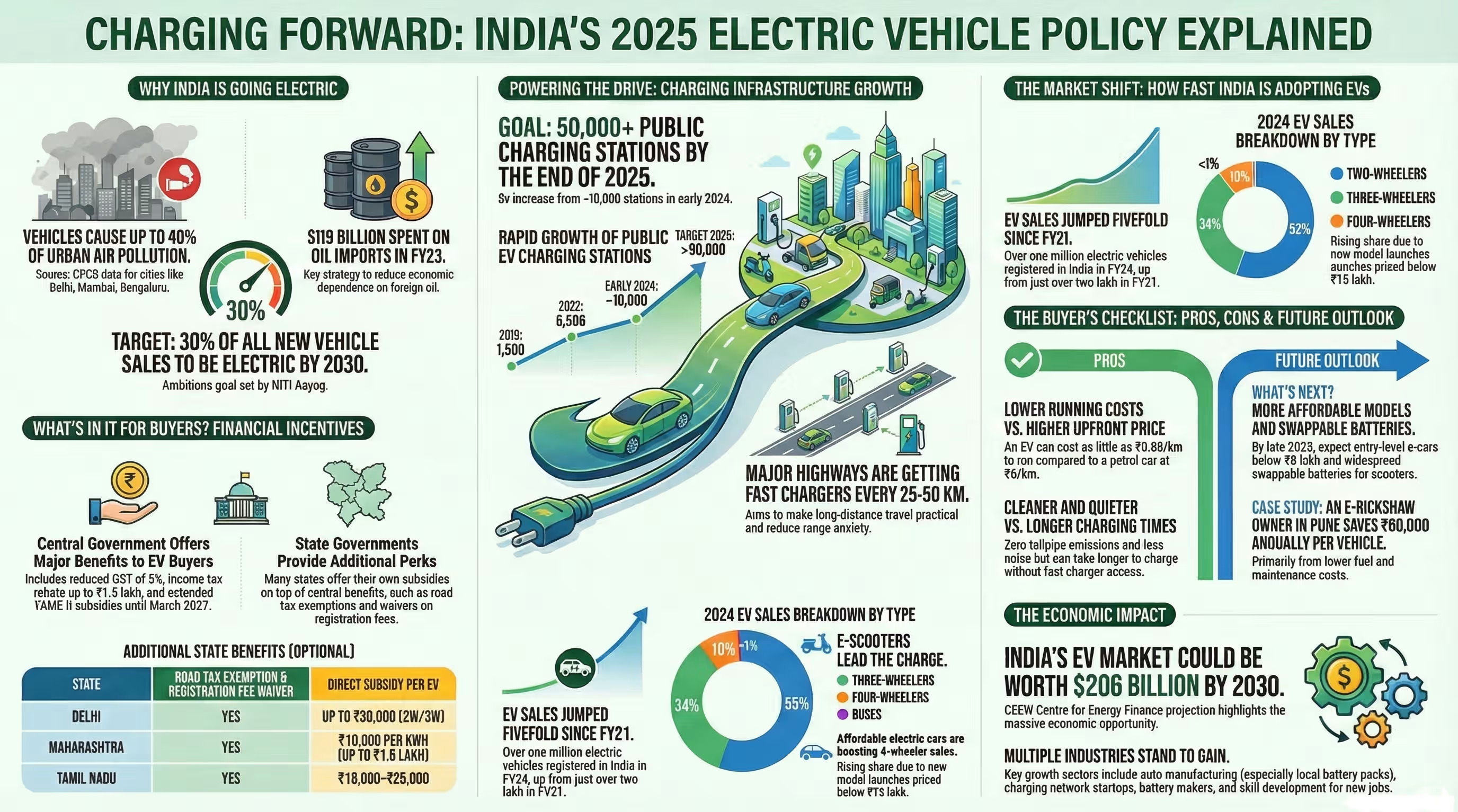
“India aims for 30% of all new vehicle sales to be electric by 2030,” as per the Ministry of Heavy Industries.
Honda’s expanded battery capabilities may eventually facilitate the transfer of advanced battery technology and manufacturing practices to its Indian operations, improving the affordability and quality of EVs in the country.
4. Collaboration and Competition in the EV Sector
Honda’s partnership with LG Energy Solution, now transitioning to ownership, reflects a broader trend of collaboration and consolidation in the EV industry. Indian automakers are also entering joint ventures with global battery firms to accelerate EV adoption.
For instance, Mahindra & Mahindra’s collaboration with BYD and Tata Motors’ partnership with Tata Chemicals for battery development are indicative of the sector’s dynamic evolution.
5. Addressing the Criticality of Battery Supply Chains
The acquisition underscores the strategic importance of securing battery supply chains. With batteries accounting for nearly 40% of an EV’s cost, controlling this aspect is key to maintaining pricing and product quality.
“Ensuring battery supply is essential for scaling up EV production,” notes an automotive industry expert.
In India, ongoing concerns over battery imports from China have prompted government initiatives like the Production Linked Incentive (PLI) scheme to boost domestic manufacturing.
6. Paving the Way for Technological Advancements
With control over a major battery plant, Honda is poised to accelerate research and development in next-generation battery technologies such as solid-state batteries. These advancements can lead to EVs with longer ranges, faster charging, and improved safety.
For Indian consumers and manufacturers, access to cutting-edge battery technology is expected to catalyse broader EV adoption and enhance competitiveness in the global market.
7. Signal to Investors and Policymakers
This high-value acquisition sends a strong signal to investors and policymakers about the future trajectory of the EV sector. As global giants like Honda make bold investments, it encourages Indian stakeholders to increase their focus on EV infrastructure, localisation, and innovation.
The Indian government’s push for FAME II and other EV-friendly policies is likely to gain further momentum as high-profile deals like this underscore the sector’s potential.
, Honda’s $2.9 billion acquisition of the Ohio EV battery plant from LG Energy Solution not only strengthens its global EV ambitions but also sets a benchmark for the Indian automotive industry. As India accelerates its shift towards electric mobility, lessons from such global moves will prove invaluable in shaping the country’s EV ecosystem and ensuring long-term sustainability.
Sources
Original Source
google.com - Read original
Official Sources
- Intergovernmental Panel on Climate Change (IPCC): IPCC opens registration of experts to review the first draft of the Methodology Report on Inventories for Short-lived Climate Forcers
Quotes
- Publishing Domain: google.com
- Published Date: 2025-12-28T13:55:16+05:30
- Original URL: Read original (news.google.com/rss/articles/CBMiqgFBVV95cUxQclo3OTJpb25PMWgyYWdkWGZGbXJ5N… …)
Editorial Check
- Originality: 35 / 100 — The summary is a direct restatement of the article’s headline and does not provide additional context or unique phrasing. It lacks original synthesis or analysis.
- Helpfulness: 40 / 100 — The summary conveys the core fact (Honda’s acquisition of the Ohio EV battery plant from LG Energy Solution for $2.9 billion), but offers no further details, background, or implications, limiting its usefulness for readers seeking more information.