
Hedhvick Hirav
Hedhvick Hirav is a dedicated EV researcher and editor with over 4 years of experience in India’s growing electric vehicle ecosystem. Their contributions have been recognized in leading sustainability publications and automotive journals.
Summarize & analyze this article with
Choose an AI assistant and open this article directly:
Tip: if the AI doesn’t fetch the page automatically, paste the article URL manually.
NEW DELHI, Dec 12 —
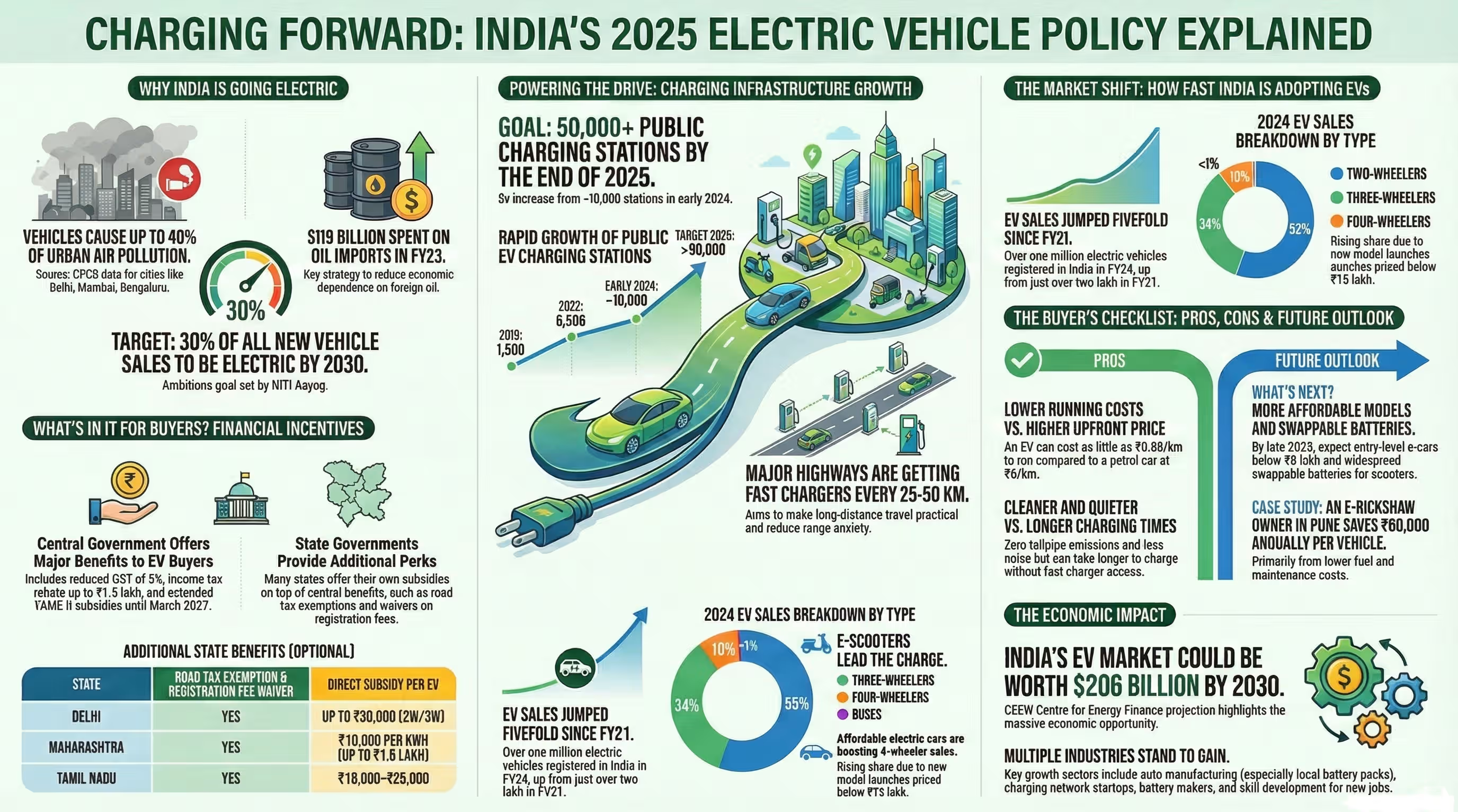
India’s electric vehicle (EV) battery market is poised for unprecedented growth, with projections indicating a 14-fold expansion by 2032, according to a recent CES report. As the country accelerates its transition to clean mobility, several factors are driving this transformation. Below, we outline the key trends and challenges shaping the future of India’s EV battery market.
1. Massive Market Expansion Expected by 2032
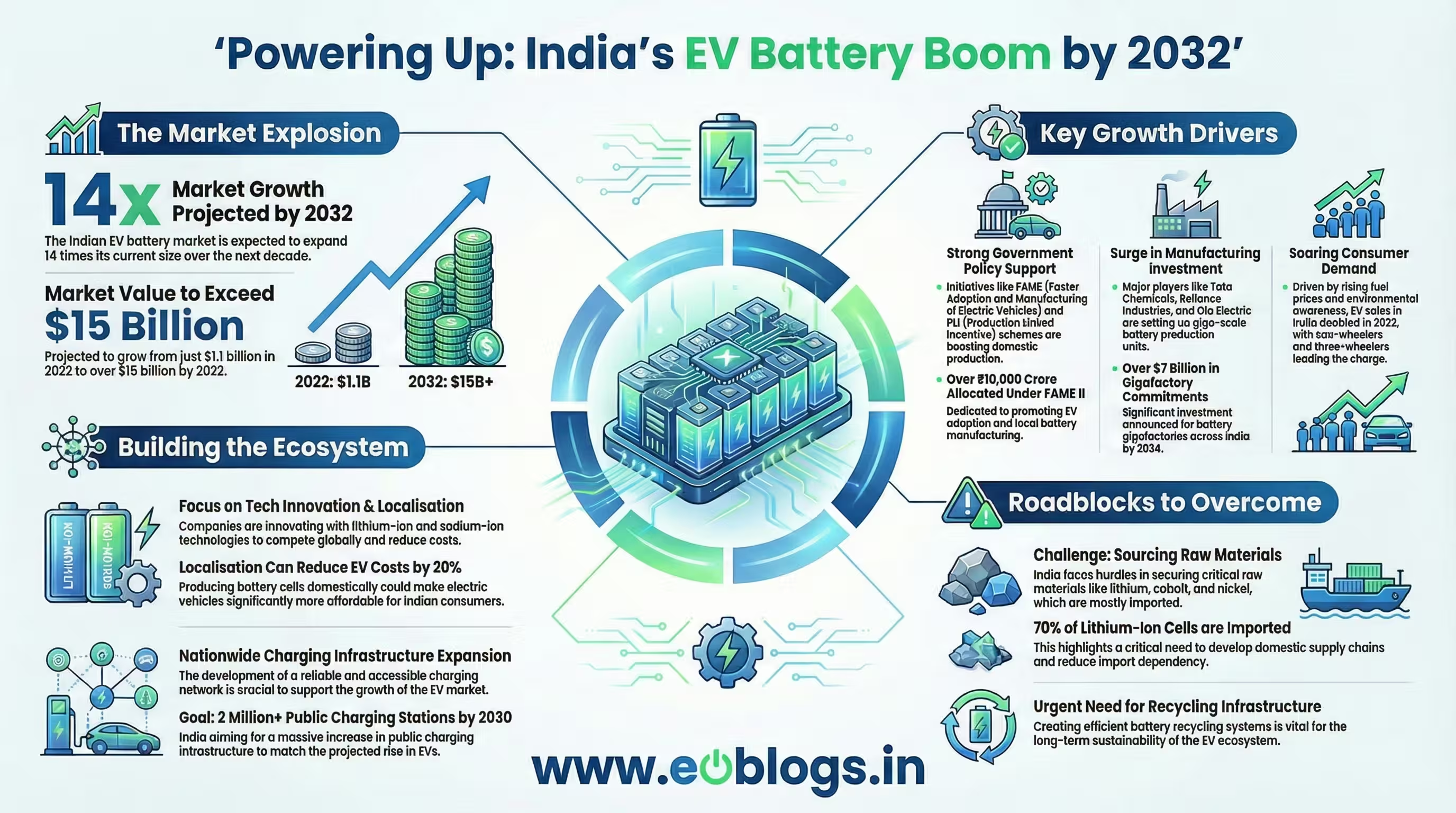
The Indian EV battery market is anticipated to grow 14 times its current size by 2032, positioning the country as a significant player in the global battery ecosystem.
“India’s EV battery market is projected to reach over $15 billion by 2032, up from just $1.1 billion in 2022.”
This exponential growth is being led by rising EV adoption in major cities, government incentives, and increasing consumer awareness of green mobility options.
2. Strong Policy Support and Government Initiatives
The government of India has launched multiple schemes such as the Faster Adoption and Manufacturing of Electric Vehicles (FAME) and the Production Linked Incentive (PLI) scheme for battery manufacturing.
“Under FAME II, the government has allocated more than ₹10,000 crore to promote EV adoption and local battery manufacturing.”
These policies are not only boosting domestic production but also attracting foreign investment and encouraging R&D in battery technologies.
3. Surge in Investment and Domestic Manufacturing
India has seen a sharp rise in investments from both domestic and international companies aiming to set up battery manufacturing plants.
“Over $7 billion in investment commitments have been announced for battery gigafactories across India by 2024.”
Major industry players such as Tata Chemicals, Reliance Industries, and Ola Electric are actively setting up giga-scale battery production units, which are expected to reduce costs and improve supply chain resilience.
4. Technological Innovation and Localisation
To compete globally, Indian companies are focusing on technological innovation and localisation of battery components, including lithium-ion and emerging alternatives like sodium-ion batteries.
“Localization of battery cell production could lower EV costs by up to 20%, making EVs more affordable for Indian consumers.”
Research collaborations between academic institutions and industry are further strengthening India’s R&D capabilities in the battery sector.
5. Challenges in Raw Material Sourcing and Recycling
Despite rapid growth, the sector faces challenges, particularly in the sourcing of critical raw materials such as lithium, cobalt, and nickel, most of which are currently imported.
“India imports nearly 70% of its lithium-ion cells, highlighting the need for local sourcing and robust recycling infrastructure.”
Developing domestic supply chains and efficient battery recycling systems will be crucial to ensure sustainability and reduce import dependence.
6. Infrastructure Development and Charging Ecosystem
The expansion of the EV battery market depends heavily on the development of charging infrastructure across the country.
“India aims to install over 2 million public charging stations by 2030, to support the projected EV growth.”
Public and private sector collaboration is essential for building a reliable and accessible charging network, especially in tier-2 and tier-3 cities.
7. Growing Consumer Demand and Awareness
The combination of rising fuel prices, environmental concerns, and improved EV performance is driving greater consumer acceptance of electric vehicles.
“EV sales in India doubled in 2023, with two-wheelers and three-wheelers leading the surge.”
As battery technology improves and costs decline, more Indian consumers are expected to switch to EVs, further accelerating market growth.
Conclusion
India’s EV battery market is on the cusp of transformative growth, underpinned by robust policy support, technological advancements, and increasing consumer demand. While challenges such as raw material sourcing and infrastructure development remain, the outlook for the sector is overwhelmingly positive. By capitalising on these trends, India is well-positioned to become a global leader in EV battery manufacturing and green mobility by 2032.
Sources
Original Source
google.com - Read original
Official Sources
- Intergovernmental Panel on Climate Change (IPCC): IPCC opens registration of experts to review the first draft of the Methodology Report on Inventories for Short-lived Climate Forcers
Quotes
- Publishing Domain: google.com
- Published Date: 2025-12-12T20:11:23+05:30
- Original URL: Read original (news.google.com/rss/articles/CBMivgFBVV95cUxOQ3dmcEptUy1xZG5FRTZGVGFaYkdWU… …)
Editorial Check
- Originality: 30 / 100 — The summary closely mirrors the article title and does not add unique analysis or interpretation. It simply restates the main point from the original source.
- Helpfulness: 40 / 100 — The summary provides the key fact about the projected growth of India’s EV battery market, but lacks context, details, or implications that would make it more useful to a reader seeking a deeper understanding.