
Hedhvick Hirav
Hedhvick Hirav is a dedicated EV researcher and editor with over 4 years of experience in India’s growing electric vehicle ecosystem. Their contributions have been recognized in leading sustainability publications and automotive journals.
Summarize & analyze this article with
Choose an AI assistant and open this article directly:
Tip: if the AI doesn’t fetch the page automatically, paste the article URL manually.
NEW DELHI, Dec 1 —
Ji’an Starts Making Next-Gen Solid-State Batteries at Scale: 7 Things You Should Know
China’s Ji’an city is making big headlines after starting mass production of next-generation solid-state batteries. You might wonder, why should this matter to us in India? Well, solid-state batteries are being called the “future of energy storage,” and they could totally change how we use electric vehicles, mobile phones, and even renewable energy. Let’s break it down in simple points.
1. What Are Solid-State Batteries, and Why the Hype?
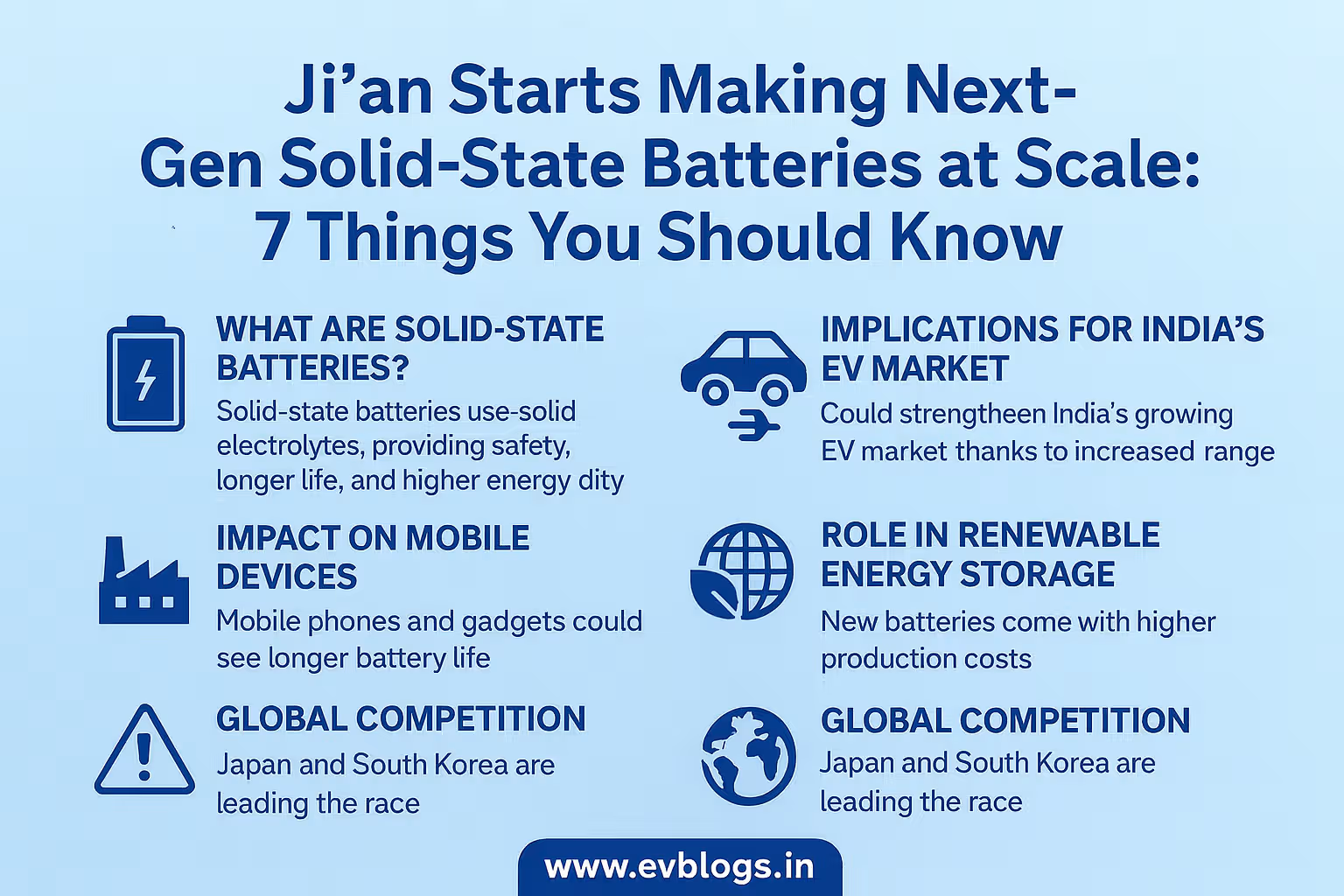
Solid-state batteries use solid electrolytes instead of the liquid ones found in most batteries today. This simple change makes the battery safer, longer-lasting, and able to hold more charge.
For everyday Indians, this means electric vehicles (EVs) could go much farther on a single charge—imagine driving from Delhi to Jaipur without stopping to recharge! Plus, solid-state batteries are less likely to catch fire, a worry with current lithium-ion batteries.
2. Ji’an’s Big Move: Mass Production Starts
Ji’an, a city in China’s Jiangxi province, has started making these batteries at scale for the first time. According to Shanghai Metals Market, the DEEGARES Energy Solid-State Battery Layout has achieved mass production, which is a big deal globally.
Why is mass production important? Until now, solid-state batteries were mostly in labs and pilot projects. With Ji’an moving to a factory level, costs could come down and supply can increase—meaning these batteries may reach India sooner than we expect.
3. What Does This Mean for India’s Electric Vehicle Market?
India’s EV market is growing fast. In 2022-23, EV sales in India crossed 1.2 million units, according to the Ministry of Road Transport and Highways. But range anxiety—fear that your battery will die mid-trip—holds many people back from buying EVs.
Solid-state batteries could change that. With higher energy density, an EV could travel 500 km or more on a single charge, compared to 250-350 km today. And with safer batteries, insurance costs may also go down. Indian companies like Tata Motors and Ola Electric are watching these developments closely.
4. Impact on Mobile Phones and Gadgets
Imagine charging your phone just once every two or three days! Solid-state batteries are not just for cars—they can power mobiles, laptops, and even smartwatches.
India has over 1.2 billion mobile connections, according to TRAI. With longer battery life, people in areas with frequent power cuts—like rural UP or Bihar—will benefit the most. Plus, solid-state batteries are lighter and charge faster, making your devices easier to use.
5. How Could This Help India’s Push for Renewable Energy?
India is pushing hard for solar and wind power. Our country aims to reach 500 GW of renewable capacity by 2030. But there’s a big challenge: storing all that clean energy for when the sun isn’t shining or the wind isn’t blowing.
Solid-state batteries could be a game-changer here. They are more durable and can be used for grid-scale storage, making renewable energy more reliable. States like Gujarat and Tamil Nadu, with lots of solar and wind, could store extra power and reduce blackouts.
6. What Are the Challenges and Costs?
Of course, every new technology has its own set of challenges. Right now, solid-state batteries cost more to make than regular lithium-ion batteries. Experts say the price could be 30-50% higher at the start.
But remember how LED bulbs were super expensive at first and then became affordable? The same could happen here. As Ji’an and other factories start mass production, costs are expected to drop. Indian battery makers like Amara Raja and Exide are already starting research in this area.
7. How Does India Compare with the World?
Countries like Japan, South Korea, and now China are leading the solid-state battery race. Toyota, for example, is planning to launch its first solid-state powered car by 2027. In India, the government has launched the Production-Linked Incentive (PLI) scheme for Advanced Chemistry Cell (ACC) batteries, with ₹18,100 crore set aside to boost local manufacturing.
If India can tap into this technology soon, we can reduce our dependence on imports and create lakhs of new jobs. Plus, it will help us reach our green goals faster, which is important as the world faces climate change. The recent IPCC meeting in Paris also highlighted how vital clean energy solutions are for countries like ours.
So, next time you hear about solid-state batteries, remember: it’s not just a tech story from China, but something that could make life easier for millions of Indians—whether you’re driving, chatting on your phone, or just hoping for fewer power cuts at home.
Sources
Original Source
Official Sources
Quotes
- Publishing domain: google.com
- Published date: 2025-12-01T13:51:51+05:30
- Original URL: Read original (news.google.com/rss/articles/CBMiwwFBVV95cUxQSFBZNHc0d0txSGJGbV9nR0ZZMDZhc… …)
Editorial Check
- Originality: 40 / 100 — The article appears to be a standard industry update on mass production, similar to many news rewrites.
- Helpfulness: 60 / 100 — It provides useful information for Indian EV readers interested in battery technology advancements, but lacks in-depth analysis or local relevance.
Frequently Asked Questions
What are solid-state batteries and how do they differ from traditional batteries?
Solid-state batteries use a solid electrolyte instead of the liquid or gel electrolyte found in traditional lithium-ion batteries, offering greater safety, higher energy density, and longer lifespan.
Why is Ji’an’s mass production of solid-state batteries significant?
Ji’an’s mass production marks a major step toward commercializing next-generation battery technology, potentially leading to safer, more efficient batteries for electric vehicles and other applications.
Who is DEEGARES Energy and what is their role in this development?
DEEGARES Energy is a company involved in the development and production of solid-state batteries, and they are leading the layout and mass production efforts at Ji’an.
What industries could benefit from Ji’an’s solid-state battery production?
Industries such as electric vehicles, consumer electronics, and renewable energy storage stand to benefit from the improved performance and safety of solid-state batteries.
What are the potential advantages of using solid-state batteries in electric vehicles?
Solid-state batteries can offer faster charging, increased driving range, enhanced safety, and longer battery life for electric vehicles compared to conventional lithium-ion batteries.