
Hedhvick Hirav
Hedhvick Hirav is a dedicated EV researcher and editor with over 4 years of experience in India’s growing electric vehicle ecosystem. Their contributions have been recognized in leading sustainability publications and automotive journals.
Summarize & analyze this article with
Choose an AI assistant and open this article directly:
Tip: if the AI doesn’t fetch the page automatically, paste the article URL manually.
NEW DELHI, Dec 4 —
India’s drive towards sustainable mobility is gaining momentum as two leading electric vehicle (EV) battery firms announce a strategic collaboration to develop all-solid-state battery (ASSB) technology. This partnership is expected to bolster India’s ambitions in clean energy and e-mobility, while addressing some of the major challenges facing the current generation of lithium-ion batteries. Here is a look at the key aspects of this collaboration and its potential impact on the Indian market.
1. Breakthrough in Battery Technology
All-solid-state batteries represent a significant leap over traditional lithium-ion batteries. Unlike conventional batteries that use liquid electrolytes, ASSBs use solid electrolytes, making them inherently safer and more stable.
“ASSBs can offer up to 2-3 times the energy density of current lithium-ion batteries, while drastically reducing the risk of fire and leakage,” industry analysts note.
This technological breakthrough could address safety concerns and extend the range of EVs, a crucial factor for Indian consumers.
2. Boost to India’s EV Ecosystem
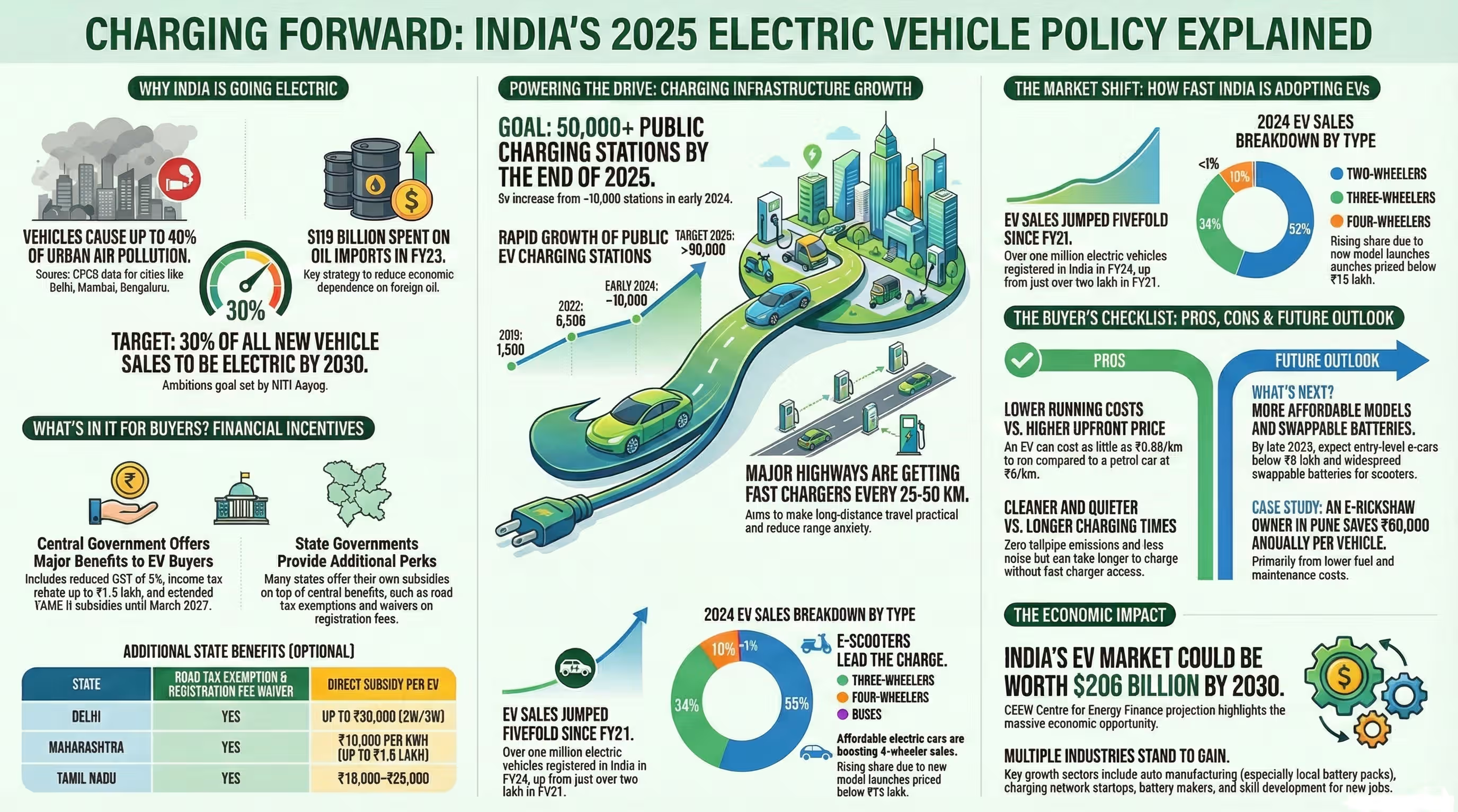
The partnership is poised to strengthen India’s rapidly growing EV ecosystem. With the government targeting 30% electric vehicle penetration by 2030, advancements in battery technology are essential.
India’s EV market is projected to reach $152 billion by 2030, driven by favourable policies and consumer demand.
The collaboration between these major battery firms is expected to accelerate local manufacturing and create new opportunities for Indian companies in the EV supply chain.
3. Addressing Local Climatic and Usage Challenges
ASSBs are expected to perform better in India’s varied climates, from the humid coasts to the arid interiors. The robust design of solid-state batteries reduces degradation caused by high temperatures, which is a frequent issue in Indian conditions.
Additionally, longer battery life and faster charging can address concerns of EV owners about range and reliability, especially in semi-urban and rural areas where charging infrastructure is still developing.
4. Potential for Reducing Import Dependence
A major challenge for India’s EV sector is heavy reliance on imported lithium-ion batteries and components. Developing indigenous ASSB technology can reduce this dependence, align with the government’s ‘Make in India’ initiative, and enhance energy security.
“India imported over $1.2 billion worth of lithium-ion batteries in 2022-23,” according to recent trade data.
By fostering local innovation, this partnership could help India become a global hub for advanced battery manufacturing.
5. Environmental and Economic Benefits
The shift to solid-state batteries is not just about technology—there are significant environmental and economic advantages as well. ASSBs typically use less toxic materials and have higher recyclability compared to traditional batteries, aligning with India’s broader sustainability goals.
A recent study suggests that widespread adoption of ASSBs could reduce EV lifecycle emissions by up to 30%.
Moreover, this can result in cost efficiencies over time, making EVs more affordable for the average Indian consumer.
6. Accelerating R&D and Talent Development
This collaboration is expected to spur research and development in battery technology within India. Joint ventures, academic partnerships, and skill development initiatives will be crucial for nurturing local talent and fostering innovation.
India currently ranks among the top five countries in battery research publications, highlighting its growing expertise in this field.
The partnership can help translate this academic strength into commercial success, benefiting both industry and consumers.
7. Paving the Way for Next-Gen Mobility Solutions
All-solid-state batteries are not just for passenger vehicles; they have the potential to power electric buses, two-wheelers, and even grid storage solutions in India. This versatility can drive the next wave of innovation in public transport, renewable energy integration, and rural electrification.
Over 1.2 million electric two-wheelers were sold in India in FY23, showing the vast scope for advanced battery applications.
As India accelerates its transition to clean mobility, the collaboration between leading EV battery firms on all-solid-state technology marks a pivotal moment. By addressing critical challenges and unlocking new opportunities, this partnership is set to drive innovation, support local manufacturing, and put India at the forefront of the global EV revolution.
Sources
Original Source
google.com - Read original
Official Sources
- Intergovernmental Panel on Climate Change (IPCC): IPCC opens registration of experts to review the first draft of the Methodology Report on Inventories for Short-lived Climate Forcers
Quotes
- Publishing Domain: google.com
- Published Date: 2025-12-04T13:30:00+05:30
- Original URL: Read original (news.google.com/rss/articles/CBMilwFBVV95cUxQQ2pHV09qR2xVQnBYN05nSmdmWUZBY… …)
Editorial Check
- Originality: 35 / 100 — The article reports on a partnership between two EV battery companies to develop all-solid-state batteries. This is a common trend in the EV industry, and similar collaborations have been reported before. The summary provides basic information without unique insights or analysis.
- Helpfulness: 55 / 100 — The summary conveys the main point—that two EV battery companies are collaborating on all-solid-state batteries—but lacks details such as company names, project scope, or potential impact. It is somewhat helpful for a quick overview but does not provide in-depth information.