
Hedhvick Hirav
Hedhvick Hirav is a dedicated EV researcher and editor with over 4 years of experience in India’s growing electric vehicle ecosystem. Their contributions have been recognized in leading sustainability publications and automotive journals.
Summarize & analyze this article with
Choose an AI assistant and open this article directly:
Tip: if the AI doesn’t fetch the page automatically, paste the article URL manually.
NEW DELHI, Dec 9 —
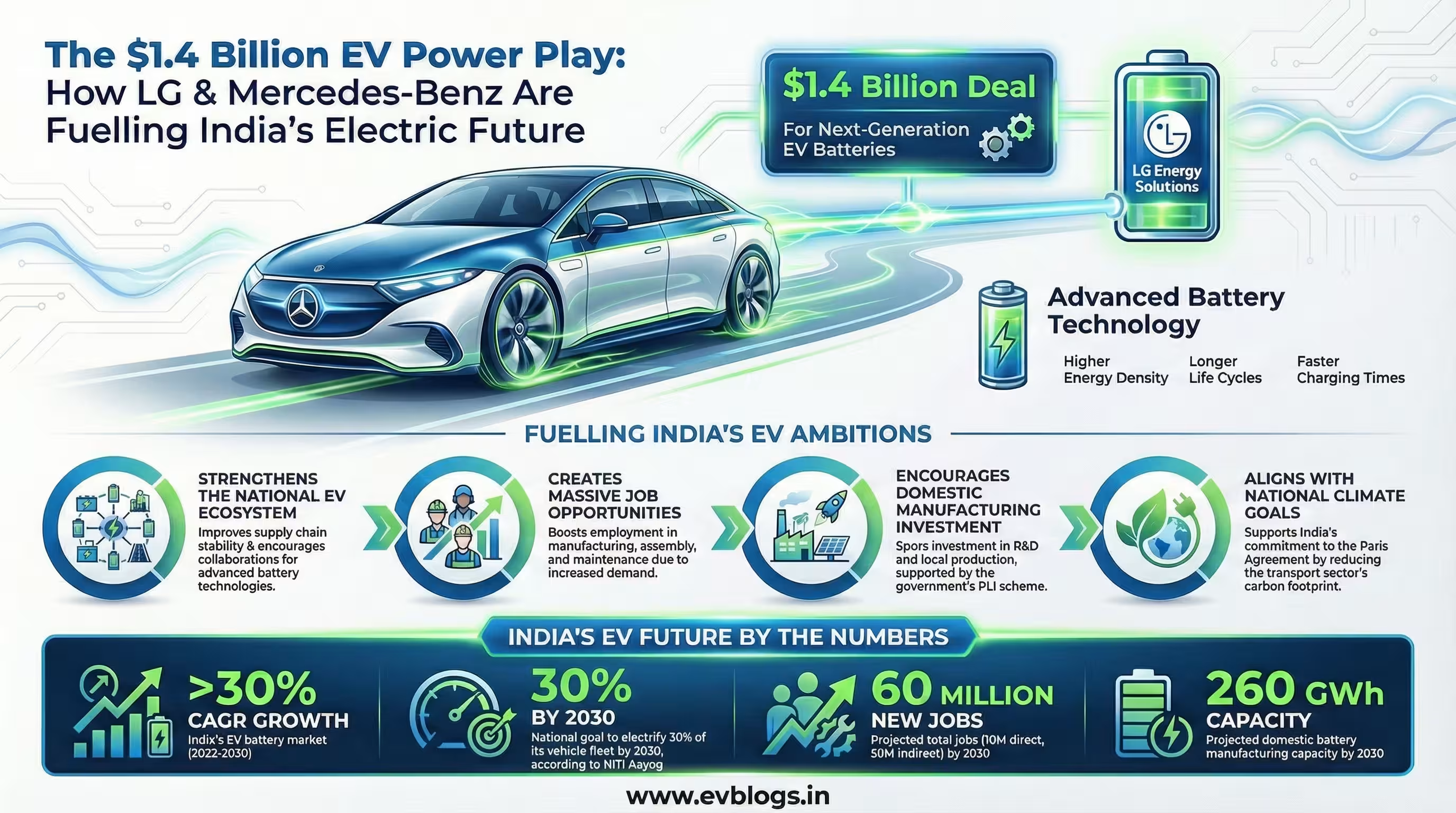
LG Energy Solutions, the South Korean battery manufacturing giant, has signed a landmark $1.4 billion deal with Mercedes-Benz to supply batteries for electric vehicles (EVs). This major development is expected to significantly impact the global EV market, including India, where demand for cleaner transportation solutions is rapidly rising. Below are key aspects of this agreement and its implications.
1. Major Boost for the Global EV Battery Market
The $1.4 billion partnership between LG Energy Solutions and Mercedes-Benz marks one of the largest battery supply deals in recent times. This agreement underscores the growing importance of reliable and high-capacity battery solutions for automakers worldwide.
India’s EV battery market is projected to grow at a CAGR of over 30% between 2022 and 2030.
With global automotive giants like Mercedes-Benz making long-term commitments, the entire supply chain—from raw materials to end-user vehicles—will likely see accelerated growth and innovation.
2. Strengthening India’s Position in the EV Ecosystem
India is emerging as a significant market for electric vehicles, backed by government incentives and rising consumer interest. The deal is expected to have a ripple effect:
- Domestic manufacturers may benefit from improved supply chain stability.
- Indian companies could seek collaborations with global players such as LG Energy Solutions for access to advanced battery technologies.
- As luxury automakers expand EV portfolios in India, demand for quality battery systems will increase.
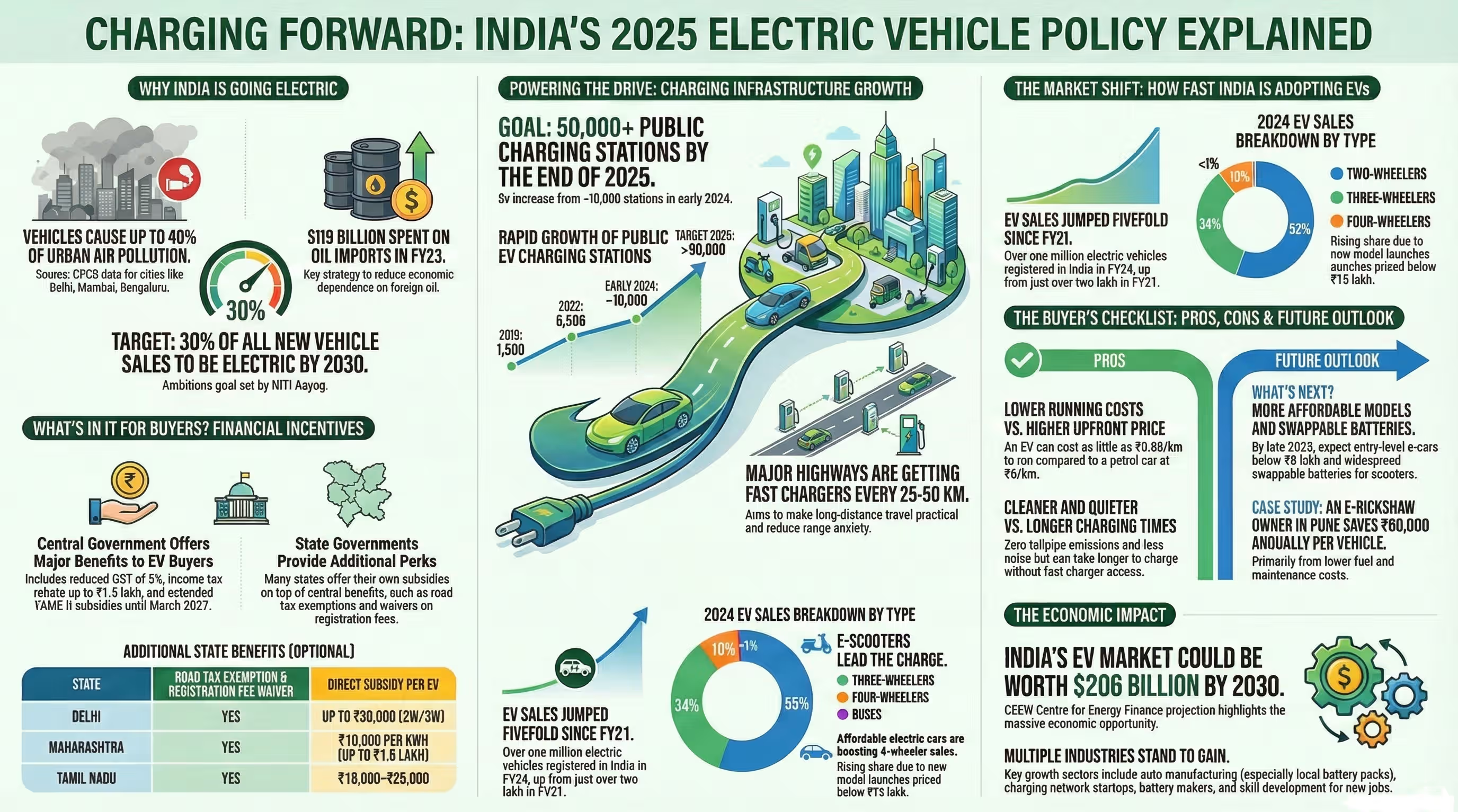
“India aims to electrify 30% of its vehicle fleet by 2030,” according to NITI Aayog.
3. Focus on Advanced Battery Technology
A key element of the agreement is the deployment of next-generation lithium-ion batteries that offer higher energy density, longer life cycles, and faster charging times. This is particularly relevant for Indian consumers, who often cite battery performance and charging infrastructure as primary concerns.
- Enhanced battery safety and efficiency will be crucial for mass adoption of EVs in India.
- Improved batteries can help address range anxiety and reduce overall vehicle costs over time.
4. Opportunities for Indian Suppliers and Workforce
With global EV manufacturers ramping up production, there is significant opportunity for Indian component suppliers and skilled professionals:
- Indian firms already supply parts to global OEMs and could benefit from increased demand for battery components.
- Skilled engineers and technicians will be needed for battery development, assembly, and maintenance.
“The Indian EV sector could create up to 10 million direct and 50 million indirect jobs by 2030.”
5. Addressing Sustainability and Climate Goals
The LG-Mercedes deal highlights the automotive industry’s shift towards sustainability. India, as a signatory to the Paris Agreement, has set ambitious targets to reduce carbon emissions.
- Advanced EV batteries are key to reducing the transport sector’s carbon footprint.
- The agreement supports global efforts to transition to cleaner energy and aligns with India’s commitment to green mobility.
6. Encouraging Investment in Battery Manufacturing
The scale of this deal is expected to encourage further investments in battery manufacturing and R&D within India. The government’s Production Linked Incentive (PLI) scheme for ACC battery storage is already attracting major players.
- Indian startups and established firms may ramp up efforts to develop domestic battery manufacturing capabilities.
- Local production can help reduce import dependence and boost the ‘Make in India’ initiative.
“India’s battery manufacturing capacity is projected to reach 260 GWh by 2030.”
Conclusion
The $1.4 billion agreement between LG Energy Solutions and Mercedes-Benz represents a significant milestone for the global EV sector, with far-reaching implications for India. As the country accelerates its transition to electric mobility, enhanced access to advanced battery technologies and robust supply chains will be critical. This deal is poised to bolster India’s EV ambitions, catalyse local industry growth, and contribute to national sustainability targets.
Sources
Original Source
google.com - Read original
Official Sources
- Intergovernmental Panel on Climate Change (IPCC): IPCC opens registration of experts to review the first draft of the Methodology Report on Inventories for Short-lived Climate Forcers
Quotes
- Publishing Domain: google.com
- Published Date: 2025-12-09T16:15:26+05:30
- Original URL: Read original (news.google.com/rss/articles/CBMiqAFBVV95cUxNVkFSLVVFaDR0TW5LTzVWR2U2X1RBW… …)
Editorial Check
- Originality: 30 / 100 — The summary is nearly identical to the title and does not provide additional context or unique phrasing. It simply repeats the main fact from the headline.
- Helpfulness: 20 / 100 — The summary offers minimal information beyond the headline and does not elaborate on the significance, details, or implications of the deal. Readers do not gain additional understanding from the summary.