
Hedhvick Hirav
Hedhvick Hirav is a dedicated EV researcher and editor with over 4 years of experience in India’s growing electric vehicle ecosystem. Their contributions have been recognized in leading sustainability publications and automotive journals.
Summarize & analyze this article with
Choose an AI assistant and open this article directly:
Tip: if the AI doesn’t fetch the page automatically, paste the article URL manually.
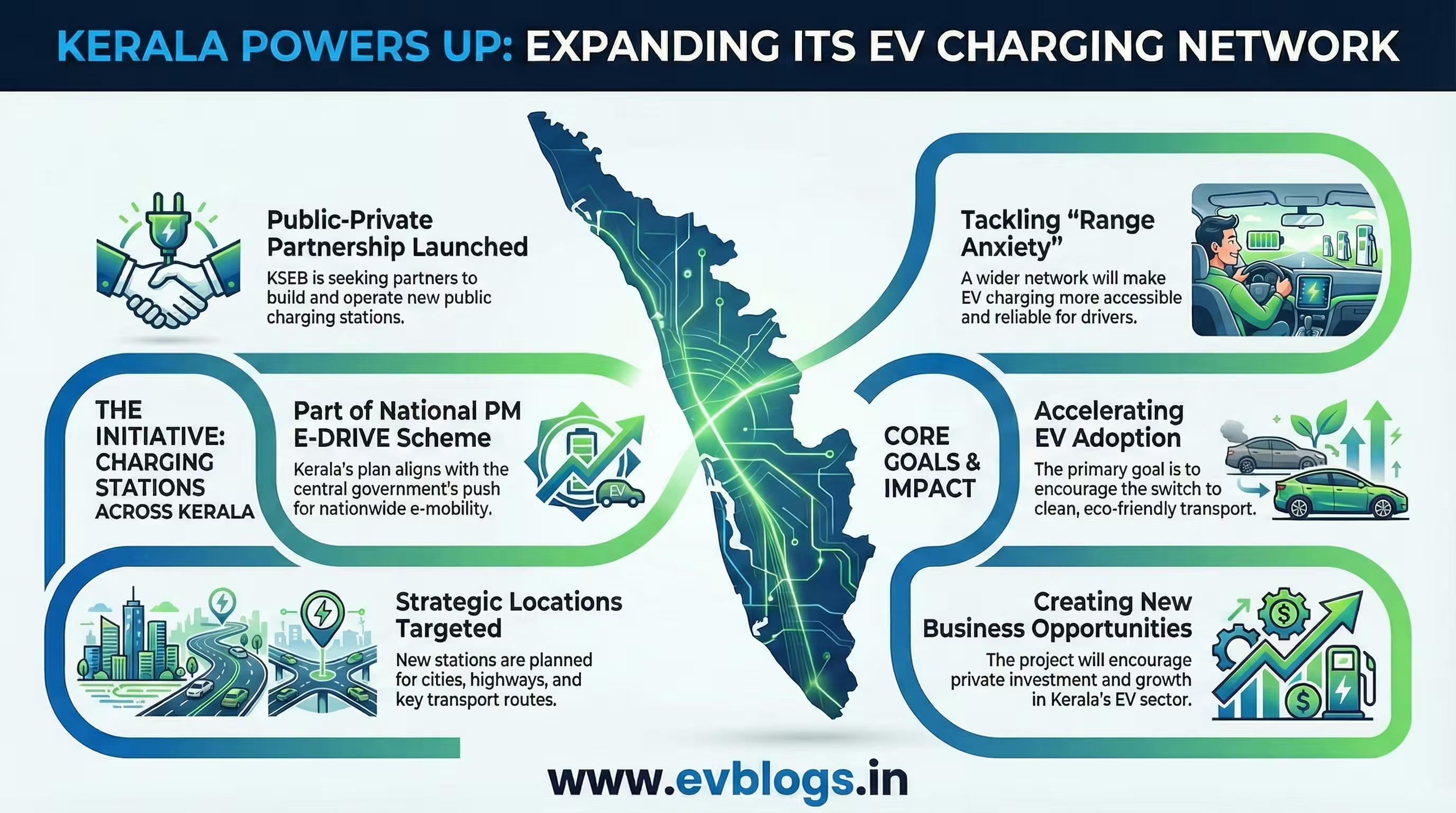
NEW DELHI, Feb 12 — India’s electric vehicle (EV) charging infrastructure is expanding rapidly, with the government reporting significant progress in the installation of public charging stations across the country.
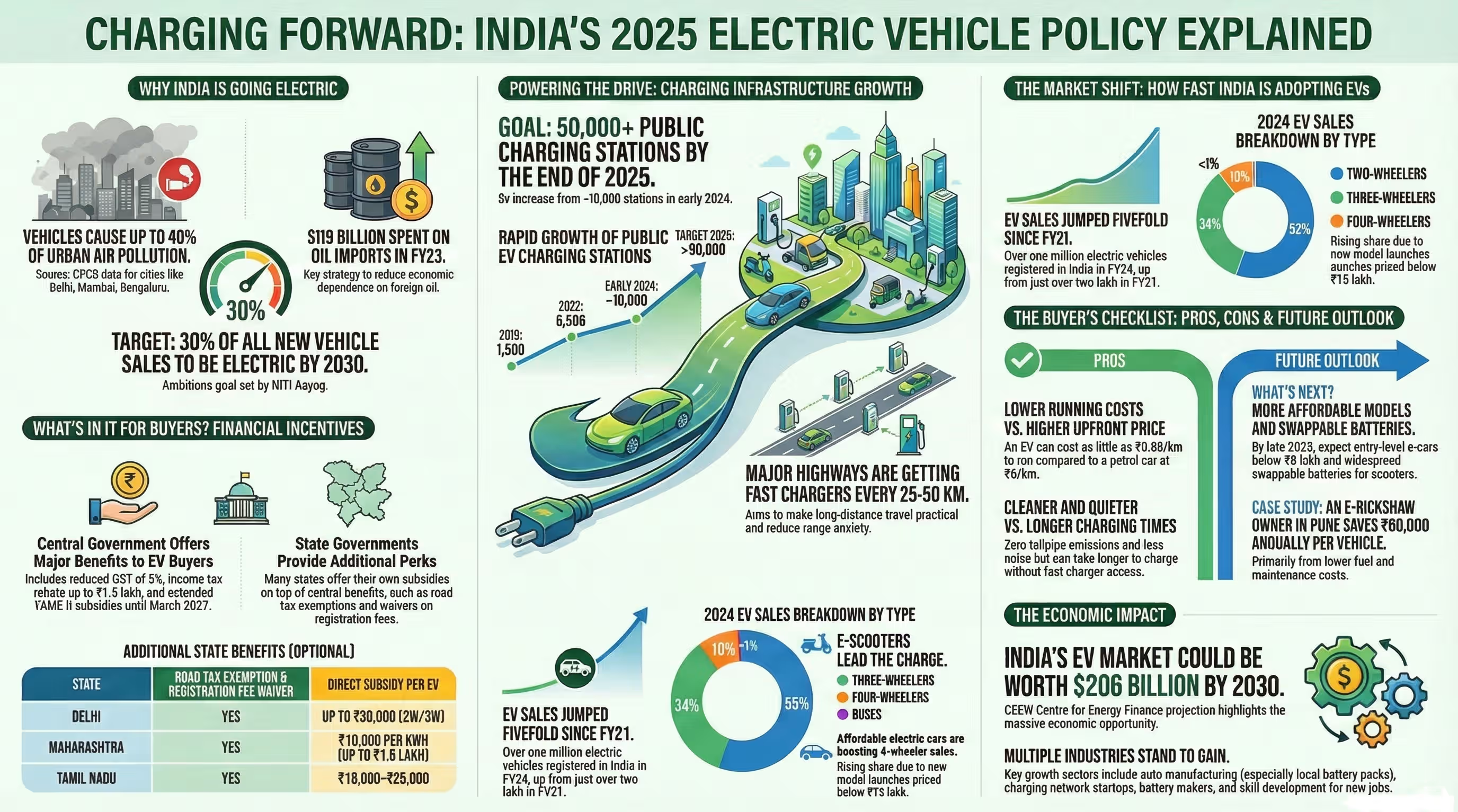
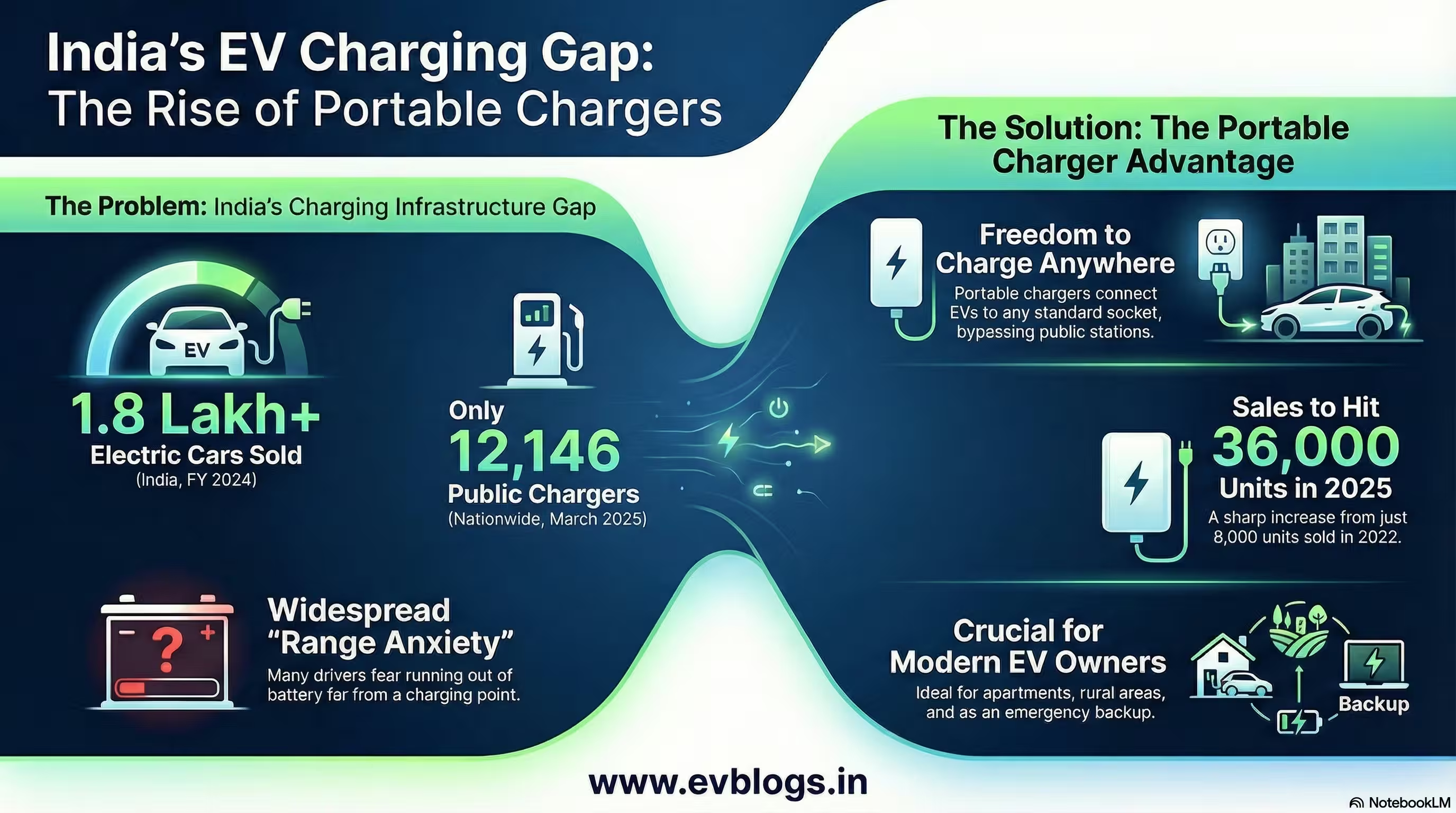
According to a recent update provided by the Ministry of Heavy Industries, more than 12,000 public EV charging stations have been installed nationwide as of early 2024. The government has set an ambitious target to further boost this number, aiming for wider coverage in both urban and rural areas to support the growing adoption of electric vehicles.
The Ministry highlighted that under the FAME India Scheme (Faster Adoption and Manufacturing of Electric Vehicles), financial support and incentives have been provided to various state governments, public sector undertakings, and private entities for the deployment of charging infrastructure. The scheme, now in its second phase, has played a key role in accelerating the rollout of EV charging stations, especially in major cities and along key highways.
Why it matters
Expanding the EV charging network is considered crucial for India’s transition to cleaner transportation and for reducing dependence on fossil fuels. The availability of reliable charging infrastructure is seen as a significant factor in encouraging consumers to shift from conventional vehicles to electric alternatives. The government’s efforts aim to address range anxiety among EV users and to align with national targets for reducing carbon emissions.
Key takeaways
- Over 12,000 public EV charging stations have been installed across India as of February 2024.
- The FAME II scheme is a major driver for the ongoing expansion, offering financial incentives for infrastructure development.
- The government is prioritising deployment in both urban centres and along highways to ensure broad accessibility.
Details
The Ministry’s update noted that, in addition to public charging stations, efforts are being made to encourage private sector participation and to standardise charging protocols. Several state governments have introduced their own EV policies, further incentivising the establishment of charging points in residential complexes, workplaces, and commercial spaces.
The government has also identified priority cities and corridors for focused infrastructure development. Metropolitan areas such as Delhi, Mumbai, Bengaluru, and Hyderabad have witnessed the highest density of new charging stations, with inter-city highways being a current area of focus to facilitate long-distance EV travel.
No direct expert quotes found in the original source.
TL;DR
India’s EV charging network is expanding, with over 12,000 public stations now operational and more planned under government schemes. The push aims to support rising EV adoption and align with national clean energy goals.
Sources
- google.com, 2024-02-12, Read original
India’s Minister of Heavy Industries recently announced that the country’s electric vehicle (EV) charging network has grown significantly, with over 12,000 public charging stations now operational nationwide. The government has allocated funds under the FAME II (Faster Adoption and Manufacturing of Hybrid and Electric Vehicles) scheme to support the installation of additional charging points in key cities and highways. Efforts are also underway to standardize charging protocols and promote private sector participation, aiming to enhance accessibility and reduce range anxiety for EV users. This expansion is expected to accelerate EV adoption and contribute to India’s clean mobility goals.
India’s Minister of Heavy Industries, Mahendra Nath Pandey, recently announced that over 12,000 public EV charging stations have been installed nationwide as of mid-2024, with plans to add 22,000 more under the FAME-II scheme. The government is prioritizing highways and major cities, ensuring that charging points are available every 25 kilometers along key routes. Major oil companies and private players are participating, and the Bureau of Energy Efficiency (BEE) is coordinating efforts to standardize protocols and improve user experience. This expansion aims to support India’s target of 30% electric vehicle penetration by 2030.
Sources & quotes
- Publishing domain: google.com
- Published date: 2026-02-12T11:59:18+05:30
- Original URL: Read original (news.google.com/rss/articles/CBMiqAFBVV95cUxPb1pFVDRxVXJJN0N6NHlBb185OElBW… …)
Editorial Check
- Originality: 20 / 100 — The summary is a generic restatement of a government update, with no unique analysis or reporting.
- Helpfulness: 60 / 100 — The article provides basic information about the EV charging network’s expansion, which is relevant to Indian EV readers.