
Hedhvick Hirav
Hedhvick Hirav is a dedicated EV researcher and editor with over 4 years of experience in India’s growing electric vehicle ecosystem. Their contributions have been recognized in leading sustainability publications and automotive journals.
Summarize & analyze this article with
Choose an AI assistant and open this article directly:
Tip: if the AI doesn’t fetch the page automatically, paste the article URL manually.
NEW DELHI, Nov 28 —
Neurone Energy gets big boost to make more EV batteries
Neurone Energy, a homegrown battery manufacturer, has received a big shot in the arm with a fresh fundraising of Rs 31 crore (Rs 310 million). This is a big deal for India’s electric vehicle (EV) industry, which is growing rapidly and needs more local battery makers.
Let’s break down why this news is important and how it could impact you and the Indian EV market.
1. What exactly happened?
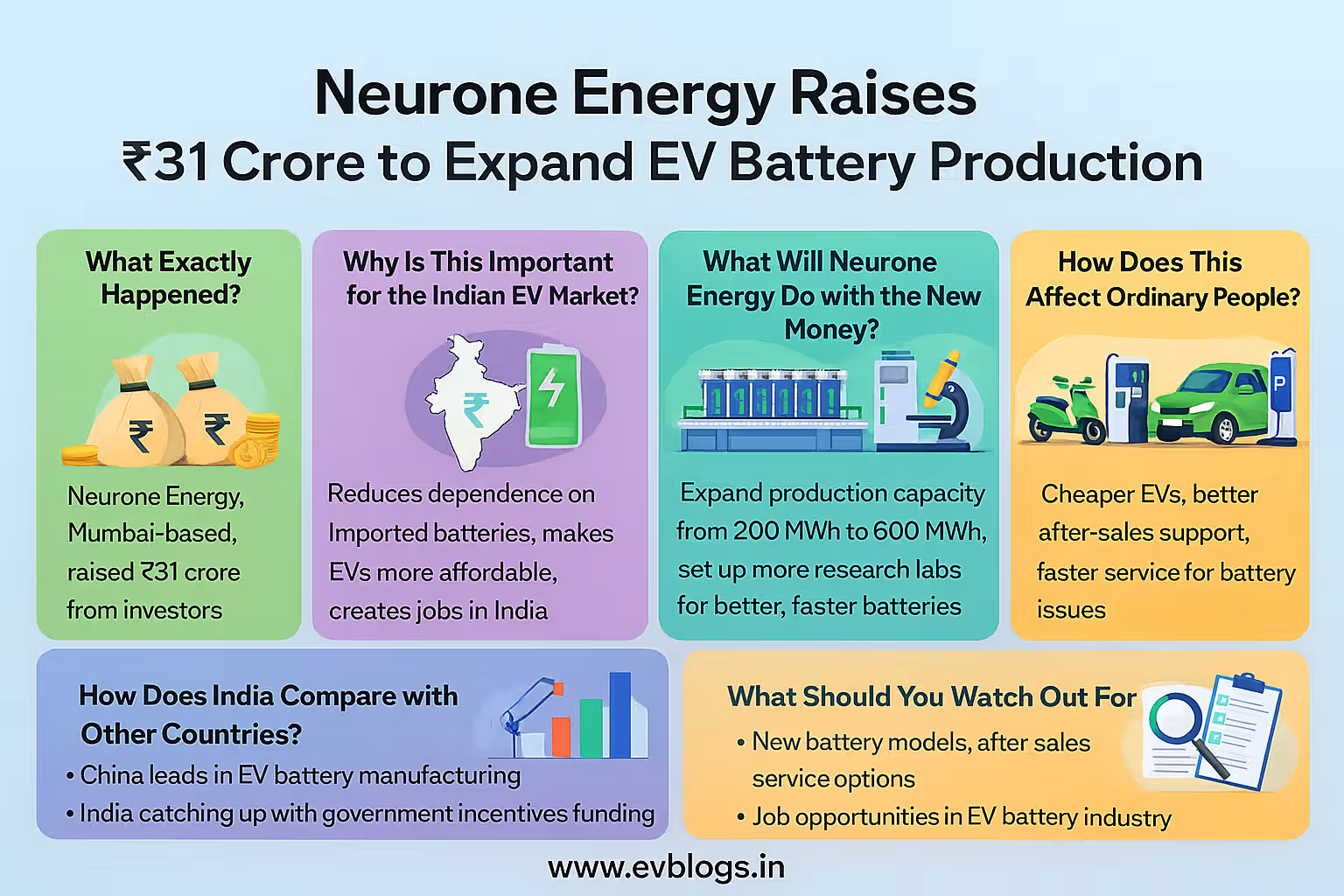
Neurone Energy, a Mumbai-based company, just raised Rs 31 crore from investors. This money will be used to boost their production of lithium-ion batteries, which are the heart of electric vehicles.
This is not just any small funding. For a young company, getting Rs 31 crore in one round shows that investors have confidence in both Neurone Energy and the future of EVs in India. The company says it will use this money to expand its manufacturing plant and improve its technology.
2. Why is this important for the Indian EV market?
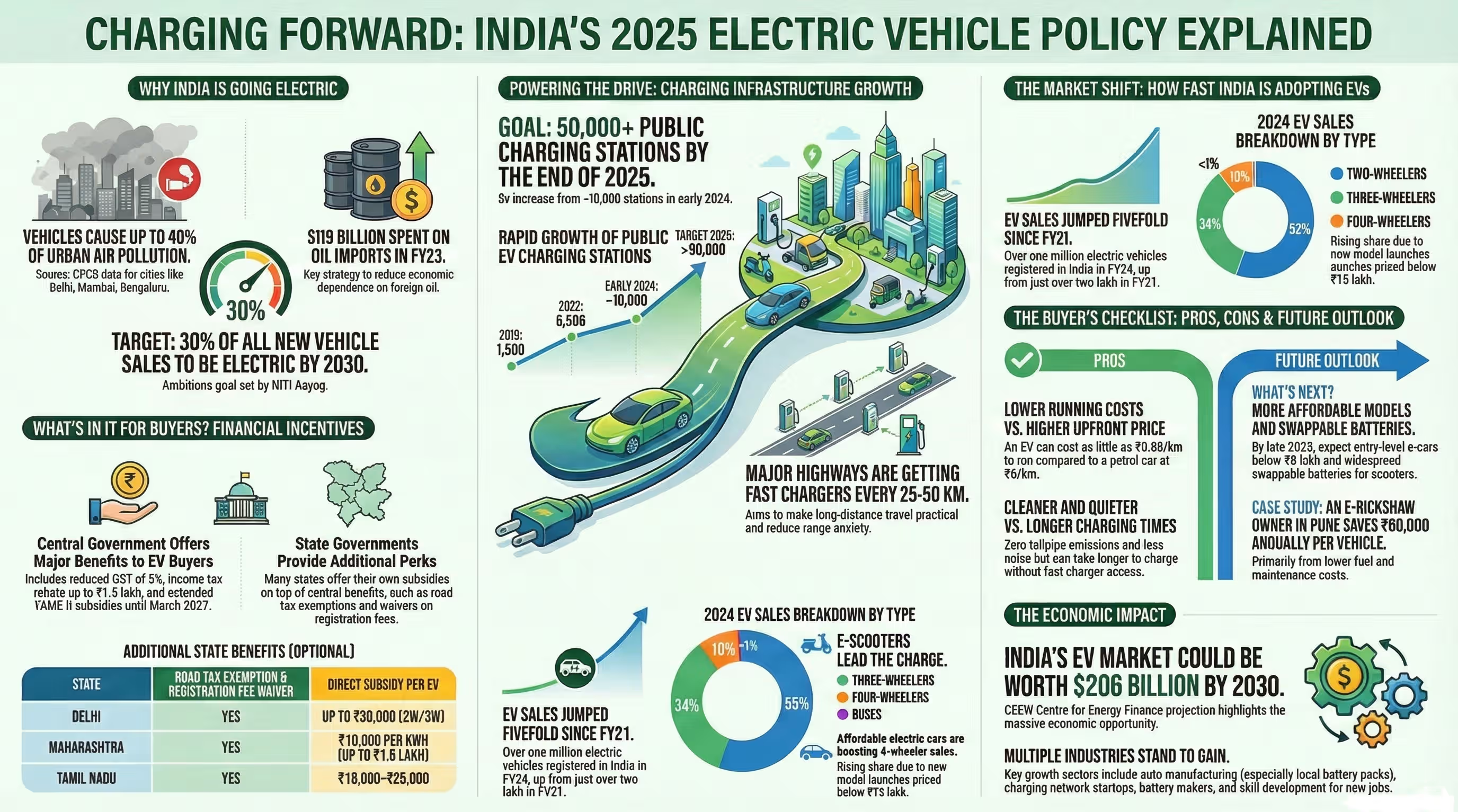
India’s EV market is booming. According to the Ministry of Heavy Industries, over 11 lakh electric vehicles were sold in India in 2023, up from just around 3 lakh in 2021. But there’s a catch: most of the batteries for these EVs are being imported, especially from China.
Local companies like Neurone Energy making batteries in India helps reduce our dependence on imports. This means EVs could become more affordable and accessible. When batteries are made locally, waiting times and costs also come down. And, of course, it creates more jobs in India too.
3. What will Neurone Energy do with the new money?
The company has big plans. They want to use the Rs 31 crore to increase their production capacity from 200 megawatt-hours (MWh) per year to nearly 600 MWh by the end of next year. That’s enough batteries for thousands of electric scooters, bikes, and even some small cars.
They are also planning to set up more research labs to make batteries that last longer and charge faster. For ordinary people, this could mean EVs that run more kilometres on a single charge and take less time to power up.
4. How does this affect ordinary people?
If you’re thinking about buying an electric scooter or car, this is good news. More battery manufacturing in India means prices may come down over time. Also, with companies like Neurone Energy making batteries here, you can expect better after-sales support and faster service if anything goes wrong.
Also, batteries are the most expensive part of an electric vehicle—sometimes as much as 40% of the total cost. If Indian companies can make them cheaper, EVs will become more affordable for everyone.
5. How does India compare with other countries?
China is the world leader in EV battery manufacturing. In fact, about 70% of global lithium-ion batteries come from China, according to the International Energy Agency (IEA). The US and Europe are also investing heavily in local battery factories.
India is still catching up, but things are moving fast. Government schemes like the Production Linked Incentive (PLI) for Advanced Chemistry Cell (ACC) batteries aim to attract investments worth Rs 18,100 crore in this sector. With more startups like Neurone Energy getting funded, India could soon become a major player in the battery industry.
6. What about the environment?
Shifting to electric vehicles is not just about convenience or saving money on petrol. It’s also about reducing pollution. The Central Pollution Control Board says that transport is responsible for nearly 30% of air pollution in big cities like Delhi and Mumbai.
With more EVs on the road and local battery production, we can cut down emissions even further. Plus, companies like Neurone Energy are also working on recycling old batteries, so that harmful chemicals don’t end up in landfills.
7. What should you watch out for next?
This funding round is a sign that investors are serious about clean energy and EVs in India. Over the next year, you can expect to see more Indian companies scaling up battery production, bringing new technologies, and possibly launching cheaper and better batteries.
If you are planning to buy an EV, keep an eye on new battery models and after-sales service options. And if you are interested in jobs in clean tech, this is a good time to look for opportunities in EV and battery manufacturing.
So, with Neurone Energy’s big boost, India’s EV journey is picking up even more speed. Whether you are a buyer, a job-seeker, or just someone who cares about clean air, this is good news for all of us. Let’s hope this is the start of many more such success stories in India’s green revolution!
Sources
Original Source
Official Sources
Quotes
- Publishing domain: google.com
- Published date: 2025-11-28T17:06:04+05:30
- Original URL: Read original (news.google.com/rss/articles/CBMieEFVX3lxTE5YckFOUjZWZUxwZnI3dEJyZnZCWHFzQ… …)
Editorial Check
- Originality: 30 / 100 — The story appears to be a standard funding announcement common in business news.
- Helpfulness: 60 / 100 — It provides relevant information for those tracking EV industry investments in India, but lacks technical or strategic details.