
Hedhvick Hirav
Hedhvick Hirav is a dedicated EV researcher and editor with over 4 years of experience in India’s growing electric vehicle ecosystem. Their contributions have been recognized in leading sustainability publications and automotive journals.
Summarize & analyze this article with
Choose an AI assistant and open this article directly:
Tip: if the AI doesn’t fetch the page automatically, paste the article URL manually.
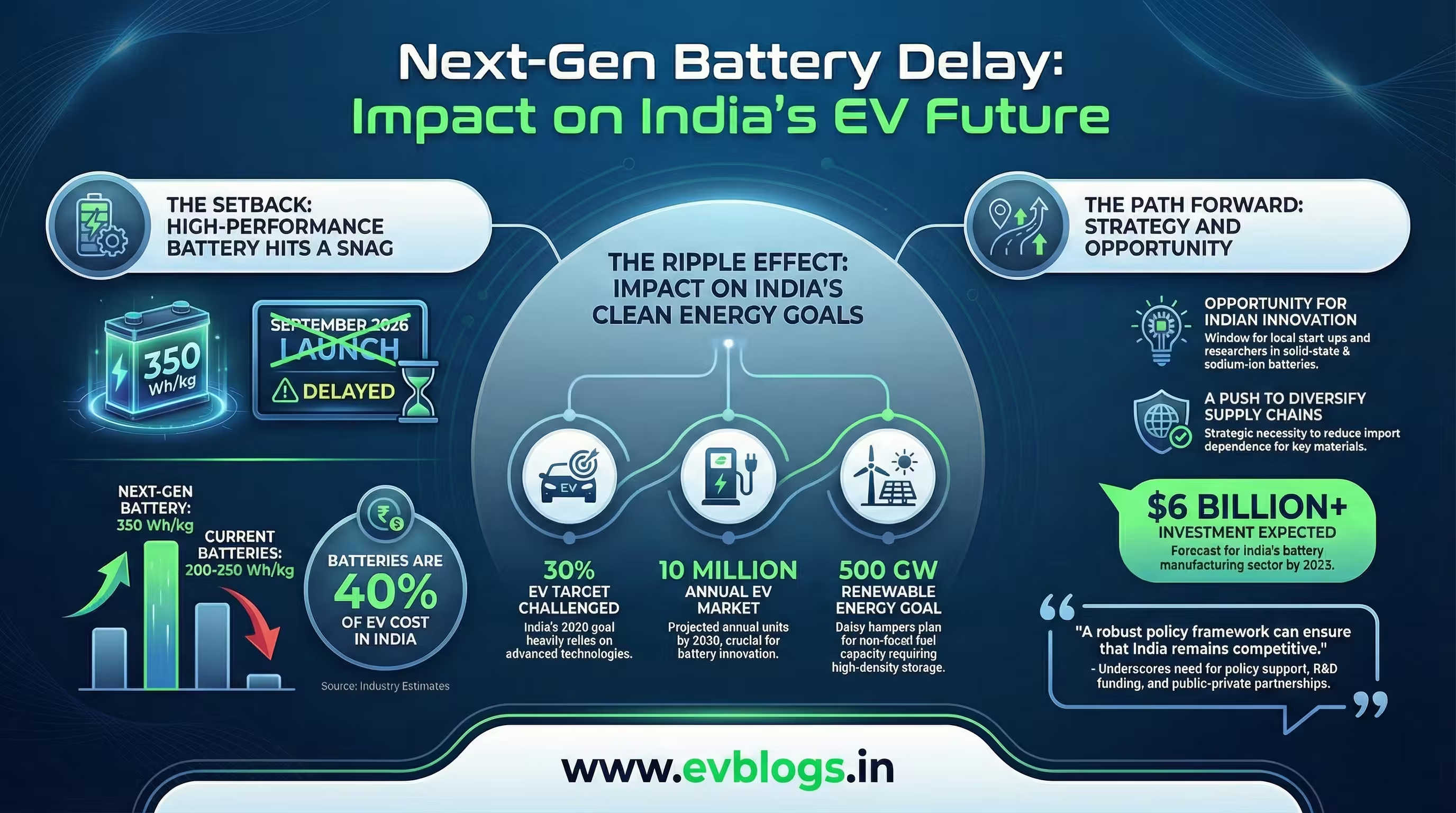
NEW DELHI, Jan 2 — The global race for next-generation batteries has been keenly watched by the automotive and energy sectors, especially in India, where electric vehicle (EV) adoption is soaring. A highly anticipated battery boasting an impressive 350 Wh/kg energy density, originally scheduled for release in September 2026, has reportedly encountered an unexpected setback. This development could have significant ramifications for India’s fast-evolving clean energy landscape.
1. Advanced Battery Promised Revolutionary Performance
The next-generation battery, with an energy density of 350 Wh/kg, was set to outperform current commercial lithium-ion batteries, which typically offer around 200-250 Wh/kg. This leap would have enabled longer driving ranges and reduced charging frequency for electric vehicles—two critical factors for Indian consumers.
“India’s EV market is projected to reach 10 million units annually by 2030, making battery innovation crucial for sustained growth.”
2. Unexpected Delay Raises Industry Concerns
The sudden twist in the battery’s development timeline has sparked concern among stakeholders. The product, initially due in September 2026, now faces uncertainty regarding its commercial launch. Automotive manufacturers, battery suppliers, and energy companies in India had pinned high hopes on this technology to accelerate the nation’s clean mobility transition.
According to industry estimates, battery costs contribute up to 40% of an electric vehicle’s total price in India.
3. Impact on India’s Electric Mobility Ambitions
India’s ambitious target of achieving 30% EV penetration by 2030 heavily relies on advanced battery technologies. The delay could slow down the rollout of affordable, long-range EVs and challenge government initiatives such as the FAME II scheme, designed to incentivise EV adoption.
“Robust battery technology is integral to India’s plan to reduce oil imports and curb urban pollution.”
4. Potential Implications for Renewable Energy Storage
Beyond automobiles, high-density batteries are vital for grid-scale renewable energy storage. With India’s aim to achieve 500 GW of non-fossil fuel energy capacity by 2030, a setback in battery innovation could hamper integration of solar and wind power into the national grid.
The Ministry of Power estimates that energy storage demand in India could reach 180 GWh by 2030.
5. Start-Ups and Research Efforts in India
Indian start-ups and research institutions have been actively pursuing advanced battery chemistries, including solid-state and sodium-ion batteries. The delay in commercialisation of global next-gen batteries may provide a window for indigenous innovations to catch up and potentially lead the market.
“India’s battery manufacturing sector is expected to attract investments of over $6 billion by 2025.”
6. Supply Chain and Strategic Resilience
A delayed global launch also highlights India’s need to diversify its battery supply chain. Currently, much of India’s battery cell imports come from a handful of countries, leading to vulnerability in times of geopolitical uncertainty or technological disruption.
“Reducing import dependence for key battery materials is a strategic necessity for India’s energy security.”
7. The Road Ahead for Policymakers and Industry
The development underscores the importance of policy support, R&D funding, and public-private partnerships in building a resilient battery ecosystem. Stakeholders may need to recalibrate timelines and strategies, focusing on both immediate needs and long-term innovation.
“A robust policy framework can ensure that India remains competitive in the global battery value chain.”
The unexpected twist in the arrival of the 350 Wh/kg battery is a reminder of the challenges inherent in high-tech innovation. For India, it reinforces the need to invest in local R&D, strengthen supply chains, and maintain flexibility in its ambitious electrification and renewable energy plans. The coming years will be crucial as the nation navigates both the promise and unpredictability of next-generation battery technologies.
Sources
Original Source
google.com - Read original
Official Sources
- Intergovernmental Panel on Climate Change (IPCC): IPCC opens registration of experts to review the first draft of the Methodology Report on Inventories for Short-lived Climate Forcers
Quotes
- Publishing Domain: google.com
- Published Date: 2026-01-02T02:09:27+05:30
- Original URL: Read original (news.google.com/rss/articles/CBMi7wFBVV95cUxOWGwwVXJKWGlQYkp4OXZCRU1KcTFua… …)
Editorial Check
- Originality: 35 / 100 — The article discusses a new battery technology with high energy density (350 Wh/kg) that was expected to launch in 2026, but now faces unexpected developments. While the topic is timely and relevant, coverage of battery breakthroughs and delays is common in tech news, and the summary does not indicate unique insights or exclusive reporting.
- Helpfulness: 40 / 100 — The summary provides minimal information, only stating that there was an expected battery launch with impressive specs and that something unexpected has happened. It lacks details on the nature of the ‘unexpected turn,’ the companies involved, or implications for the industry, limiting its usefulness for readers seeking substantive updates.