
Hedhvick Hirav
Hedhvick Hirav is a dedicated EV researcher and editor with over 4 years of experience in India’s growing electric vehicle ecosystem. Their contributions have been recognized in leading sustainability publications and automotive journals.
Summarize & analyze this article with
Choose an AI assistant and open this article directly:
Tip: if the AI doesn’t fetch the page automatically, paste the article URL manually.
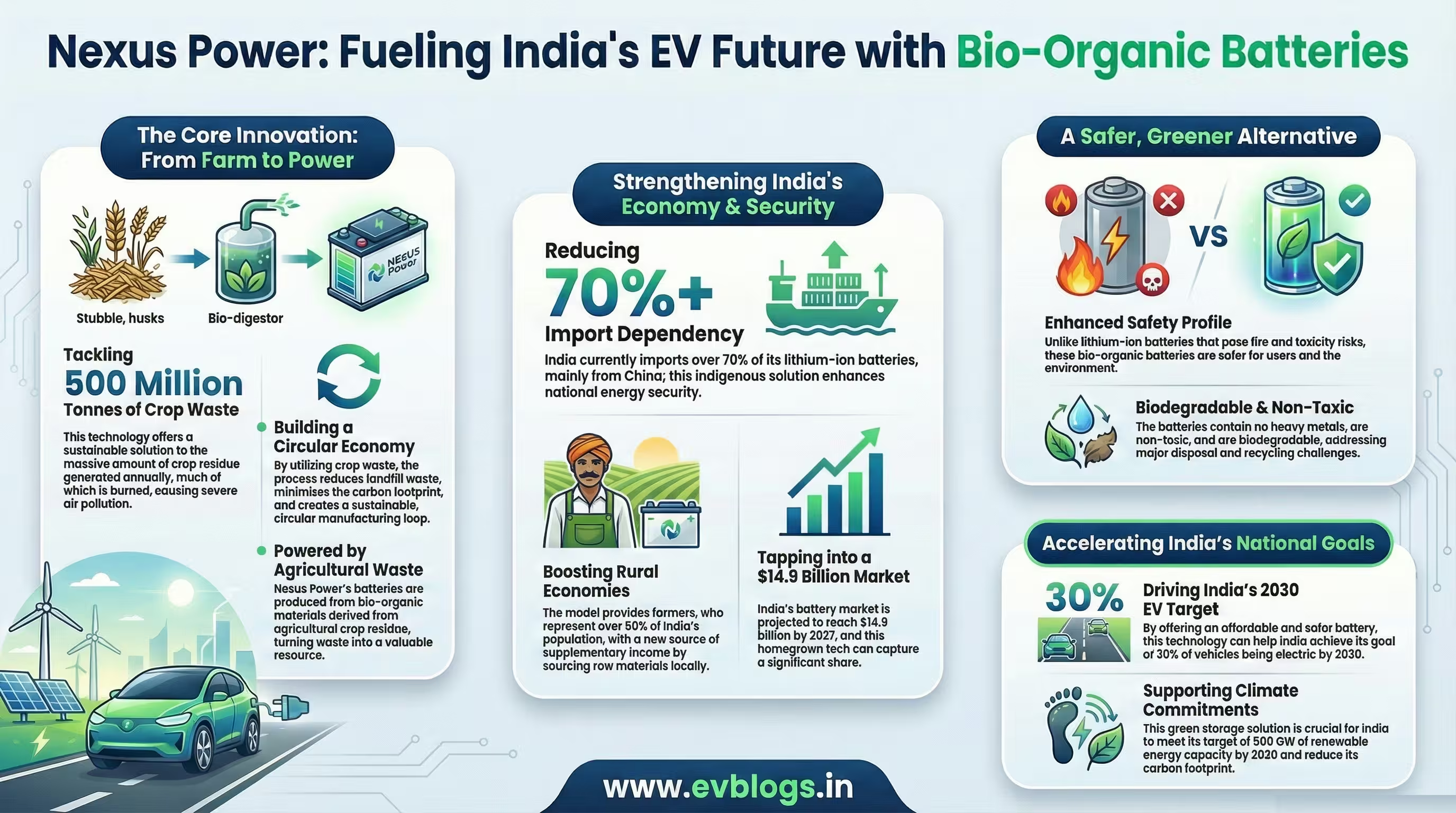
NEW DELHI, Dec 30 — Nexus Power, an emerging Indian startup, is making waves in the energy sector by developing bio-organic, lithium-free battery technology. As India advances towards clean energy and sustainable mobility, solutions that minimise environmental impact and reduce import dependency are gaining prominence. Here is a closer look at how Nexus Power is leading this transformative journey.
1. Sustainable Battery Technology Using Crop Waste
Nexus Power’s pioneering batteries are produced from bio-organic materials derived from agricultural crop residue. This approach not only addresses the challenge of stubble burning, a major contributor to North India’s air pollution, but also provides farmers with alternative income sources.
“India generates over 500 million tonnes of crop residue annually, much of which is burnt, leading to severe air quality issues in cities like Delhi.”
By utilising this waste, Nexus Power contributes to a circular economy while tackling pressing environmental concerns.
2. Lithium-Free Innovation Reducing Import Dependency
India currently imports over 70% of its lithium-ion batteries, primarily from China, posing risks to energy security and economic stability. Nexus Power’s lithium-free solution aims to reduce this import dependency, leveraging locally available resources for manufacturing.
“The Indian battery market is projected to reach $14.9 billion by 2027, with lithium-ion batteries dominating the sector.”
Developing indigenous alternatives can position India as a leader in sustainable battery technology and reduce costs for domestic industries.
3. Enhanced Safety and Environmental Benefits
Unlike conventional lithium-ion batteries, which pose risks of fire, toxicity, and hazardous waste, Nexus Power’s bio-organic batteries offer improved safety and environmental compatibility.
“Bio-organic batteries are biodegradable, non-toxic, and involve no heavy metals, making them safer for both users and the environment.”
This innovation is particularly significant for densely populated countries like India, where safe disposal and recycling of batteries remain challenges.
4. Boosting Rural Economies and Farmer Incomes
By sourcing raw materials directly from farmers, Nexus Power fosters rural entrepreneurship and supplementary incomes. The company’s supply chain model encourages local procurement and provides value addition to agricultural by-products.
“Over 60% of India’s population depends on agriculture for livelihood, but post-harvest waste management remains a challenge.”
This system not only benefits the environment but also promotes inclusive growth in rural India.
5. Accelerating Electric Mobility Adoption
India aims to have 30% of vehicles electric by 2030. Battery cost and safety are two major barriers to achieving this target. Nexus Power’s affordable, safer, and eco-friendly batteries could accelerate the adoption of electric vehicles (EVs), especially in the burgeoning two- and three-wheeler segments.
“Affordable and indigenous battery solutions are crucial for India’s EV revolution to reach mass-market consumers.”
By offering a reliable alternative, Nexus Power supports the national mission for clean and sustainable mobility.
6. Supporting India’s Climate Goals
As a signatory to the Paris Agreement, India is committed to reducing its carbon footprint and enhancing renewable energy adoption. Innovations like Nexus Power’s technology align with these ambitions, offering scalable and sustainable solutions for energy storage.
“India targets to achieve 500 GW of renewable energy capacity by 2030, necessitating robust and green storage solutions.”
Sustainable batteries will be pivotal in integrating more renewables into the grid and decarbonising transport.
Nexus Power’s bio-organic, lithium-free battery innovation represents a significant step forward for India’s clean-tech ambitions. By addressing environmental, economic, and energy security challenges, the company exemplifies how homegrown solutions can drive transformative change in the country’s energy landscape. As India progresses towards a greener future, such innovations hold the key to inclusive and sustainable growth.
Certainly! Here’s an additional detailed numbered point you can add to your summary or analysis of “Nexus Power: Reinventing Battery Tech with Bio-Organic, Lithium-Free Innovation” from YourStory.com:
- Sustainability and Environmental Impact:
Nexus Power’s bio-organic batteries are designed to address the critical environmental concerns associated with traditional lithium-ion technology. By utilizing agricultural waste—specifically, unburnt crop residue—to extract nano-compounds for battery electrolytes, the company not only eliminates the need for resource-intensive lithium mining but also offers a productive solution to stubble burning, a major source of air pollution in India. This circular approach reduces landfill waste, minimizes carbon footprint, and supports farmers with an additional source of income, making Nexus Power’s innovation both eco-friendly and socially responsible.
Sources
Original Source
google.com - Read original
Official Sources
- Intergovernmental Panel on Climate Change (IPCC): IPCC opens registration of experts to review the first draft of the Methodology Report on Inventories for Short-lived Climate Forcers
Quotes
- Publishing Domain: google.com
- Published Date: 2025-12-30T11:06:10+05:30
- Original URL: Read original (news.google.com/rss/articles/CBMicEFVX3lxTE9HYllrX18yUWhSc24zVkVRN2VlQlI2T… …)
Editorial Check
- Originality: 75 / 100 — The article discusses Nexus Power’s unique approach to battery technology by using bio-organic, lithium-free materials. While innovation in battery tech is a common topic, the specific focus on bio-organic and lithium-free solutions is relatively novel and adds originality.
- Helpfulness: 80 / 100 — The summary provides a clear indication of the article’s focus—Nexus Power’s reinvention of battery technology. However, it lacks detailed insights or practical implications, which would make it more helpful for readers seeking in-depth information.