
Hedhvick Hirav
Hedhvick Hirav is a dedicated EV researcher and editor with over 4 years of experience in India’s growing electric vehicle ecosystem. Their contributions have been recognized in leading sustainability publications and automotive journals.
Summarize & analyze this article with
Choose an AI assistant and open this article directly:
Tip: if the AI doesn’t fetch the page automatically, paste the article URL manually.
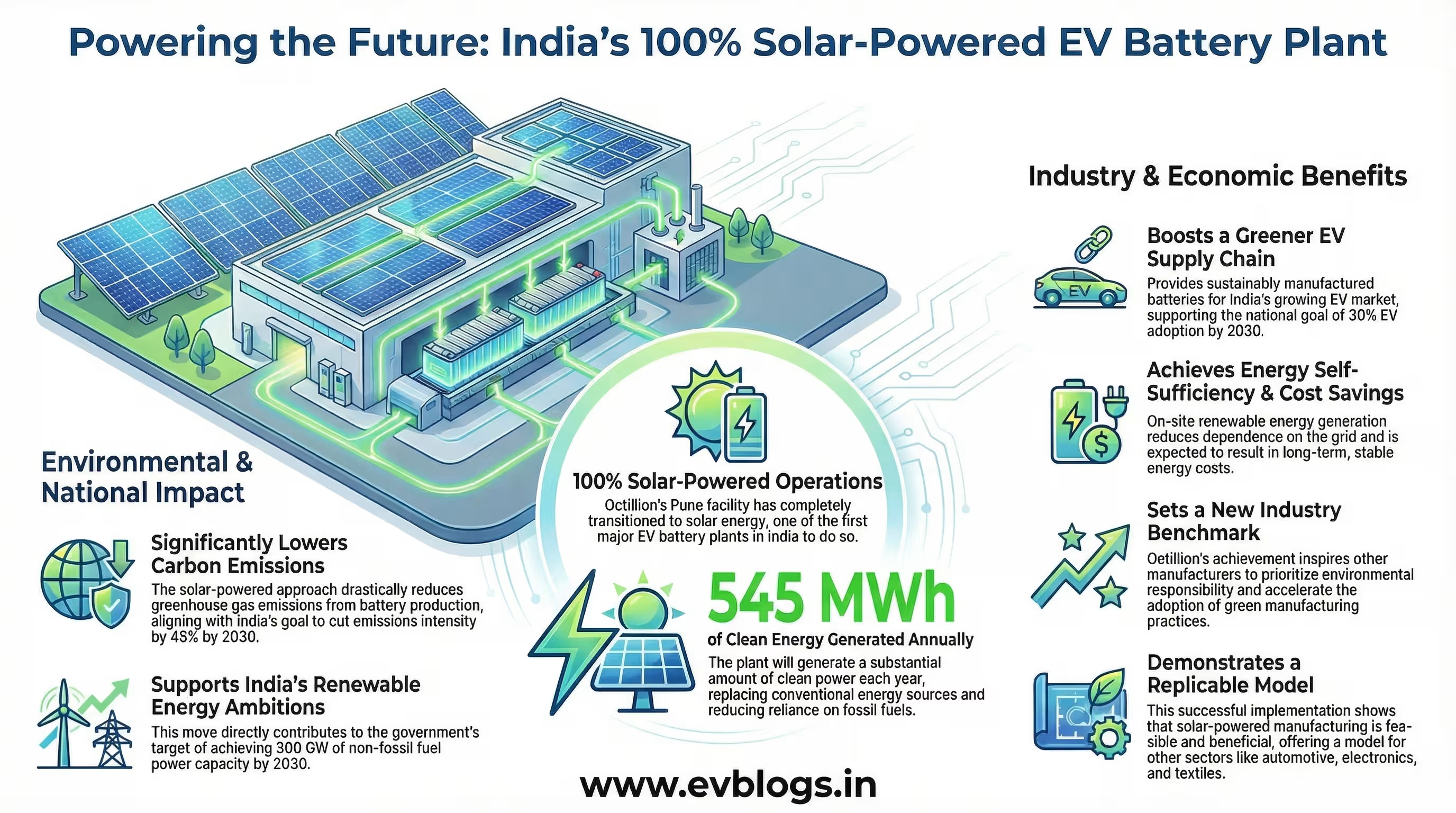
NEW DELHI, Dec 3 — Octillion Power Systems has announced that its Pune-based EV battery manufacturing plant is now operating entirely on solar power, marking a significant milestone for green manufacturing in India’s fast-growing electric vehicle sector. The facility is expected to generate 545 megawatt-hours (MWh) of clean energy annually, contributing to India’s renewable energy and sustainability goals. Here are the key highlights of this development:
1. Octillion’s Pune Plant Achieves 100% Solar Power Transition
Octillion’s Pune facility has completely transitioned to solar energy, making it one of the first major EV battery plants in India to do so. This move demonstrates the company’s commitment to reducing its carbon footprint and aligning with national clean energy targets.
“The plant will generate 545 MWh of clean power every year, replacing conventional sources and reducing reliance on fossil fuels.”
2. Significant Reduction in Carbon Emissions
By adopting a fully solar-powered approach, the plant will help to significantly lower greenhouse gas emissions associated with battery production. This is particularly crucial as India aims to reduce its overall emissions intensity by 45% by 2030 compared to 2005 levels.
According to the Ministry of Power, India’s solar capacity exceeded 70 GW in 2023, reflecting the sector’s rapid growth.
3. Boost to India’s Electric Vehicle Ecosystem
The solar-powered plant is expected to enhance the sustainability of India’s EV supply chain, providing greener batteries for electric vehicles. As the EV market grows—with over 1.5 million EVs sold in India in FY 2022-23—such initiatives are vital in supporting the country’s transition to cleaner mobility.
“Sustainable battery manufacturing is a key pillar in India’s goal to have 30% of all vehicles electric by 2030.”
4. Energy Self-Sufficiency and Cost Savings
By generating its own renewable energy on-site, Octillion’s Pune plant reduces dependence on grid electricity, which often comes from non-renewable sources. This shift is anticipated to result in long-term cost savings and energy security for the facility.
“Solar power not only supports sustainability but also ensures predictable and stable energy costs for manufacturers.”
5. Inspiring Industry-Wide Green Manufacturing Practices
Octillion’s achievement is expected to set a benchmark for other manufacturers in India’s EV and battery sector. As businesses increasingly prioritise environmental responsibility, more companies may follow suit, accelerating the adoption of renewable energy in industrial operations.
“With India’s focus on ‘Make in India’ and Atmanirbhar Bharat, green manufacturing practices are becoming central to industrial policy.”
6. Supporting India’s Renewable Energy Ambitions
The move aligns with the government’s ambitious target to achieve 500 GW of non-fossil fuel power capacity by 2030. By integrating solar energy into manufacturing, Octillion is contributing to the national agenda of a cleaner, more resilient energy ecosystem.
The International Energy Agency (IEA) projects India will lead global growth in renewable energy over the next decade.
7. Potential for Replication Across Sectors
The successful implementation at Octillion’s Pune plant demonstrates the feasibility and benefits of solar-powered manufacturing. Other sectors, including automotive, electronics, and textiles, can look to this model to reduce environmental impact and support India’s sustainable development goals.
“Solar-powered factories can play a transformative role in India’s decarbonisation journey.”
Conclusion
Octillion’s transition to a fully solar-powered EV battery plant in Pune is a landmark achievement for India’s clean manufacturing landscape. This initiative not only underscores the importance of renewable energy in industrial growth but also paves the way for greener supply chains in the electric vehicle sector. As India continues to advance its green energy ambitions, such examples set a strong precedent for sustainable industrial transformation nationwide.
Certainly! Here’s an additional detailed numbered point you can add to about Octillion’s Pune EV battery plant going fully solar-powered:
5. Strategic Impact on Supply Chain Sustainability:
Octillion’s shift to a fully solar-powered operation not only reduces its carbon footprint but also enables more sustainable supply chains for its automotive partners. By embedding clean energy into its manufacturing process, Octillion helps downstream EV manufacturers meet increasingly stringent ESG (Environmental, Social, and Governance) goals and regulatory requirements. This move is expected to enhance the brand value of both Octillion and its clients, attract eco-conscious investors, and potentially open up new markets where green procurement policies are enforced.
Sources
Original Source
google.com - Read original
Quotes
- Publishing Domain: google.com
- Published Date: 2025-12-03T16:01:11+05:30
- Original URL: Read original (news.google.com/rss/articles/CBMizwFBVV95cUxPN2Q1YWI2VkNjMENfWVUtanlEUy1Ya… …)
Editorial Check
- Originality: 40 / 100 — The news about an EV battery plant transitioning to full solar power is moderately original, but similar announcements have been made by other manufacturers in recent years. The specific details about Octillion and the Pune plant add some uniqueness.
- Helpfulness: 65 / 100 — The summary provides a concise headline and the key figure (545 MWh annually), which is useful for a quick understanding. However, it lacks further context, such as the plant’s capacity, environmental impact, or industry significance, which would make it more helpful.