
Hedhvick Hirav
Hedhvick Hirav is a dedicated EV researcher and editor with over 4 years of experience in India’s growing electric vehicle ecosystem. Their contributions have been recognized in leading sustainability publications and automotive journals.
Summarize & analyze this article with
Choose an AI assistant and open this article directly:
Tip: if the AI doesn’t fetch the page automatically, paste the article URL manually.
NEW DELHI, Oct 30 — Toyota has accelerated its efforts to revolutionise the electric vehicle (EV) industry, moving closer to a long-awaited breakthrough in solid-state battery technology. As Indian automakers and consumers keenly watch global trends, Toyota’s advancements could reshape the future of EV adoption in India, promising longer range, faster charging, and enhanced safety. Here are the key developments you need to know:
1. Toyota Unveils Progress in Solid-State Battery Development
Toyota has announced significant advancements in its solid-state battery technology, with the potential to deliver higher energy density and safety compared to conventional lithium-ion batteries. The company claims these batteries could offer EVs a range of up to 1,200 km on a single charge—more than double the range of most current electric cars.
“A solid-state battery could enable an EV to travel from Delhi to Mumbai without a recharge,” industry experts have noted.
2. Faster Charging and Improved Performance
One of the major hurdles for EV adoption in India is the long charging time. Toyota’s new batteries promise to reduce charging times drastically, with the company aiming for a 10-minute full charge. This could be a game-changer, especially in Indian cities where charging infrastructure is still developing.
Current fast chargers in India take 45-60 minutes for an 80% charge in most EVs.
3. Enhanced Safety Features
Solid-state batteries are known for their improved safety profile over traditional batteries. They are less prone to overheating and fire, a concern that has been highlighted in several EV incidents across India. Enhanced safety could boost consumer confidence and encourage wider adoption of electric vehicles.
Incidents of EV fires in India have raised safety concerns among potential buyers.
4. Potential Boost for India’s EV Ecosystem
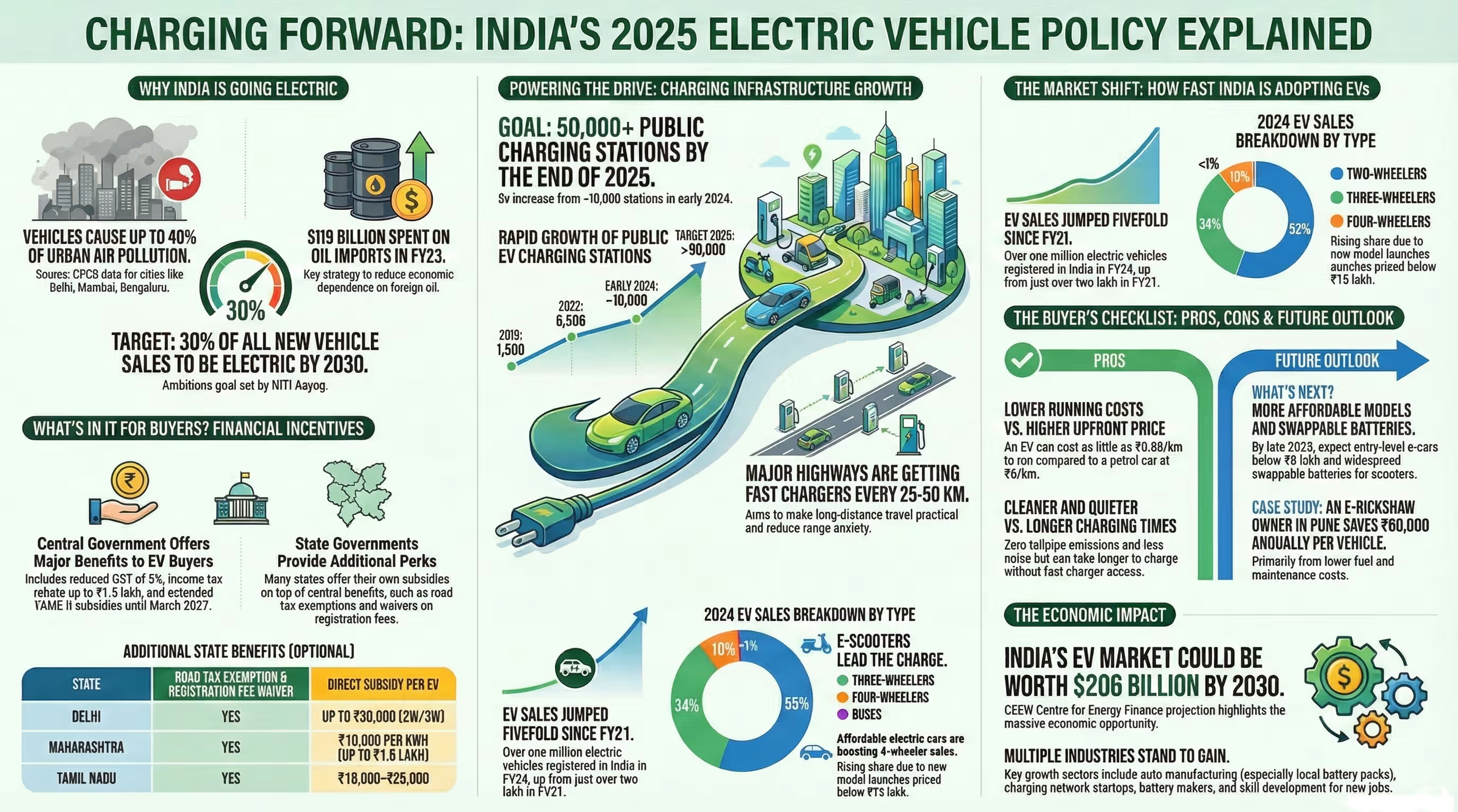
India’s EV market is at a crucial juncture, with the government aiming to achieve 30% electric vehicle penetration by 2030. Toyota’s advancements could provide the technological backbone for Indian manufacturers—such as Tata Motors and Mahindra—to develop more competitive and affordable EVs for the local market.
India sold over 1 million EVs in FY 2022-23, a record high, but still far from mass adoption.
5. Challenges Ahead: Localisation and Cost
While the technology is promising, cost and localisation remain significant challenges for introducing solid-state batteries in India. Manufacturing these batteries at scale and at a price point suitable for Indian consumers will require further innovation and investment.
“High battery costs are a major barrier to EV affordability in India,” according to industry reports.
6. Implications for the Indian Consumer
For Indian buyers, Toyota’s breakthrough could mean more choices, longer range, and shorter charging times in the near future. This aligns well with the Indian government’s push for clean mobility and could accelerate the shift from petrol and diesel vehicles.
With over 3 million cars sold annually in India, a shift to EVs could significantly reduce urban pollution.
7. Global Leadership and Collaboration Opportunities
Toyota’s leadership in solid-state battery technology opens up opportunities for collaboration with Indian companies and research institutions. Such partnerships could catalyse local manufacturing and research, ensuring that India is not left behind in the global EV revolution.
Collaborative research and technology transfer could make advanced EVs more accessible to Indian consumers.
As Toyota edges closer to commercialising solid-state batteries, the impact on India’s automotive landscape could be profound. The promise of longer range, faster charging, and greater safety may finally help electric vehicles achieve mainstream acceptance in India, marking a significant step towards a more sustainable future.
Certainly! Here’s an additional detailed numbered point that could fit into a list about “Toyota’s solid-state EV battery dreams might actually come true” as reported by Electrek:
- Key Partnerships and Investment Surge:
Toyota has recently intensified its collaborations with battery specialists and material suppliers, notably investing billions of dollars into solid-state battery research facilities both domestically in Japan and overseas. The automaker is working closely with subsidiaries like Prime Planet Energy & Solutions as well as academic institutions to overcome manufacturing bottlenecks, boost energy density, and scale up production. This increased investment and partnership strategy is a strong signal that Toyota is determined to translate its laboratory successes into mass-market vehicles within the next few years, potentially leapfrogging competitors in the global EV race.
Sources
Original Source
google.com - Read original
Quotes
- Publishing Domain: google.com
- Published Date: 2025-10-30T12:30:00+05:30
- Original URL: Read original (news.google.com/rss/articles/CBMimgFBVV95cUxPOVM3Y2FCMUlLWElSbkxUbjhJanVNR… …)
Editorial Check
- Originality: 30 / 100 — The summary is almost identical to the article title and does not provide any unique insight, paraphrasing, or additional information.
- Helpfulness: 10 / 100 — The summary does not add value beyond repeating the headline; it lacks context, details, or explanation about Toyota’s solid-state battery progress.