
Hedhvick Hirav
Hedhvick Hirav is a dedicated EV researcher and editor with over 4 years of experience in India’s growing electric vehicle ecosystem. Their contributions have been recognized in leading sustainability publications and automotive journals.
Summarize & analyze this article with
Choose an AI assistant and open this article directly:
Tip: if the AI doesn’t fetch the page automatically, paste the article URL manually.
NEW DELHI, Dec 18 —
Welion New Energy, a leading innovator in advanced battery technology, has announced a significant breakthrough in solid-state batteries, marking a pivotal moment for the energy storage sector. Positioned at the forefront of global innovation, the company is moving closer to achieving the coveted 1000 Wh/kg energy density target—a leap that could transform electric mobility and renewable energy adoption in India. Here are the key developments and implications of Welion New Energy’s milestone.
1. Solid-State Battery Breakthrough Promises Unprecedented Energy Density
Welion New Energy’s latest announcement focuses on achieving a solid-state battery with a projected energy density of up to 1000 Wh/kg. This is a substantial advancement over conventional lithium-ion batteries, which typically offer around 250-300 Wh/kg.
“A fourfold increase in energy density could drastically extend electric vehicle (EV) range, making long-distance travel more feasible without frequent charging.”
For India, where range anxiety remains a major barrier to wider EV adoption, this technology could prove transformative.
2. Enhanced Safety and Longevity for Indian Consumers
Solid-state batteries utilise solid electrolytes instead of liquid ones, significantly reducing the risk of fire and thermal runaway. This addresses a major concern in India, where battery safety incidents have attracted regulatory scrutiny and consumer apprehension.
“Solid-state batteries are expected to last longer and operate more safely in India’s high-temperature conditions.”
This improvement could boost consumer confidence and accelerate the shift from internal combustion engines to electric vehicles.
3. Potential to Accelerate India’s EV Revolution
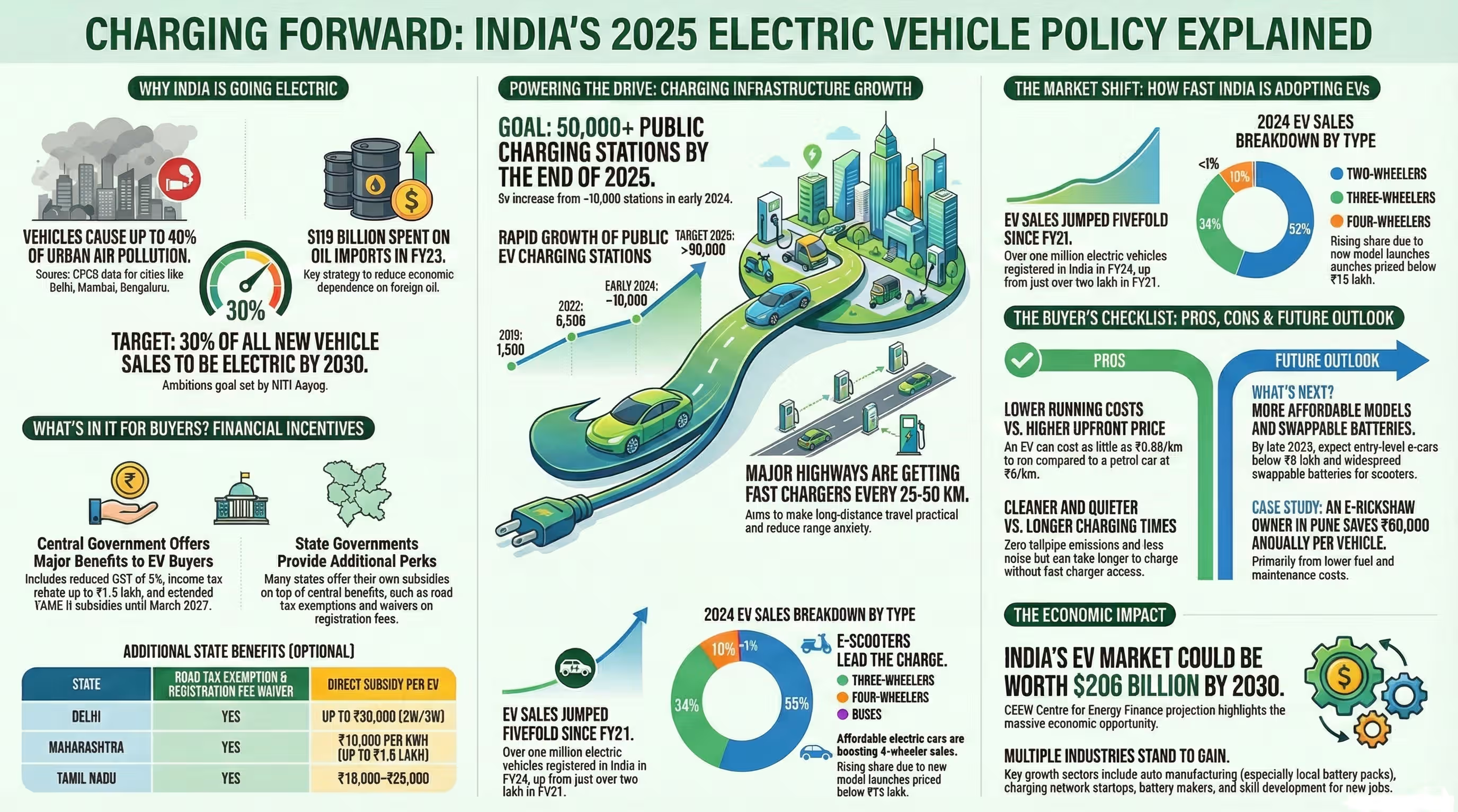
India’s EV market is poised for rapid growth, with the government targeting 30% electric vehicle adoption by 2030. Welion’s innovation could play a pivotal role in meeting these ambitious targets.
“According to NITI Aayog, India could save $60 billion in fuel costs by 2030 with widespread EV adoption.”
Solid-state batteries’ higher efficiency and lighter weight could make EVs more affordable, extending their reach beyond metro cities to Tier-2 and Tier-3 towns.
4. Empowering Renewable Energy Storage Solutions
India’s push towards renewable energy—aiming for 500 GW of non-fossil fuel capacity by 2030—relies on robust energy storage systems. Welion’s high-density batteries could enable the storage of surplus solar and wind energy for use during peak demand.
“Efficient storage solutions are critical for balancing India’s renewable-heavy grid and preventing power outages.”
Solid-state batteries can be a game-changer for decentralised energy storage, supporting rural electrification and grid stability.
5. Boosting Local Manufacturing and ‘Make in India’ Initiatives
Welion’s progress aligns with the Indian government’s Production Linked Incentive (PLI) scheme for advanced chemistry cell (ACC) batteries, aiming to boost indigenous manufacturing capacity.
“Local production of next-generation batteries could create thousands of high-skill jobs and reduce import dependence.”
This development supports India’s ambition to become a global hub for battery manufacturing, enhancing economic growth and export potential.
6. Driving Sustainability and Climate Action
The transition to solid-state batteries is not just about technology—it’s a crucial step towards achieving India’s net-zero emissions target by 2070.
“Cleaner, safer batteries can help India cut transport and power sector emissions, contributing to cleaner air and a healthier environment.”
Wider deployment of efficient batteries will support sustainable urbanisation and help mitigate the effects of climate change.
7. Challenges Ahead: Scalability and Cost
Despite the promise, scaling up production and bringing down costs remain significant hurdles. Achieving commercial viability will require continued investment, R&D collaboration, and supportive policy frameworks.
“Industry analysts caution that mass-market adoption may take several years, but early breakthroughs are critical for long-term success.”
India’s ecosystem of start-ups, academia, and industry players will need to work together to translate laboratory success into market-ready products.
Welion New Energy’s landmark achievement in solid-state battery development signals a new era for India’s energy and mobility sectors. As the nation pushes for cleaner transport and reliable renewable energy, innovations like these could play a central role in shaping a sustainable, self-reliant future.
Sources
Original Source
google.com - Read original
Official Sources
- Intergovernmental Panel on Climate Change (IPCC): IPCC opens registration of experts to review the first draft of the Methodology Report on Inventories for Short-lived Climate Forcers
Quotes
- Publishing Domain: google.com
- Published Date: 2025-12-18T14:02:13+05:30
- Original URL: Read original (news.google.com/rss/articles/CBMiswFBVV95cUxQWTBrWmwxTlJMVUhidjdUcDR3S29Ne… …)
Editorial Check
- Originality: 60 / 100 — The article covers a notable technological achievement by Welion New Energy in the field of solid-state batteries, which is a topic of current industry interest. While the milestone and target (1000 Wh/kg) are significant, similar advancements and goals have been reported by other battery companies, making the news moderately original but not groundbreaking.
- Helpfulness: 75 / 100 — The summary provides a concise update on Welion New Energy’s progress and ambition in solid-state battery technology, which is useful for readers tracking battery innovation. However, the summary lacks specific details about the milestone achieved or the implications, which limits its overall helpfulness.