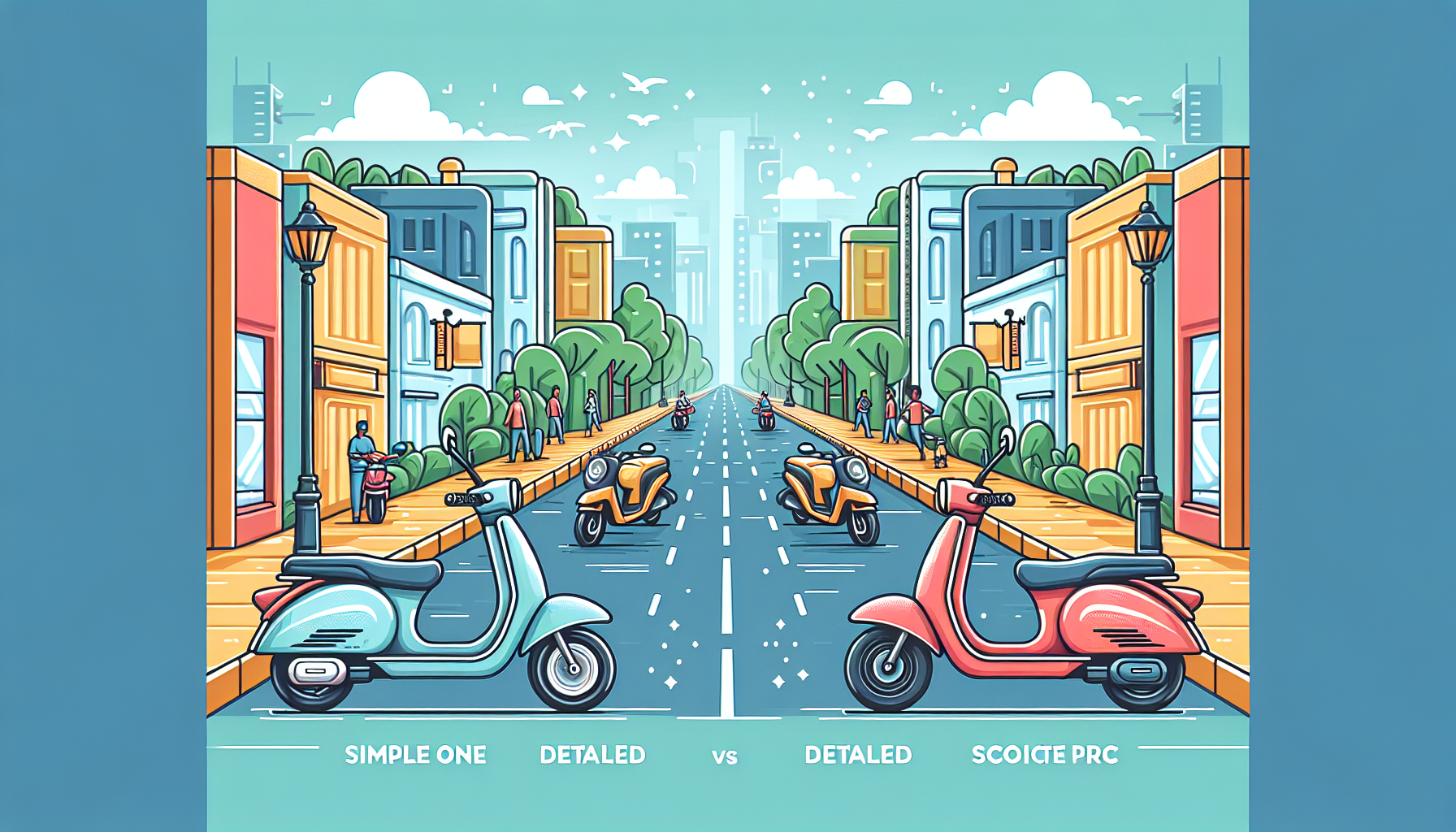
On a spec sheet, the Simple One Gen 2 beats the Ather 450X on almost every line: more range, more power, a bigger boot, quicker off the line. So why do I still tell most buyers to get the Ather? Because a scooter is not a spec sheet. It is a thing you have to charge, service, and trust for five years. On those three, the gap runs the other way, and it runs wide.
This is an honest head-to-head built from tested data, real owner reviews, and the things both brands would rather you not weigh up. I have kept the IDC lab numbers separate from real-world range throughout, and I have flagged where independent test data simply does not exist yet.
My quick verdict: Buy the Simple One Gen 2 if you live in one of Simple’s 38 service cities and you want the longest range and most performance for the money. Buy the Ather 450X if you want the safer ownership bet, which is most people.
Specs at a Glance
| Spec | Simple One Gen 2 (5 kWh) | Ather 450X (3.7 kWh) |
|---|---|---|
| Ex-showroom price | Rs 1,77,999 to 1,83,706 | Rs 1,64,079 (base) |
| IDC range | 265 km | 161 km |
| Real-world range | ~140-180 km (reviewer estimate) | ~100-125 km (tested) |
| Battery | 5 kWh fixed | 2.9 / 3.7 kWh fixed |
| Peak power | 8.8 kW | 6.4 kW |
| 0-40 km/h | 2.55 sec | 3.3 sec |
| Top speed | 115 km/h | 90 km/h |
| Boot space | 35 litres | 22 litres |
| Kerb weight | 129 kg | 111.6 kg |
| Service centres | 68 showrooms, 38 cities | 500 service centres, pan-India |
| Fast chargers | ~270 (Bolt.Earth) | 5,000+ (Ather Grid) |
Prices ex-showroom, mid-2026. Sources are linked through the sections below.
Price: What You Actually Pay
The Simple One Gen 2 in its 5 kWh form lists from Rs 1,77,999 at launch, rising to about Rs 1,83,706 on BikeWale’s current listing (BikeWale , Autocar India ). The Ather 450X 3.7 kWh starts at Rs 1,64,079 ex-showroom (BikeWale ).
So the Ather looks Rs 14,000 cheaper. Here is the catch most comparisons miss: the base 450X does not include Warp mode, full traction control, or Google Maps. Those sit behind Ather’s Stack Pro add-on, which costs Rs 17,000 to Rs 20,000 extra (BikeDekho ). Add it and the Ather is actually the pricier scooter. The Simple One includes traction control and its full feature set as standard. If you want the complete Ather, budget for the Stack Pro.
Range: The Lab Number vs Reality
This is where you have to read carefully. The Simple One Gen 2 claims a huge 265 km IDC. But as of mid-2026 there is no controlled, independent real-world range test of it. The figures floating around, roughly 180 km in Eco and 140 km in Normal, are reviewer estimates from first-ride events, not measured tests (ZigWheels ). I will not present an estimate as a tested number, and neither should anyone else.
The Ather 450X has real test data, though the most rigorous one is older. Autocar India measured 115.5 km in Eco and 98.2 km in Sport on the Gen 3, and noted the range readout stayed “extremely accurate” the whole way (Autocar India ). A BikeDekho long-term test of the 3.7 kWh got 125 km in Smart Eco and 85 km in Warp (BikeDekho ).
Bottom line: the Simple One almost certainly travels further per charge given its much bigger battery, probably 140 km-plus in everyday riding. But the Ather’s number is the one you can actually trust today, and its range readout is honest, which matters more than a brochure figure.
Performance and the Safety Flag You Should Know
The Simple One is the quicker, faster scooter: 2.55 seconds to 40 km/h and a 115 km/h top speed against the Ather’s 3.3 seconds and 90 km/h (BikeDekho Simple , BikeDekho Ather ). For straight-line fun, Simple wins.
But there is a real catch that no rival comparison page flags. Both Autocar India and ZigWheels independently found the Simple One Gen 2’s handlebar starts to judder and feel unstable above 90 km/h, to the point the Autocar reviewer stuck to the 90 km/h Air mode to avoid it (Autocar India ). On a scooter that does 115 km/h, high-speed instability is a safety point, not a footnote. The Ather tops out at 90 km/h and feels planted there. Neither scooter has ABS, both use combined braking only.
The Ather is also 21 kg lighter (108 kg vs 129 kg) with a shorter wheelbase, so it is noticeably more flickable in traffic. The Simple is the highway sprinter, the Ather is the city dancer.
Service Network: The Difference That Actually Decides This
Here is the single most important line on this page. Ather has 500 service centres and 600 experience centres across India as of March 2026, up nearly 80% in a year (Autocar Professional ). Simple Energy has 68 showrooms across 38 cities (Autocar India ).
If you live in Bengaluru, both work. If you live in Indore, Ranchi, or most of India, only one of them can fix your scooter without a long trip. Owners feel this directly:
“Good mileage, good looking and excellent features and comfortable but no showroom in belagavi.” by Praneet, 4.6/5, 91wheels
“Best performance for indian road. Suspension is very good. Service center available.” by Suman Santra, 5.0/5, 91wheels
Before you buy a Simple One, check that one of those 38 cities is yours. If it is not, this comparison is already over.
Charging Network
Same story, different numbers. Ather Grid runs over 5,000 fast chargers across 395 cities (Autocar Professional ). Simple riders depend on a Bolt.Earth partnership of around 270 DC chargers across 100 cities, with the in-app integration still listed as under development as of February 2026 (Autocar Professional ). For home charging the Simple’s bigger battery needs about 5 hours 20 minutes to 80%, the Ather about 4.5 hours to full. If you ever charge away from home, the Ather network is the only one that genuinely has your back today.
Known Issues, Honestly
Simple One Gen 2: the high-speed wobble above 90 km/h, a front brake that reviewers consistently call wooden and short on bite, stiff front suspension over broken roads, and navigation that uses MapMyIndia rather than Google Maps (BikeWale ). There is also history: Simple’s Gen 1 era had severe delivery delays, though no Gen 2 delivery complaints have surfaced yet.
Ather 450X: a stiff ride that needs care over potholes, a vague front brake, and an idle battery drain of roughly 3% a day, enough that one long-term tester found the scooter dead after sitting for a couple of weeks (BikeWale long-term ). Older units had dashboard glitches that newer AtherStack software has largely fixed.
The Question Nobody Else Asks: Is Simple Energy a Safe Bet?
You are buying a five-year relationship, so the company matters. Ather is a listed company with over 604,000 scooters on the road and 18.5% market share in early 2026 (Autocar Professional ). Simple Energy is a pre-IPO startup, ranked ninth nationally, with roughly 4,800 scooters sold cumulatively and a best month of 1,744 units, now targeting an FY28 IPO (DriveSpark , Business Standard ).
Simple is growing fast and that is genuinely good to see. But a smaller, younger company means more risk on parts availability, warranty support, and resale value over the years you will own this. That is not a dealbreaker, but it belongs on the scale.
What Owners Say
“The Simple Energy is excellent for long drives, offering smooth riding and good acceleration.” by Sanjay Rai, 5.0/5, 91wheels
“The biggest winning factor of the ather 450x is how refined and well engineered it feels.” by an Ather owner, 5.0/5, ZigWheels
The pattern across both platforms is consistent: Simple owners love the ride and range but worry about support reach, Ather owners trust the refinement and the service network but wish it had more range and a softer ride.
Who Should Buy Which
Buy the Simple One Gen 2 if: you live in one of Simple’s 38 service cities, your commute is long and range is your top priority, you want the bigger 35-litre boot, and you value quick acceleration and traction control as standard.
Buy the Ather 450X if: you live anywhere outside those cities, you want the proven service and charging networks, you prefer a lighter scooter in traffic, and company stability and resale matter to you. This is the safer choice for most buyers.
Frequently Asked Questions
Is the Simple One Gen 2 better than the Ather 450X for daily commuting? On range and boot space, yes. But for most commuters the Ather wins overall because of its far larger service and charging networks and lighter handling. The Simple only makes sense if you are in one of its 38 service cities.
Does the Simple One Gen 2 have ABS? No. It uses a combined braking system only, as does the Ather 450X. Neither has ABS.
What is the real-world range of the Ather 450X 3.7 kWh? Independent tests put it around 100-125 km depending on mode, with about 125 km in Smart Eco and 85 km in Warp.
Is the Ather Stack Pro worth the extra cost? If you want Warp mode, full traction control, and Google Maps, you need it. Factor the Rs 17,000-20,000 into your budget, because the base 450X leaves those out.
Which has the better service network, Simple Energy or Ather? Ather, by a wide margin: 500 service centres pan-India versus 68 Simple showrooms across 38 cities.
My Final Verdict
If you are inside Simple’s service footprint and you want the most range and performance per rupee, the Simple One Gen 2 is a genuinely strong scooter and the spec-sheet winner. For everyone else, and that is most buyers, the Ather 450X is the smarter, safer choice. A 13-times-larger service network, a 5,000-charger advantage, lighter handling, and the backing of a listed company are not numbers you ignore over a longer brochure range.
For more on both brands, see my guides to the best electric scooters under 2 lakh and the longest-range electric scooters in India , plus my Ather 450X vs Bajaj Chetak comparison.
Prices and specifications are as of June 2026 and sourced from the manufacturers and publications linked above. Real-world range varies with rider weight, terrain, weather and riding mode. Confirm the current on-road price and warranty at your dealer before buying.