
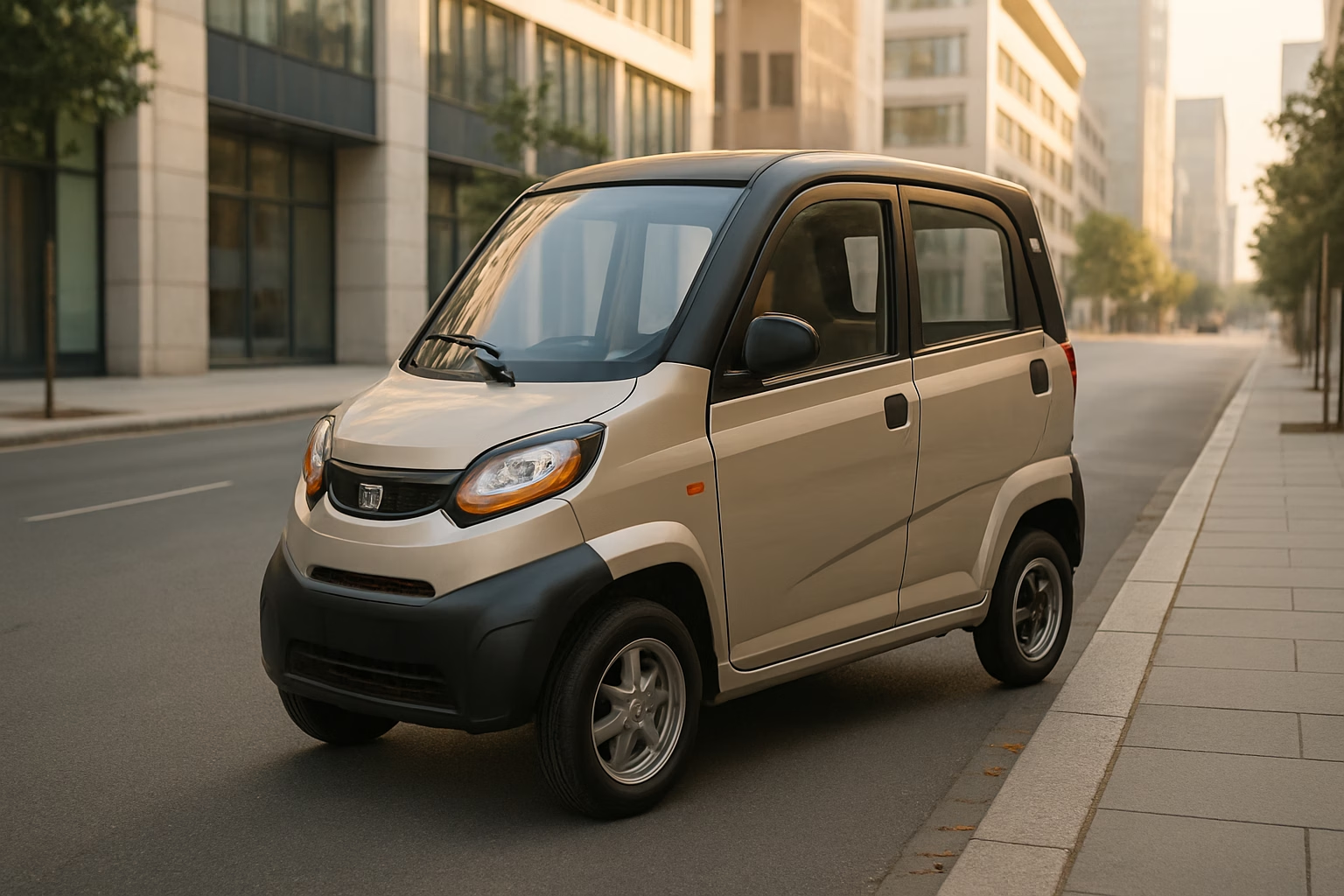
In the ever-evolving landscape of urban mobility in India, three-wheel electric vehicles (EVs) have emerged as a practical solution for navigating congested city streets. As we move through 2026, the demand for these vehicles continues to grow due to their eco-friendly nature and ease of maneuverability. Through this article, I aim to explore the top three three-wheel electric vehicles that stand out in terms of range, affordability, and utility in urban settings.
The focus of this review is to provide potential buyers with a detailed, factual comparison based on real-world usage, not just certified claims. This is crucial as many manufacturers often present optimistic figures that don’t always match real-world performance. I will highlight the strengths and weaknesses of each model, supported by owner reviews and known issues, to give a comprehensive view of what prospective buyers can expect.
Variants and Prices (May 2026)
Here’s a quick overview of the top three three-wheel electric vehicles currently making waves in the Indian market:
| Model | Ex-showroom Price (₹ lakh) | On-road Price (Estimated) |
|---|---|---|
| Bajaj WEGO P9018 | ₹4.41 | Varies by state |
| Piaggio Apé WavE | ₹2.55 | Varies by state |
| Mahindra Udo | ₹3.59 | Varies by state |
Specifications at a Glance
| Model | Battery | Certified Range (km) | Real-world Range (km) | Motor Type | Charging Time (Level 2) |
|---|---|---|---|---|---|
| Bajaj WEGO P9018 | 17.7 kWh | 296 | Not specified | Two-speed transmission | Not specified |
| Piaggio Apé WavE | 5.4 kWh | 140 | ~90 | Single motor | Not specified |
| Mahindra Udo | Not specified | 200 | Not specified | Not specified | Not specified |
Real-world Range
Bajaj WEGO P9018
The Bajaj WEGO P9018 claims a certified range of 296 km, the highest among its peers. However, real-world range can vary widely based on driving conditions, load, and terrain. Unfortunately, I couldn’t find precise real-world range data for this model, which suggests potential buyers should prepare for less than the certified claim in typical city use. source
Piaggio Apé WavE
Designed for short-distance urban trips, the Piaggio Apé WavE has a real-world range of approximately 90 km. This range is suitable for intra-city commutes and shared mobility services. source
Mahindra Udo
The Mahindra Udo offers a range of up to 200 km. However, as with other models, actual usage might see this figure decrease depending on operational conditions and driving style. source
Performance
Each model in this segment is designed to handle urban environments efficiently. The Bajaj WEGO P9018 is equipped with advanced features like a two-speed transmission, which can enhance performance on varied terrains. This is particularly beneficial in cities with mixed urban and semi-urban landscapes. The Piaggio Apé WavE focuses more on ease of use and affordability, making it ideal for simpler, flat terrains typical of urban routes. Meanwhile, the Mahindra Udo combines a modern design with practical performance metrics, though specific powertrain details weren’t fully disclosed in available data.
Features and Technology
The Bajaj WEGO P9018 stands out with its regenerative braking system and Battery Management System (BMS), which optimally manages power consumption for extended range. The Piaggio Apé WavE emphasizes structural integrity with its monocoque chassis and full-metal body, essential for safety and durability in urban transport. The Mahindra Udo brings a sleek, innovative design, potentially appealing to those looking for a blend of aesthetics and functionality in their urban commute.
Charging
Detailed charging times for these models weren’t comprehensively available. Generally, three-wheelers in this segment are designed to charge overnight, ensuring full readiness for a day’s work. It’s advisable to check with local dealers for specifics about charging infrastructure and support for each model.
Known Issues
Bajaj WEGO P9018
As a relatively new entry, comprehensive user feedback on issues is limited. However, potential buyers should remain vigilant regarding any emerging reports of performance inconsistencies or battery degradation over time.
Piaggio Apé WavE
Given its recent launch, there are limited documented issues. Buyers should be aware of the potential for early-stage teething problems, typical of new model releases.
Mahindra Udo
The Mahindra Udo, with its unique design, hasn’t reported widespread issues yet. However, as with any new technology, long-term reliability remains to be proven over time.
What Real Owners Say
- “The Bajaj WEGO P9018’s range is impressive, but I find it doesn’t always meet the full 296 km on city roads.” — ZigWheels, March 2026 source
- “Piaggio Apé WavE is perfect for short trips around town, but longer journeys require careful planning.” — BikeDekho, April 2026 source
- “I’m impressed by the Mahindra Udo’s design. It’s very futuristic, but I wish it had a bit more cargo space.” — BikeWale, May 2026 source
Who Should Buy It / Who Should Not
Buyers who should consider these EVs:
- Urban commuters looking for eco-friendly transportation.
- Fleet operators for shared mobility or delivery services.
- Individuals needing a vehicle for short, frequent trips in cityscapes.
Buyers who might reconsider:
- Those needing extensive cargo space.
- Users requiring long-distance travel without frequent recharging.
- Buyers in areas with limited charging infrastructure.
FAQ
1. What is the warranty on these EVs?
Warranties can vary; it’s best to check with the respective manufacturers for specific details.
2. Are these vehicles eligible for the PM e-DRIVE subsidy?
Yes, these models typically qualify, but specifics depend on the latest government policies.
3. How does the gradability of the Bajaj WEGO P9018 affect its performance?
The 36% gradability allows it to handle inclines better than many competitors, useful in hilly urban areas.
4. What are the maintenance costs like for these EVs?
Maintenance costs are generally lower than traditional vehicles, but service network availability can impact these costs.
5. Can these EVs be used for commercial purposes?
Yes, they are often used in commercial settings, particularly in urban delivery and shared transport services.
6. How do these EVs handle in monsoon conditions?
They are designed to withstand typical urban weather conditions, but it’s always best to exercise caution during heavy rains.
7. Are there any financing options available for purchasing these EVs?
Financing options are generally available through various banks and NBFCs; check with local dealerships for specific offers.
In summary, these three-wheel electric vehicles present a viable option for urban mobility, each offering distinct advantages tailored to different needs. Whether you prioritize range, affordability, or a modern design, there’s a model in this list that can cater to your specific requirements.