
The three main EV motor types are the permanent magnet synchronous motor (PMSM), the induction motor, and the brushless DC (BLDC) motor. In India, almost every electric car uses a PMSM for its efficiency, scooters use PMSM or BLDC depending on price, and induction motors stay rare, mostly in performance or heavy vehicles.
When I started looking under the skin of electric cars and scooters, I assumed the battery was the only part that mattered. It isn’t. The motor decides how efficiently that battery turns into kilometres, and there are real differences between the three types you’ll find on Indian roads. If you’ve ever read a spec sheet and seen “PMSM” or “BLDC hub motor” and skipped past it, this is the part worth understanding before you buy.
Key takeaways
- PMSM dominates the EV market, roughly 80 to 85 percent of it, and is the motor in almost every electric car sold in India.
- PMSM efficiency often exceeds 95 percent, which is why it became the default choice for stretching range from a given battery.
- Induction motors use no permanent magnets and need no rare-earth material, so they’re the go-to for ruggedness and supply-chain resilience.
- BLDC motors are the workhorse of two-wheelers, powering hub motors in scooters and entry-level e-bikes.
- PMSM and BLDC both rely on rare-earth magnets whose supply sits largely in China, which is the India angle worth knowing.
- For most Indian buyers, your EV is running a PMSM, and that’s good for efficiency and range.
What are the three EV motor types you’ll actually meet?
Almost every EV in India uses one of three motor families: PMSM, induction, or BLDC. They all do the same job, but they go about it differently.
PMSM (permanent magnet synchronous motor) is the one you’ll see most often. It uses permanent magnets, usually made from neodymium-iron-boron (NdFeB) rare-earth material, embedded in the rotor. That gives it excellent efficiency, often above 95 percent, in a compact package. It’s why it dominates the EV market, roughly 80 to 85 percent of it, according to EVEnergyHub .
Induction motor takes the opposite approach. It has no permanent magnets at all, so it doesn’t need any rare-earth material. Instead it induces current in the rotor electromagnetically. Tesla famously used induction motors in its early cars. They’re robust and handle heat well, but they tend to be slightly less efficient at light loads, the kind of gentle city cruising most of us do, as iNetic explains.
BLDC (brushless DC) motor is the workhorse of the two-wheeler world. You’ll find it in hub motors tucked inside scooter wheels and in many entry-level e-bikes. It’s closely related to the PMSM in principle and also uses permanent magnets, but the control electronics and construction are usually simpler and cheaper, which suits smaller, lower-cost vehicles.
How do PMSM, induction, and BLDC compare?
The short answer: PMSM wins on efficiency and size, induction wins on not needing scarce magnet material, and BLDC keeps two-wheelers cheap. Here’s the side-by-side.
| Motor type | Permanent magnets? | Efficiency | Best suited for | Trade-off |
|---|---|---|---|---|
| PMSM | Yes (rare-earth NdFeB) | Highest (can exceed 95%) | Cars, premium scooters | Depends on rare-earth supply |
| Induction | No | Slightly lower at light loads | Performance cars, rugged use | Bulkier, no magnet shortage worry |
| BLDC | Yes | High | Two-wheelers, hub motors | Simpler control, lower top-end refinement |
A useful side-by-side breakdown of how induction stacks up against PMSM is also covered by CMVTE , and it lines up with what I’ve seen in real vehicles: PMSM wins on efficiency and size, induction wins on not needing scarce magnet material.
What motor is in your EV?
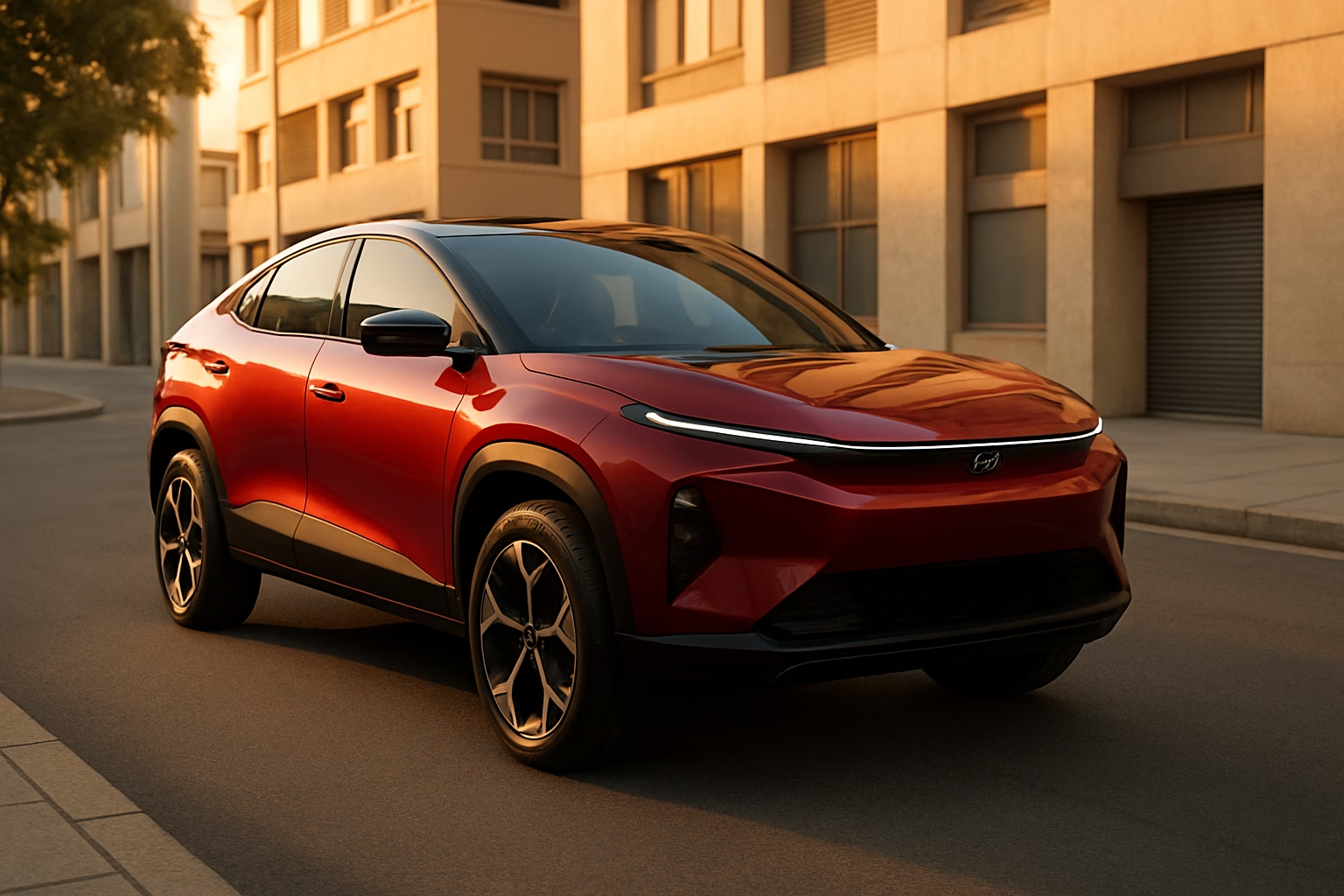
If you’re buying an electric car in India, odds are very high it’s a PMSM. Most of the popular models, including the cars I’ve covered in our roundup of the best Tata electric cars in India 2026 , lean on PMSM because buyers here care a lot about range per rupee of battery, and PMSM squeezes the most range out of a given pack.
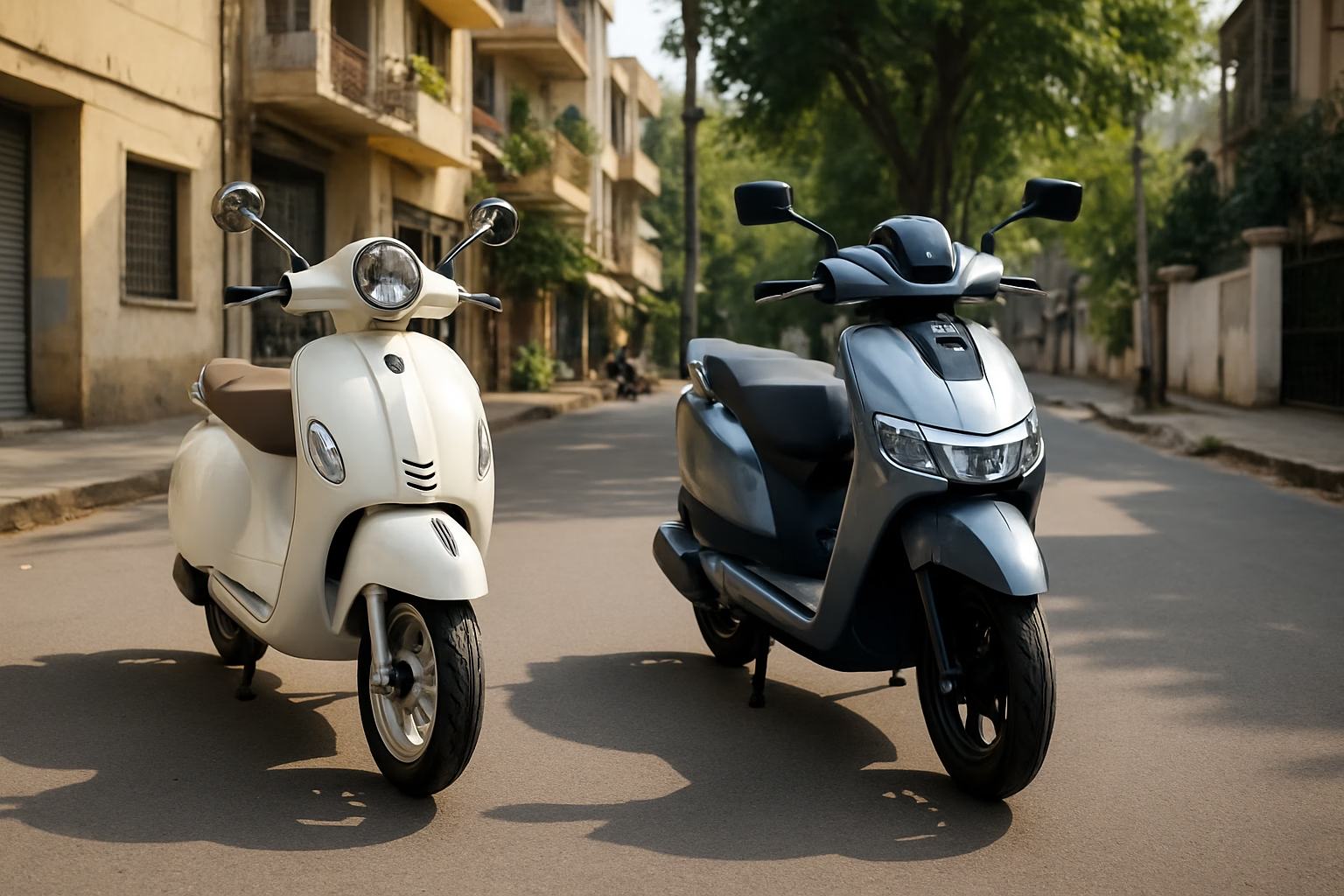
Electric scooters are a slightly more mixed bag. Premium scooters often use a PMSM-style motor for that smooth, efficient delivery, while more budget-focused models use a BLDC hub motor. If you’re comparing scooters, the differences in how the best Ather electric scooters in India 2026 drive owe a lot to the motor and the controller behind it, not just the battery size on the brochure.
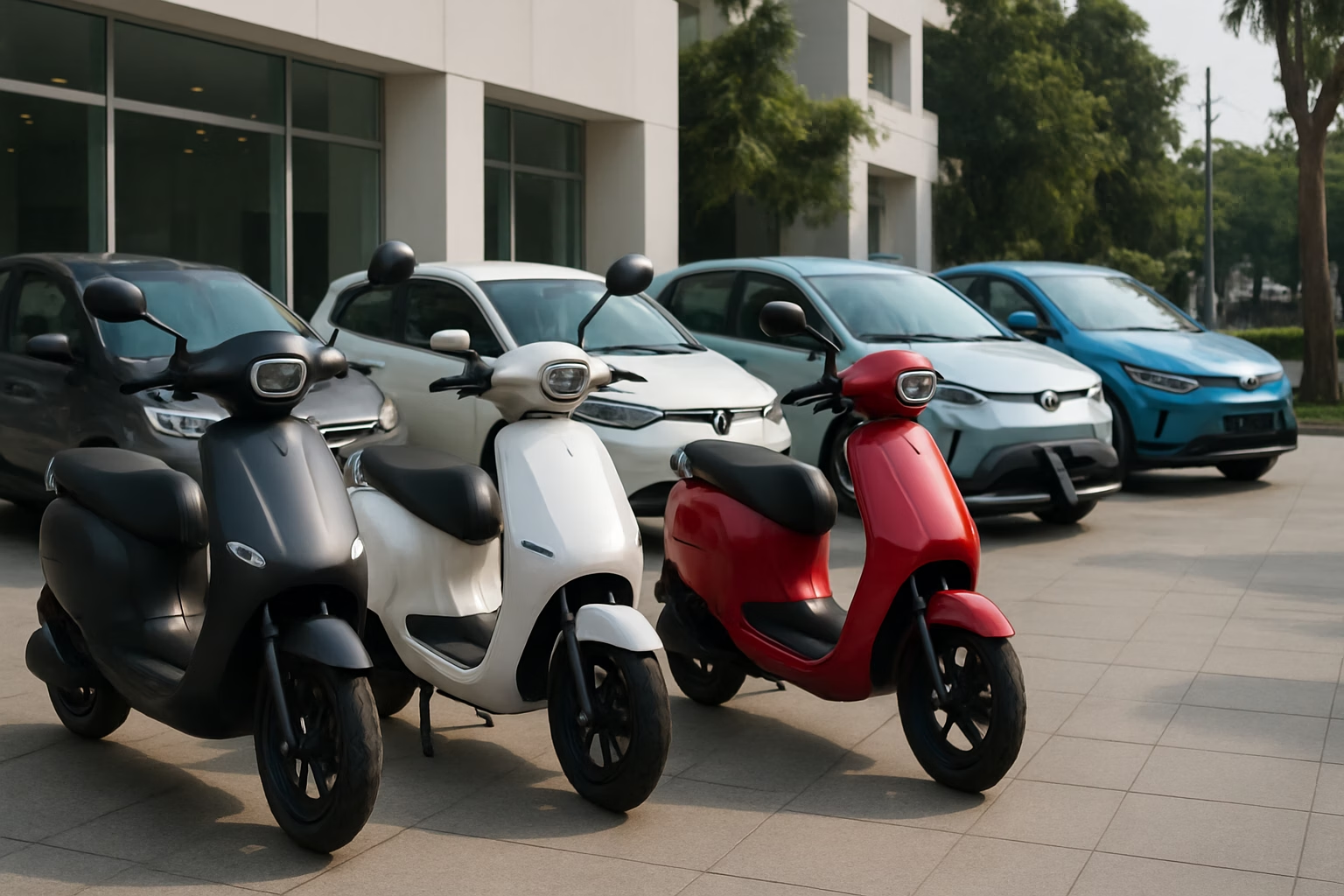
So the rough rule of thumb: car in India equals almost certainly PMSM; scooter equals PMSM or BLDC depending on price; induction is rarer here and usually shows up in performance-oriented or heavier vehicles.
Why does the motor type actually matter to you?
The motor type matters because it shapes your range, your cost, and the supply chain your EV depends on. Here are the three practical reasons.
Range. A more efficient motor turns more of your battery into distance. That’s why PMSM became the default. For the same battery, a high-efficiency motor can stretch your real-world kilometres noticeably, which matters more in India where charging stops aren’t always around the corner.
Cost. BLDC motors keep two-wheelers affordable. PMSM adds cost because of the magnets but pays it back in efficiency. Induction can be cheaper to build in some ways since it skips the magnets, though it’s usually used where its ruggedness is worth it.
Supply chain. This is the India angle worth knowing. PMSM and BLDC both need rare-earth magnets, and the supply chain for that material sits largely in China. That import dependence is a genuine concern for India’s Make-in-India and EV manufacturing push, because a motor design that relies on imported magnets is harder to fully localise. Induction motors sidestep this entirely since they use no permanent magnets, which is part of why they keep coming up in conversations about supply security. I’m keeping this qualitative on purpose, because the precise import figures I’ve seen aren’t something I’d stake a number on.
None of this should change your buying decision on its own. But if two scooters have similar batteries and very different real-world range, the motor and its controller are often the reason. It’s the same logic I keep coming back to in our wider battery and technology coverage: the headline spec is rarely the whole story.
The bottom line
For most Indian buyers, your EV is running a PMSM, and that’s a good thing for efficiency and range. BLDC keeps the budget two-wheeler segment moving. Induction is the quiet alternative that matters most for supply-chain resilience rather than your daily commute. Knowing which one you’ve got won’t change your charging habits, but it does help you read a spec sheet honestly and understand why one EV goes further than another on the same battery.
Frequently asked questions
What motor does my EV use?
If you bought an electric car in India, it’s almost certainly a PMSM, since carmakers favour its efficiency and compact size. Electric scooters split between a PMSM-style motor on premium models and a BLDC hub motor on budget ones. Induction motors are rare here and usually appear only in performance-oriented or heavier vehicles.
Is PMSM better than an induction motor?
It depends on what you value. PMSM is the more efficient and compact option, often exceeding 95 percent efficiency, which is why it dominates roughly 80 to 85 percent of the EV market. Induction motors are robust, handle heat well, and need no rare-earth magnets, so they win on ruggedness and supply-chain resilience rather than outright efficiency.
Why do PMSM motors need rare-earth magnets?
PMSM motors get their high efficiency from permanent magnets embedded in the rotor, usually made from neodymium-iron-boron (NdFeB) rare-earth material. Those magnets are what let the motor stay compact and efficient. The trade-off is supply dependence, since the rare-earth supply chain sits largely in China, which matters for India’s localisation push.
Which EV motor is best for range?
PMSM is best for range because it converts more of the battery’s energy into distance, with efficiency often above 95 percent. For the same battery pack, a high-efficiency PMSM stretches real-world kilometres further than the alternatives, which is exactly why it became the default motor in Indian electric cars where charging stops aren’t always nearby.
Sources
Last updated: 22 June 2026