
For most Indian EV buyers, LFP is the better battery: it’s safer in our heat, costs about 20-30% less, and lasts 3,000 to 5,000-plus charge cycles. NMC wins only when you need maximum range from a given weight, since it packs more energy per kilo. The right pick depends on how you actually drive.
When I started shopping for my first EV, the spec sheet listed a “battery type” and I had no idea why it mattered, and most of that difference comes down to the cell chemistry.
Key takeaways
- LFP (lithium iron phosphate) is safer in heat, with a thermal runaway threshold around 270C versus NMC’s roughly 210C.
- LFP costs about $80-100/kWh in 2026, roughly 20-30% cheaper than NMC.
- LFP lasts 3,000 to 5,000-plus charge cycles; NMC typically manages around 800 to 2,000.
- You can charge an LFP pack to 100% daily; NMC is happier kept between 20% and 80%.
- NMC offers higher energy density, 150-300 Wh/kg at cell level against LFP’s 90-160 Wh/kg, so it delivers more range per kilo.
- LFP suits budget cars, two- and three-wheelers, and hot climates; NMC suits premium long-range cars.
What do LFP and NMC mean?
LFP stands for lithium iron phosphate and NMC stands for nickel manganese cobalt, two lithium-ion battery chemistries that differ in their cathode material. That single choice ripples out into safety, price, range, and how long the pack lasts.
LFP stands for lithium iron phosphate. NMC stands for nickel manganese cobalt. Both are lithium-ion batteries, so the charging socket and the basic idea are the same. The difference is in the cathode material, and that single choice ripples out into safety, price, range, and how long the pack lasts.
If you want the deeper picture of how packs age over time, I’d pair this with our guide on battery degradation in electric vehicles .
The quick comparison
| Factor | LFP | NMC |
|---|---|---|
| Energy density (cell) | 90-160 Wh/kg | 150-300 Wh/kg |
| Cost (2026) | ~$80-100/kWh | roughly 20-30% higher |
| Cycle life | 3,000-5,000+ cycles | ~800-2,000 cycles |
| Thermal runaway threshold | ~270C | ~210C |
| Daily charge to 100%? | Yes, fine | Better kept 20-80% |
| Best for | Budget cars, 2W/3W, hot climate | Premium long-range cars |
Sources for these figures are linked at the bottom.
Is LFP safer than NMC in Indian heat?
Yes, LFP is safer than NMC in India’s heat because its cells are more thermally stable, with a thermal runaway threshold around 270C against NMC’s roughly 210C. That extra headroom matters when a car bakes in a parking lot all afternoon in summers that cross 45C.
This is the one I care about most, living where summers cross 45C. LFP cells are more thermally stable. Their thermal runaway threshold sits around 270C, while NMC starts running away closer to 210C, according to BikeWale . That extra headroom matters when a car bakes in a parking lot all afternoon.
It doesn’t mean NMC cars are unsafe. Carmakers wrap NMC packs in serious cooling and management systems, and a good battery management system for an electric vehicle does a lot of heavy lifting here. But if you want the chemistry itself to be more forgiving in our climate, LFP has the edge.
Is LFP cheaper than NMC?
Yes, LFP is cheaper than NMC, running about $80-100/kWh in 2026, roughly 20-30% less per kWh. That’s because it skips cobalt and nickel, and the saving is why most affordable Indian EVs, and nearly all electric two- and three-wheelers, use LFP.
LFP is cheaper to build because it skips cobalt and nickel, which are expensive and price-volatile. In 2026, LFP runs about $80-100/kWh, roughly 20-30% cheaper than NMC per Recharged . That saving is exactly why most affordable Indian EVs, and nearly all electric two- and three-wheelers, use LFP. It keeps the on-road price within reach.
Which battery lasts longer, LFP or NMC?
LFP lasts longer than NMC, handling 3,000 to 5,000-plus charge cycles against NMC’s typical 800 to 2,000. For someone keeping a car eight to ten years, that’s a real difference in long-term health, and you can charge an LFP pack to 100% daily while NMC ages slower kept between 20% and 80%.
LFP also lasts longer. It handles 3,000 to 5,000-plus charge cycles, while NMC typically manages around 800 to 2,000, according to LiKraft . For someone keeping a car eight to ten years, that’s a real difference in long-term health.
There’s a daily-habit angle too. You can charge an LFP pack to 100% every single day without much worry, while NMC is happier kept between 20% and 80% to slow aging, as Deltic notes. So LFP is just less fussy for the average owner who plugs in overnight and forgets about it.
Why does NMC still win on range?
NMC wins on range because it packs more energy into every kilogram, with cell-level density of 150-300 Wh/kg against LFP’s 90-160 Wh/kg, so a pack of the same weight drives further. That’s why premium long-range EVs still choose NMC.
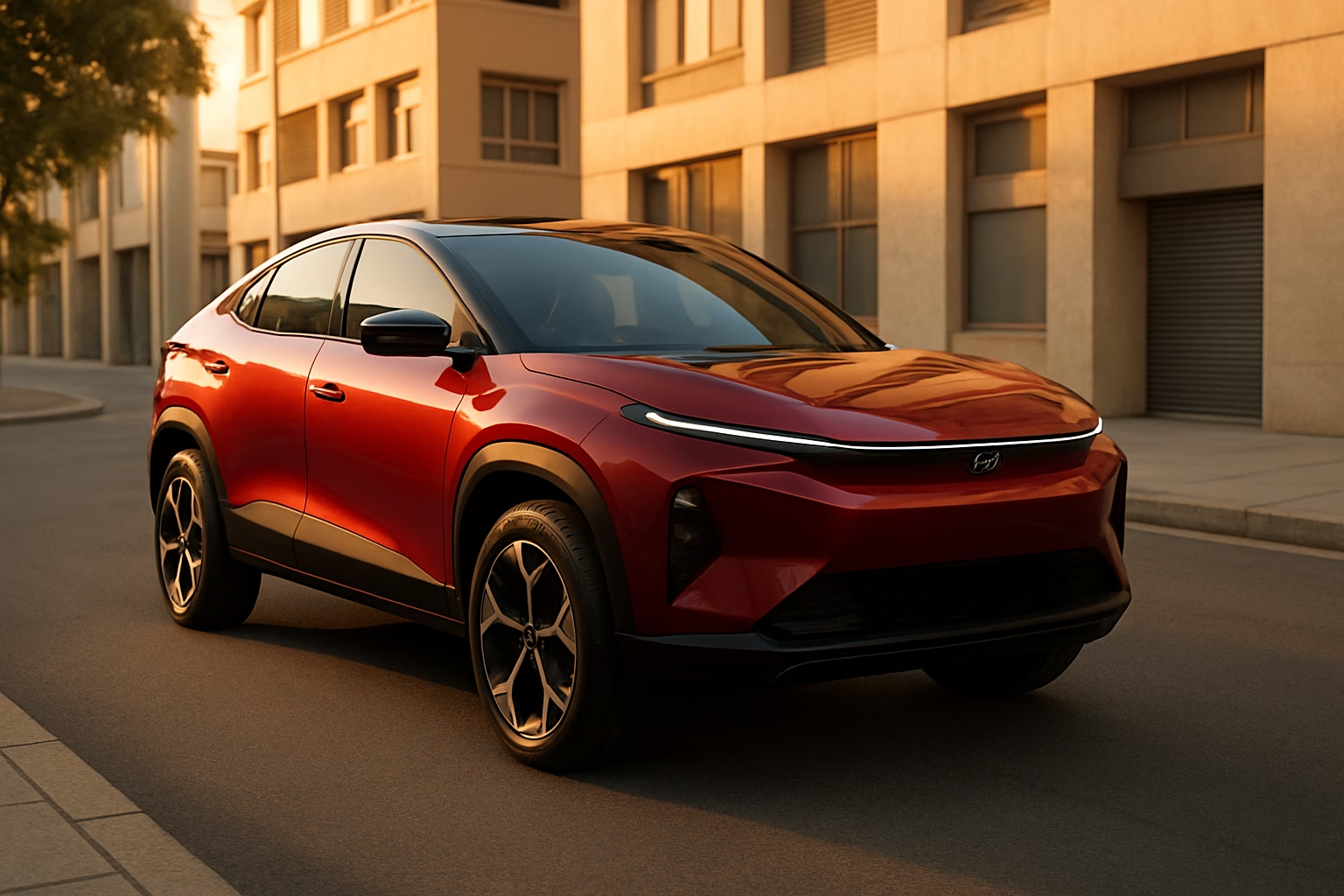
If LFP is so good, why does NMC exist? Range. NMC packs more energy into every kilogram, with cell-level density of 150-300 Wh/kg against LFP’s 90-160 Wh/kg, per Motorwatt . More energy per kilo means more driving range without making the car heavier. That’s why premium long-range EVs like the Hyundai IONIQ 5 and Kia EV6 still lean on NMC. If your priority is the highest possible range from a given weight, NMC delivers.
Which battery should Indian buyers choose?
For most Indian buyers, LFP is the smart default because it’s safer, cheaper, and longer-lasting in a hot climate, which is why it suits budget cars, two-wheelers, and three-wheelers. NMC is the choice only for premium long-range cars where buyers will pay more for extra kilometres per charge.
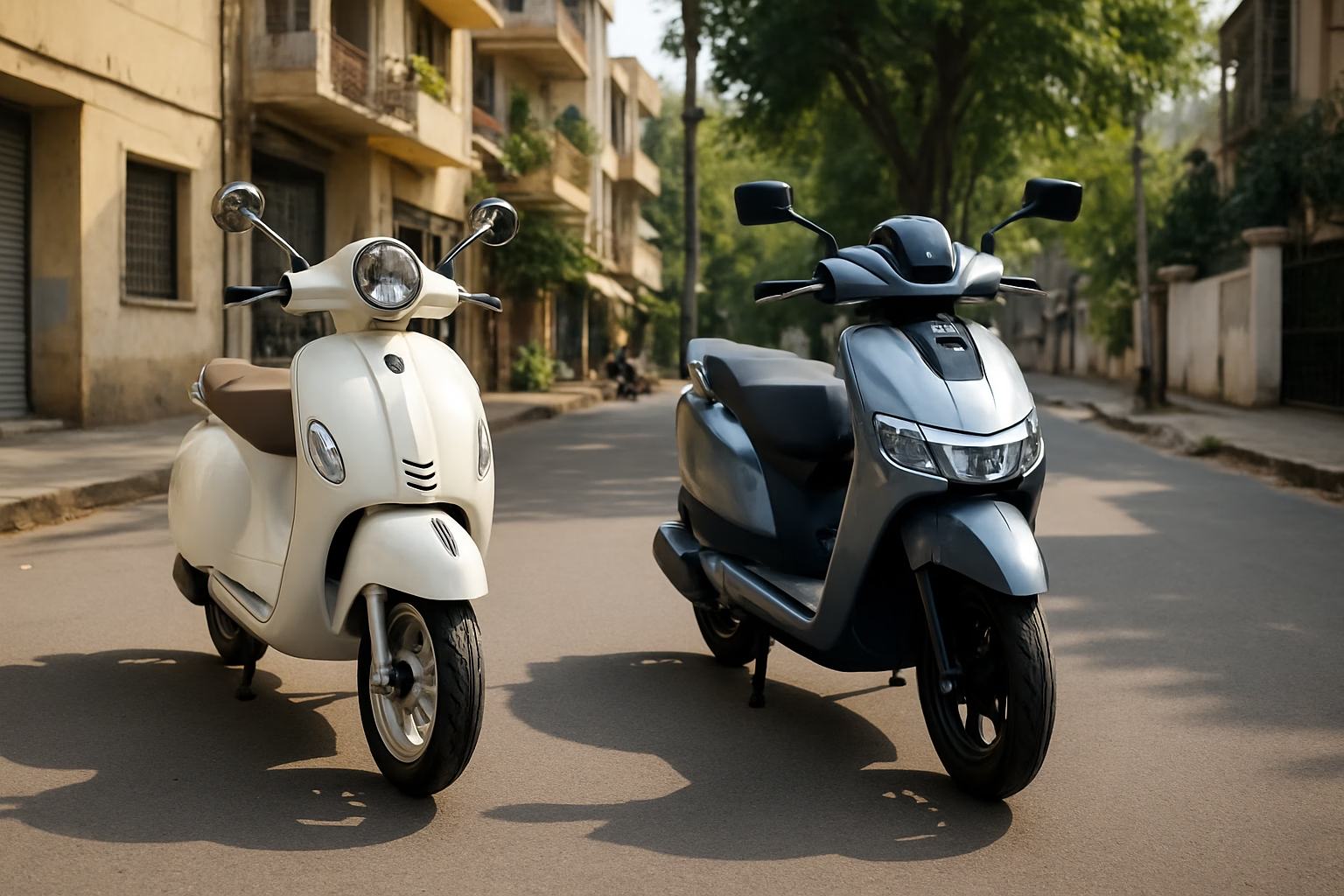
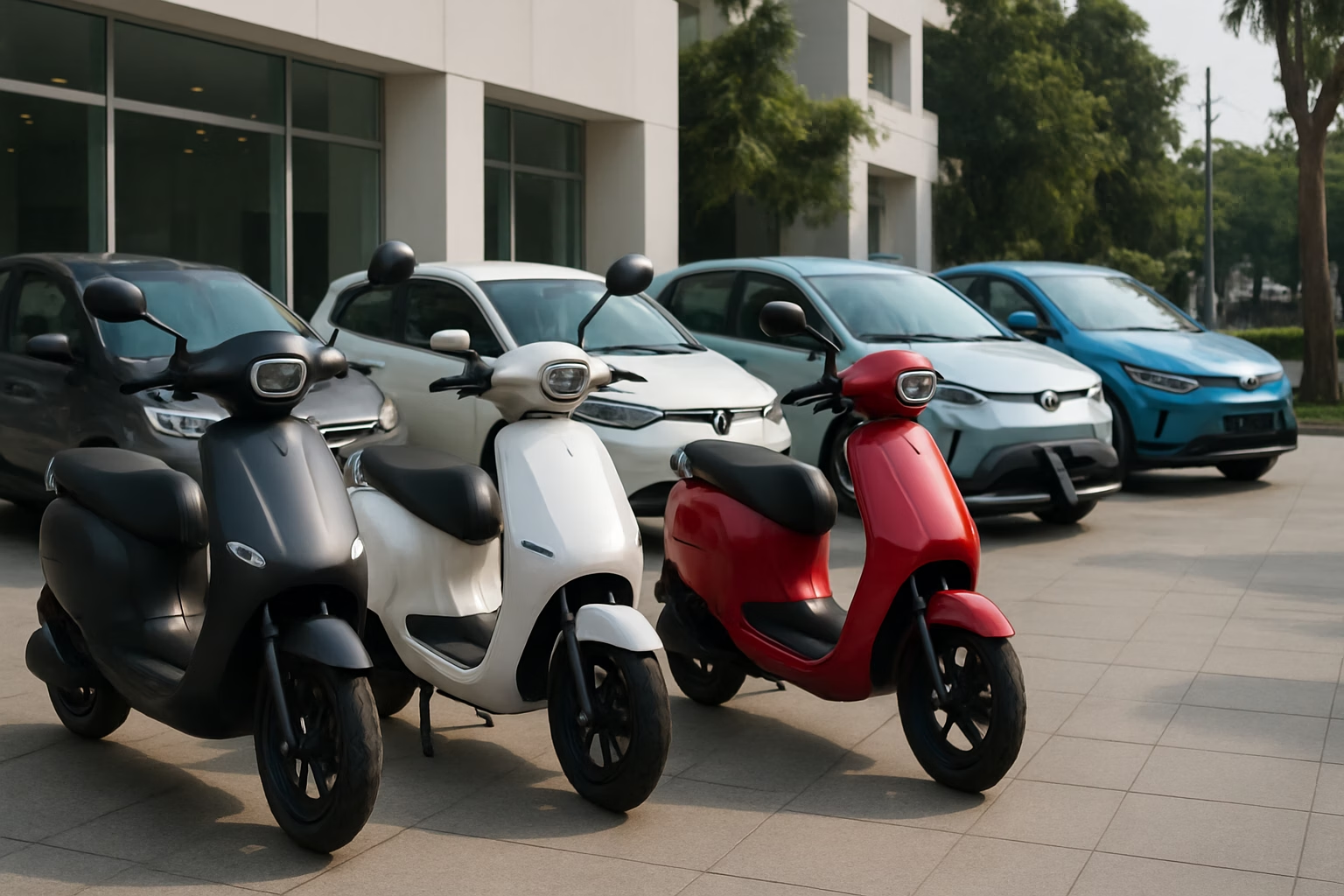
Here’s how the two chemistries map onto what’s actually on sale here. LFP suits the mass market: budget cars, two-wheelers, three-wheelers, and anyone who values safety and longevity in a hot climate. Tata and MG already use LFP in several of their models, which is part of why their pricing stays competitive. If you’re comparing those, our roundups of the best Tata electric cars in India 2026 and the best MG electric cars in India 2026 are good next reads.
NMC, meanwhile, stays the choice for premium, long-range cars where buyers will pay more for extra kilometres per charge.
So which battery is better, LFP or NMC?
For most Indian buyers, LFP is better because it’s safer in heat, about 20-30% cheaper, lasts more charge cycles, and forgives daily 100% charging. NMC is better only if your need is maximum range and you’re buying a premium car. There’s no single winner.
There’s no single winner, and don’t let anyone tell you otherwise. For most Indian buyers, especially first-time owners on a budget who deal with brutal summers, LFP is the smart default. It’s safer, cheaper, lasts longer, and forgives lazy charging habits. If your need is maximum range and you’re buying a premium car where price is less of a concern, NMC earns its place. Decide based on how you actually drive, not on which chemistry sounds more advanced.
Frequently asked questions
Do Tata and MG cars use LFP or NMC?
Tata and MG already use LFP in several of their models. That’s part of why their pricing stays competitive, since LFP skips expensive cobalt and nickel and runs about 20-30% cheaper than NMC per kWh. LFP also suits India’s hot climate, where its higher thermal runaway threshold of around 270C makes it more forgiving.
Can I charge an LFP battery to 100% every day?
Yes, you can charge an LFP pack to 100% every single day without much worry. NMC, by contrast, is happier kept between 20% and 80% to slow its aging. This makes LFP less fussy for the average owner who plugs in overnight and forgets about it, which is one reason it suits first-time EV buyers.
Which battery has more range, LFP or NMC?
NMC has more range potential because it has higher energy density, 150-300 Wh/kg at cell level against LFP’s 90-160 Wh/kg. More energy per kilo means more driving range without making the car heavier, which is why premium long-range EVs like the Hyundai IONIQ 5 and Kia EV6 lean on NMC.
Is LFP or NMC safer in hot weather?
LFP is safer in hot weather. Its cells are more thermally stable, with a thermal runaway threshold around 270C, while NMC starts running away closer to 210C. That extra headroom matters in Indian summers that cross 45C, though carmakers do wrap NMC packs in serious cooling and management systems.
Sources
- BikeWale - LFP vs NMC batteries
- Recharged - LFP vs NMC battery in electric cars
- LiKraft - NMC vs LFP lithium batteries for EVs in India
- Motorwatt - LFP vs NMC battery
- Deltic - LFP vs NMC vs lead-acid electric scooter battery India
Last updated: 22 June 2026.