A sodium-ion battery stores energy using sodium ions instead of lithium. For India it matters because sodium is abundant and lithium is nearly all imported, so these cells could cut both cost and import dependence. They fit budget two and three-wheelers and grid storage first, not long-range cars yet.
Every time I talk to an EV buyer in India, the same worry comes up: the battery. It’s the most expensive part of the vehicle, and almost all the lithium behind it gets imported. So when I started reading about sodium-ion batteries, my first question was simple. Could this be the cheaper, more home-grown option India has been waiting for? Here’s what I’ve learned, kept honest.
Key takeaways
- A sodium-ion battery uses sodium, the element in common salt, instead of lithium, so it doesn’t depend on imported raw material.
- Sodium-ion cells are projected at around $60 per kWh versus roughly $80 to $100 per kWh for lithium options.
- Reliance Industries acquired UK sodium-ion firm Faradion in 2021, India’s biggest bet on the technology.
- China’s CATL launched a new sodium-ion battery in April 2026, a sign the tech is maturing fast.
- Lower energy density means less range for the same weight, so sodium-ion fits budget 2W/3W and stationary storage before long-range cars.
- India’s PLI scheme for Advanced Chemistry Cells has delivered only a fraction of its target capacity, so domestic cells are still years from showroom prices.
What is a sodium-ion battery?
A sodium-ion battery works on the same basic idea as the lithium-ion cell in your scooter or car, except the ion doing the work is sodium instead of lithium. Ions shuttle between two electrodes when the battery charges and discharges, and these cells use sodium, the same element you find in common salt.
That swap matters more than it sounds. Lithium is relatively rare and India imports nearly all of it. Sodium is everywhere, which is exactly why a lot of people see it as a way to cut both cost and import dependence.
Why should India care about sodium-ion batteries?
India should care because sodium-ion attacks the country’s two biggest battery weak spots, cost and import dependence, at once. The case comes down to three things: cheaper cells, supply security from abundant sodium, and an industry that’s already investing.
First, cost. Sodium-ion cells are projected to land around $60 per kWh, compared with roughly $80 to $100 per kWh for lithium options, according to Energy-Solutions . For a price-sensitive market, that gap is the whole story.
Second, supply security. India’s lithium dependence is a real vulnerability. A chemistry built on abundant sodium fits neatly with Make in India and the push to manufacture cells at home rather than ship them in.
Third, the industry is already moving. Reliance Industries acquired UK sodium-ion firm Faradion back in 2021, which remains India’s biggest bet on the technology, as covered by ORF . And in April 2026, China’s CATL launched a new sodium-ion battery, a sign the technology is maturing fast, per pv magazine India .
If you want the bigger picture on how cells power Indian EVs, I’ve covered the basics over on our battery and technology hub.
How does sodium-ion compare with lithium-ion?
Sodium-ion isn’t a straight upgrade over lithium-ion. It wins on cost and supply, since it uses abundant sodium at a projected ~$60/kWh, but it loses on energy density, which means less range for the same battery weight. Lithium-ion stays ahead for long-range cars.
I don’t want to oversell this. Sodium-ion trades some performance for cost and supply benefits. Here’s how the two stack up.
| Factor | Sodium-ion | Lithium-ion (NMC/LFP) |
|---|---|---|
| Raw material | Sodium, abundant | Lithium, mostly imported by India |
| Projected cost | ~$60/kWh | ~$80-100/kWh |
| Energy density | Lower | Higher |
| Range for same weight | Less | More |
| Best early fit | Budget 2W/3W, storage | Long-range cars |
| Maturity | Early, scaling up | Mainstream |
The headline trade-off is energy density. Sodium-ion packs less energy into the same weight than lithium NMC. In plain terms, that means less range for the same size battery. So it isn’t the answer for a long-range electric car just yet.
Where does sodium-ion fit first?
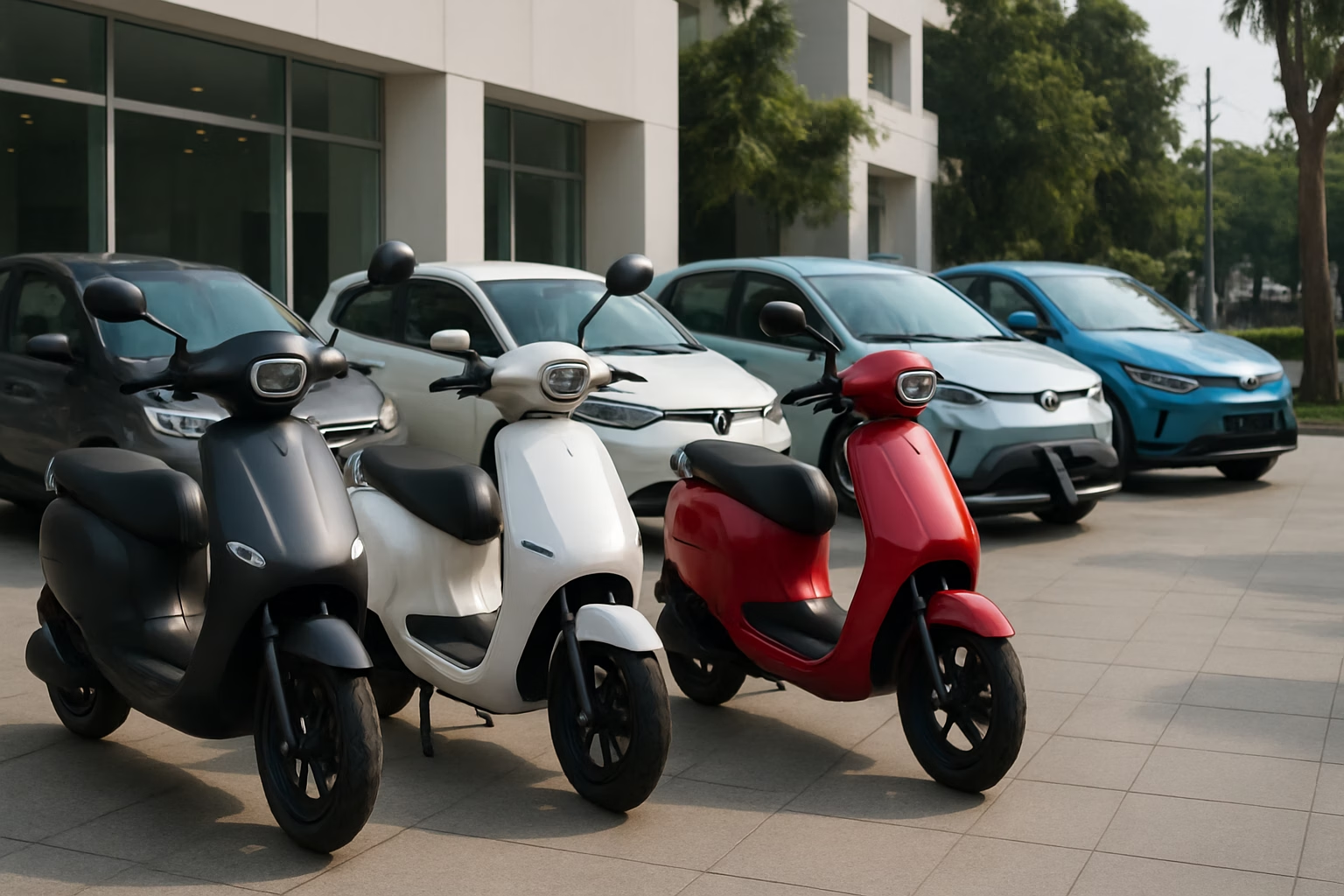
Sodium-ion fits budget two and three-wheelers and stationary storage first, because of the energy density gap. These are uses where a low price per kWh matters more than squeezing out maximum range, so the smart first homes aren’t long-distance cars.
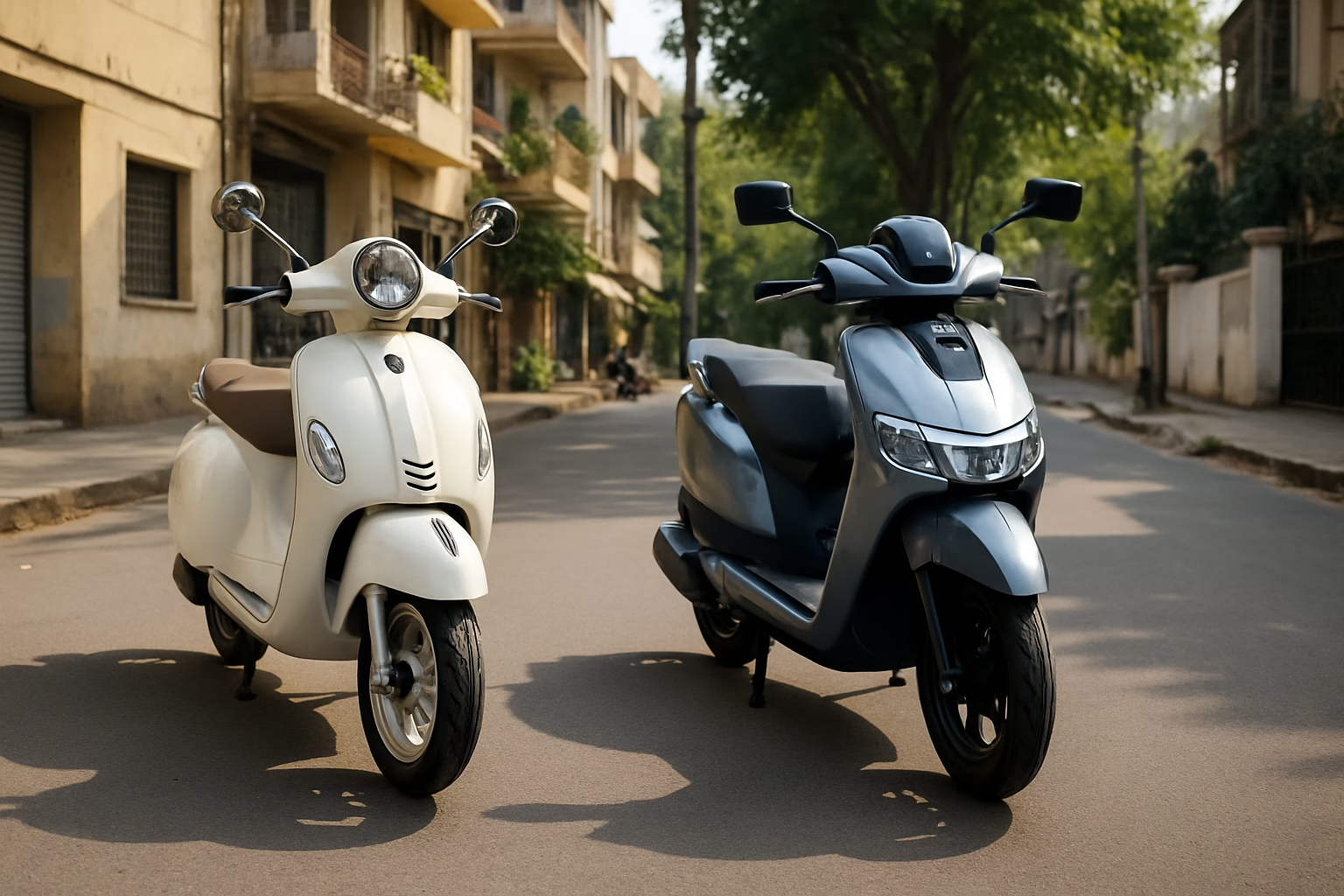
Budget two-wheelers and three-wheelers are the obvious starting point. A delivery rider or an auto driver covering short, predictable city routes cares far more about a low upfront price than about an extra 50 km of range they’d rarely use. The economics of electric auto-rickshaws in India already live or die on running cost, so a cheaper cell could be a genuine difference-maker there.
Stationary storage is the other natural fit, where weight and size barely matter and low cost per kWh is everything. The Council on Energy, Environment and Water has analysed exactly this potential for India in its CEEW study .
There’s also a neat overlap with swappable battery models. If cells are cheaper, swap networks become easier to scale, which ties into the battery swapping policy in India that’s still taking shape.
Is sodium-ion ready to buy in an EV today?
No, sodium-ion isn’t something you’ll find on an EV spec sheet today, and you shouldn’t wait for it before buying. Promising technology and ready technology aren’t the same thing, and India’s domestic cell production still has a long way to go.
India does have a PLI scheme for Advanced Chemistry Cell manufacturing, but the rollout has been slow. Reporting from IEEFA found that only a fraction of the targeted capacity has been delivered so far under the incentive scheme. That tells me domestic cell production of any chemistry, sodium-ion included, still has a long way to go before it shows up in showroom prices.
So if you’re shopping for an EV today, sodium-ion isn’t a feature you’ll find on the spec sheet yet, and you shouldn’t wait around for it before buying. The lithium cells in current scooters and cars are mature, reliable, and improving every year.
What’s my take on sodium-ion for India?
My take is that sodium-ion is one of the most promising battery developments for India, because it directly targets our two biggest weak spots, cost and import dependence. I’m optimistic for budget vehicles and grid storage, but it’s early and the energy density gap keeps it out of long-range cars for now.
Sodium-ion is one of the more exciting things happening in batteries for India specifically, precisely because it attacks our two biggest weak spots: cost and import dependence. I’m genuinely optimistic about it for budget two and three-wheelers and for grid storage over the next few years.
But it’s early. The energy density gap keeps it out of long-range cars for now, and India’s cell manufacturing base is still finding its feet. I’d watch the Reliance-Faradion progress and the CATL rollout closely. If those scale, the affordable Indian EV battery story could shift faster than most people expect.
Frequently asked questions
Is sodium-ion cheaper than lithium-ion?
Yes. Sodium-ion cells are projected at around $60 per kWh, compared with roughly $80 to $100 per kWh for lithium options. Sodium is abundant, while India imports nearly all of its lithium, so the chemistry cuts both cost and import dependence. That price gap is the main reason it matters for a price-sensitive market.
Which Indian company is betting on sodium-ion?
Reliance Industries is India’s biggest bet on sodium-ion. It acquired UK sodium-ion firm Faradion back in 2021, and that remains the country’s leading move on the technology. Globally, China’s CATL launched a new sodium-ion battery in April 2026, a sign the chemistry is maturing fast.
Will my next EV use a sodium-ion battery?
Probably not yet. Sodium-ion isn’t on EV spec sheets today, and its lower energy density means less range for the same weight, so it fits budget two and three-wheelers and stationary storage before long-range cars. India’s domestic cell production is also still scaling, so current lithium cells remain the mature, reliable choice.
Sources
- Energy-Solutions - Sodium-ion batteries cheaper lithium alternative
- ORF - Powering ahead: the future of EV battery manufacturing in India
- pv magazine India - A closer look at CATL’s new sodium-ion battery
- CEEW - Are sodium-ion batteries shaping the future of clean energy in India
- IEEFA - Only 28% target capacity delivered under India’s battery manufacturing incentive scheme
Last updated: 22 June 2026.