
A software-defined vehicle (SDV) is a car whose features and functions are controlled mainly by software rather than fixed hardware. That means the carmaker can add, fix, or improve capabilities after you’ve bought the car, sending them straight to your vehicle through over-the-air (OTA) updates instead of forcing a workshop visit or a whole new model.
Key takeaways
- An SDV keeps most of its behaviour in software, so features can change after purchase through OTA updates.
- A few centralized computers replace dozens of separate electronic control units (ECUs) found in older cars.
- Tata Motors says it engineered the new Sierra as an SDV with OTA capability built in from the start.
- A Deloitte India 2026 study found that about 95% of Indian consumers are willing to pay for SDV features.
- SDVs aren’t only EVs, but the EV shift and SDV shift are happening together in India.
What actually makes a vehicle “software-defined”?
The core idea is that software, not hardware, decides what the car can do. In a traditional car, each function (windows, braking aids, infotainment) sits on its own ECU, wired and fixed at the factory. In an SDV, a few powerful central computers run most of these functions, and the carmaker updates that software over time.
So when people say a car is “software-defined,” they usually mean two things together: a centralized computing setup, and the ability to keep improving it remotely.
How is an SDV different from a normal connected car?
A connected car can talk to the internet. An SDV goes further: it’s actually built so its features depend on software that can be rewritten later.
| Aspect | Traditional car | Software-defined vehicle |
|---|---|---|
| Control of features | Fixed hardware and many ECUs | Centralized computers running software |
| New features after buying | Rare, usually needs new hardware | Added via OTA updates |
| Bug fixes | Workshop recall | Often pushed remotely |
| Architecture | Distributed, dozens of ECUs | Fewer, more powerful computers |
Is the software-defined vehicle idea real in India yet?
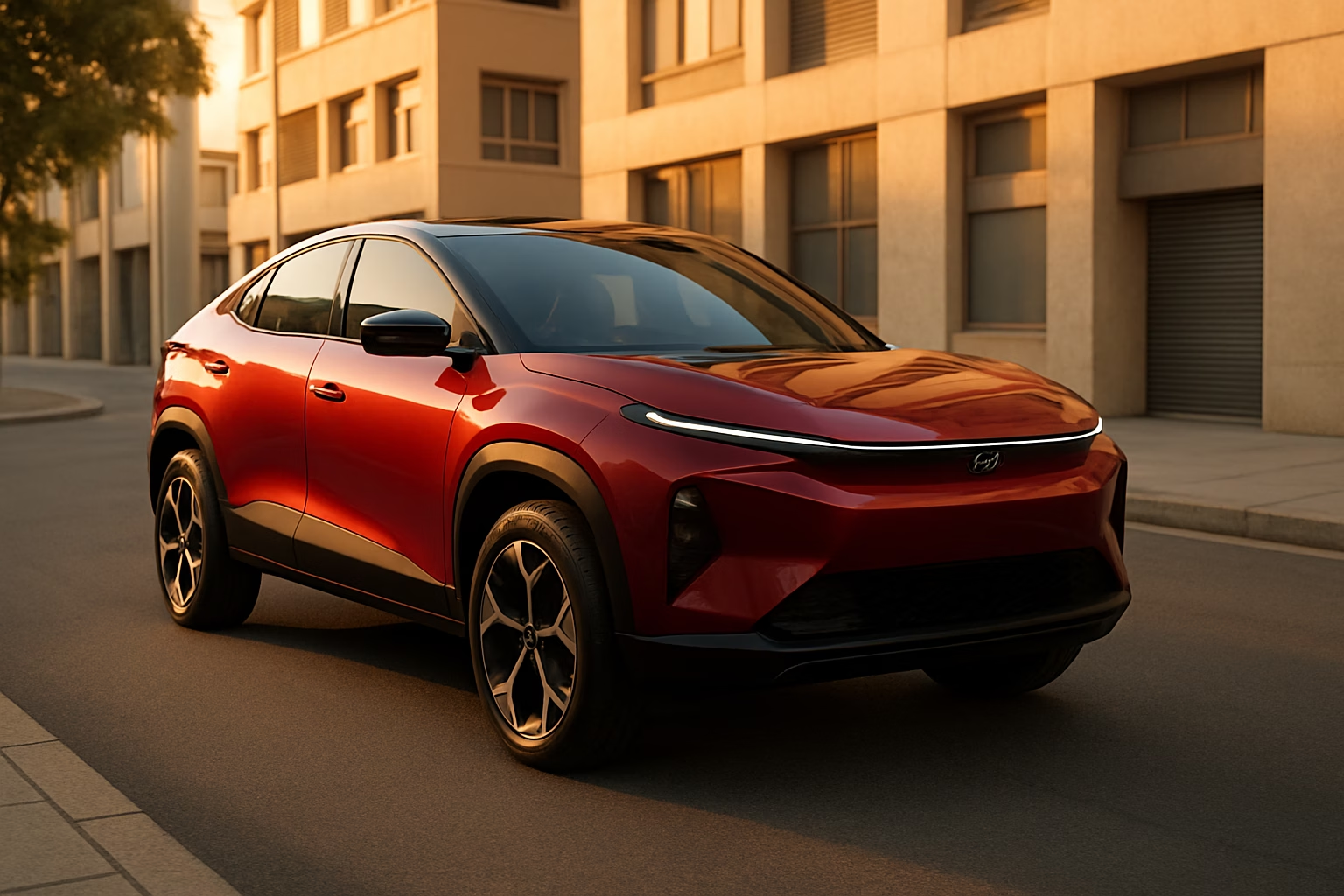
Yes, it’s moving from concept to product. Tata Motors has positioned the new Tata Sierra as engineered to be an SDV, with OTA software updates and remote diagnostics designed in from inception rather than bolted on afterwards.
Demand looks ready too. A 2026 Deloitte India study reported that about 95% of Indian consumers are willing to pay for software-defined vehicle features , which is a strong signal for any carmaker weighing the investment.
What can SDVs actually do for an owner?
Because the car can be updated, the experience can keep getting better after you drive it home. A few common examples:
- New or improved driver-assistance and infotainment features pushed remotely.
- Quicker fixes for bugs without booking a service slot.
- Better battery and energy management, which ties into things like OTA updates in EVs and an intelligent battery management system .
- A path toward smarter charging and energy use, including future links to vehicle-to-grid (V2G) setups.
The practical takeaway: an SDV is meant to age more like a smartphone than a typical car, where the hardware stays put but the capabilities keep growing.
Frequently asked questions
Is every electric vehicle a software-defined vehicle?
No. Plenty of EVs still rely on traditional, hardware-led architecture. A vehicle is software-defined only when its functions are controlled by software that can be updated later, which can apply to EVs and, in principle, to other vehicles too.
Do SDV features cost extra?
Often, yes. Carmakers can offer some features as paid upgrades delivered over the air. The Deloitte India 2026 study suggests most Indian buyers are open to paying for such features.
Is the Tata Sierra a software-defined vehicle?
Tata Motors has described the new Sierra as engineered to be an SDV, with OTA updates and remote diagnostics built in from the start, according to the Excelfore write-up on their collaboration.
Sources
- Deloitte India: About 95% of Indian consumers are willing to pay for software-defined vehicles
- Excelfore: Tata Motors and Excelfore OTA software updates and remote diagnostics for the new Tata Sierra
Last updated: 23 June 2026.