• Written by — Vignesh
VigneshEV Researcher, EVBlogs.inElectric Vehicles IndiaEV Subsidies and Government SchemesEV Charging Infrastructure
• Last Updated:
Apr 10, 2026, 11:45:35 PM IST
Summarize & analyze this article with
Choose an AI assistant and open this article directly:
Tip: if the AI doesn’t fetch the page automatically, paste the article URL manually.
Prompt (paste into AI)
Summary
India is steering into a transformative era of electric mobility. As the nation accelerates its transition to cleaner transportation, 2026 is shaping up to be a landmark year for entrepreneurs exploring EV franchise India opportunities. Whether it’s setting up an electric vehicle dealership, launching an EV charging station franchise, entering battery swapping in India, or selling electric scooters, the time has never been more favorable. The government’s ongoing FAME II and state-level incentives, combined with rising consumer awareness and declining battery prices, have created fertile ground for growth.
This guide offers deep insight into electric mobility India and how to start EV business India—whether you have a ₹10 lakh budget or are looking for profitable EV startup opportunities in tier 2 cities. We’ll explore franchise types, costs, market trends, and challenges, backed by real-world examples, data, and first-hand entrepreneurial insights.
Why 2026 is the Breakout Year for EV Franchising in India
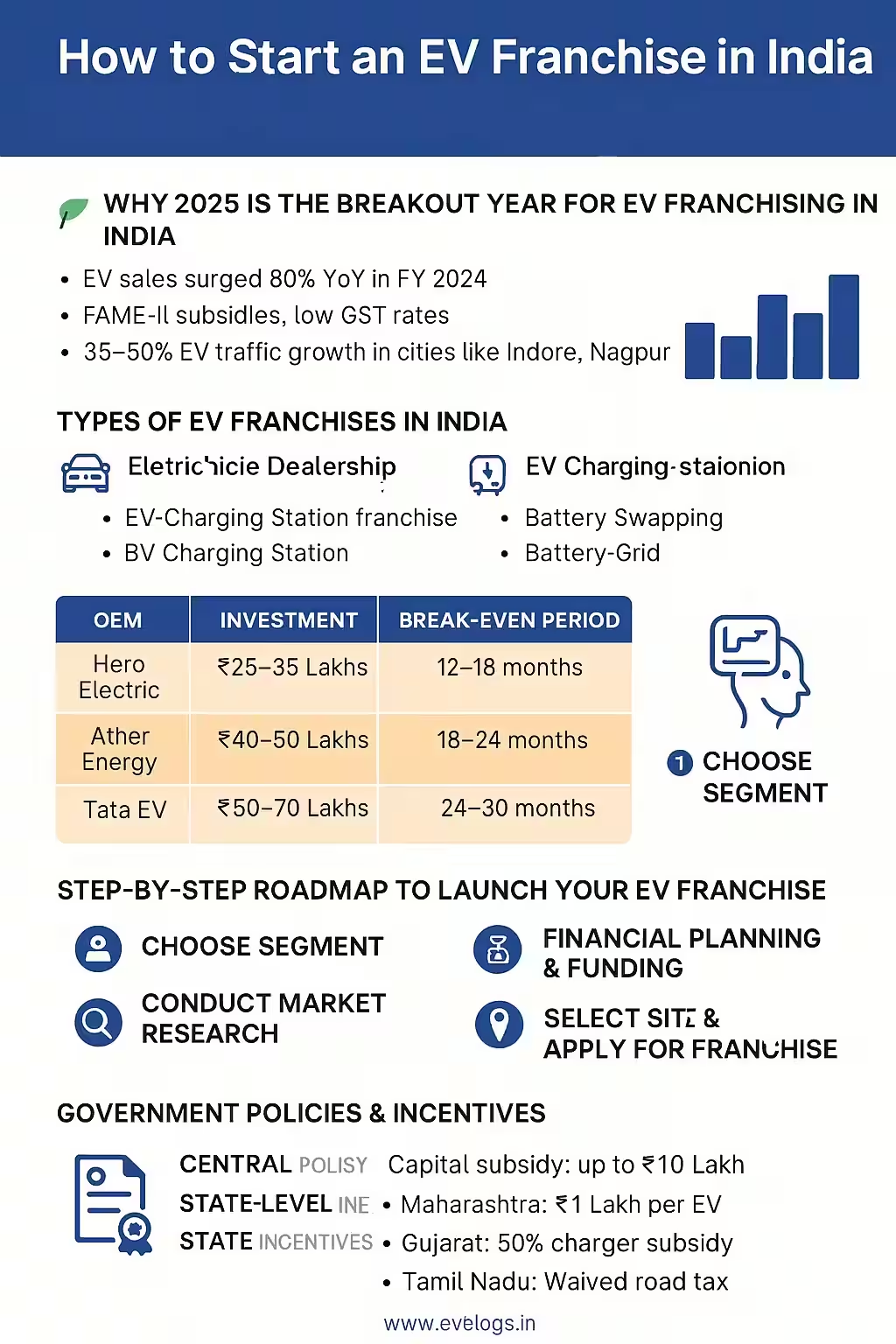
India’s electric vehicle (EV) market is no longer emerging—it’s booming. According to the Society of Indian Automobile Manufacturers (SIAM), EV sales in India crossed 15 lakh units in FY 2023-24, a sharp 80% increase from the previous year. Several factors are accelerating this trend:
FAME II Extension: Extended till March 2024 with ₹10,000 crore for EV subsidies (MoHI, 2024)
PLI Schemes: ₹18,000 crore for Advanced Chemistry Cell (ACC) batteries
GST Slashed: Only [5% GST on EV](/electric-vehicle/gst-rate-on-electric-vehicles/)s and charging equipment
State EV Policies: Nearly every state offers benefits like interest-free loans, capital subsidies, and registration waivers
These initiatives have increased EV adoption rates even in non-metro areas. Electric vehicle business 2026 is likely to see more volume from tier 2 and tier 3 cities than ever before.
Real-World Example
Tata Power has established over 4,000 public charging points by 2024 and plans to double this by 2026. Their franchise partners report monthly returns upwards of ₹1.2 lakhs in high-footfall zones.
Types of EV Franchises Available in India
1. Electric Vehicle Dealership
Opening an electric vehicle dealership is a primary way to enter the green business franchise space. Major OEMs like Tata, Ather, Hero Electric, and Ola are expanding their dealership networks aggressively.
<td>
  ₹30-40 Lakhs
</td>

<td>
  15-20 months
</td>

<td>
  High demand from youth
</td>
FAQ: How to open an EV dealership in India? Approach the OEM directly, fulfill infrastructure requirements, secure funding, and complete training. Some OEMs offer territory exclusivity.
FAQ: Is an electric vehicle dealership viable in smaller cities? Absolutely. With lower setup costs and rising EV adoption, cities like Nashik, Mysore, and Patna show strong growth potential.
2. EV Charging Station Franchise
India’s public charging infrastructure remains underdeveloped, creating lucrative opportunities for franchises. Top operators include:
[Tata Power EZ Charge](/electric-vehicle/tata-power-charging-station/)
EV Charging Station Franchise Returns: High-traffic urban or highway locations can fetch ₹60,000–₹1.2 lakh/month with ROI achieved within 2-3 years.
FAQ: Can I integrate solar with my EV station? Yes. Solar-powered charging can cut operational expenses by up to 40% (MNRE, 2024).
3. Battery Swapping India Franchises
With a focus on 2W and 3W segments, battery swapping solves range anxiety and reduces downtime. Franchises offered by:
Sun Mobility
Bounce Infinity
RACE Energy
Setup Requirements:
Investment: ₹10–15 Lakhs
500–1000 sq.ft. area
Grid and backup power access
OEM backend integration
Expert Insight: “Our Bengaluru partners earned faster ROI by placing swap stations in residential clusters with consistent delivery demand,” says a Bounce Infinity executive.
FAQ: What kind of training is provided for battery swapping franchisees? Full onboarding on hardware management, tech integration, and safety compliance is typically included.
4. Electric Scooter Franchise
Electric two-wheeler sales are expected to cross 1 crore units by 2026. Franchises are available through:
Okinawa
Ampere
[Ola S1](/electric-vehicle/ola-electric-scooter/)
PURE EV
Low-Cost Entry: PURE EV and Ampere offer dealership options under ₹20 lakhs.
Revenue Boosters: Accessories, AMC services, insurance, and co-branded merchandise
FAQ: Which electric scooter brands have the highest ROI? Brands like Ola and Ather offer better resale value and longer battery warranties, improving resale and service revenues.
How to Start an EV Business in India: A Complete Guide
Step 1: Identify Your Segment
EV Dealership
EV Charging Station Franchise
Battery Swapping
Electric Scooter Franchise
Step 2: Market Research
Study regional EV adoption trends
Evaluate state-specific incentives
Map competitors within your target city or town
Step 3: Financial Planning
Prepare a capital estimate with contingency
Explore NBFCs or government loans with interest subsidies
Step 4: Location and Infrastructure
Tier 2 cities like Raipur, Jodhpur, and Vizag have lower rental and untapped demand
Look for commercial property with parking and electricity access
FAQ: Are licenses required for EV stations? As per the Ministry of Power (2022), no license is required for setting up public charging stations. However, electricity board permissions are necessary.
ROI Analysis: EV Franchise Profitability in India {.wp-block-heading}
But: Early movers are reaping network advantages and territory exclusivity.
Conclusion: Green Mobility Isn’t the Future—It’s Now
2026 represents a pivotal moment for electric mobility India. If you’re considering how to start EV business India, this is the time to act. Whether you invest in an electric vehicle dealership, EV charging station franchise, battery swapping India venture, or electric scooter franchise, the demand is real and rising.
Action Steps:
Pick a segment based on budget and interest
Compare franchise providers
Lock down your city/location
Apply for incentives
EV business opportunities in tier 2 cities will be the growth frontier. As India electrifies its roads, those who enter now will lead the charge tomorrow.
Tata EV owner and founder of EVBlogs.in. Tracks India's EV market through real ownership experience, ARAI data, and state subsidy notifications. No paid placements — all rankings are based on specs and owner feedback.